
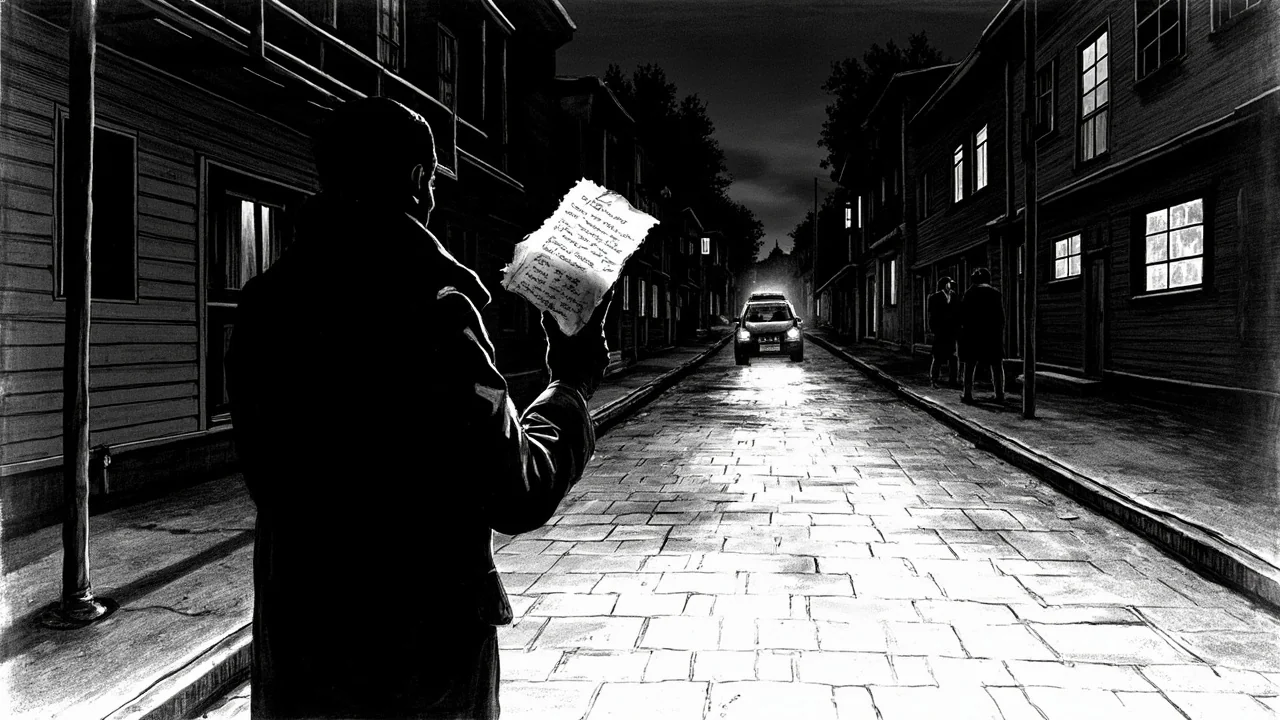
Finland's 2006 Jukka S. Lahti murder case has been thrust back into the spotlight following the receipt of an anonymous letter by a news organization. The letter names a man its writers claim is the real killer, alleging he made a drunken confession to the crime and provided graphic details of its commission. This development directly challenges the official judicial history of a case that saw Lahti's wife twice convicted and later fully acquitted of his murder.
An Anonymous Tip Arrives
The letter was reportedly received in December, according to the news outlet's reporting. Its writers, who signed off as 'A small group of persons who have followed the matter closely,' claim the named individual confessed to the killing while intoxicated. They further allege this same man, in a separate drunken state, claimed knowledge of the location of a woman's body, that woman disappeared in Pori in 2010. The letter's motive is suggested to be 'intense hatred and rage' towards Lahti, though no precise reason is given. A cover letter, signed by a 'Group of Pori residents following the matter,' states an identical letter was sent to Finland's National Bureau of Investigation.
A Case Defined by Conviction and Acquittal
Jukka S. Lahti was killed in his home in December 2006. The investigation led to the prosecution of his wife, Anneli Auer. She was found guilty of the murder twice in district court, receiving a life sentence. However, both convictions were overturned on appeal. The Court of Appeal not only cleared Auer but stated she was innocent, a definitive legal ruling that closed the case against her. The original police investigation and subsequent trials were major news events, creating a complex narrative of domestic tragedy and contested justice. The case has remained officially unsolved since Auer's acquittal, leaving a lingering question about who killed Lahti.
Police Confirm Receipt of Letter
Olli Töyräs, the Detective Chief Inspector for the homicide investigation line at the National Bureau of Investigation, confirmed to the news outlet that the KRP had indeed received the same anonymous letter. This formal police acknowledgment adds a layer of official gravity to the tip, moving it beyond mere speculation. According to the reporting, the man named in the letter was not interviewed during the original murder investigation, and his name does not appear in the pre-trial investigation materials compiled by police. This raises immediate questions about whether the original investigative net was cast widely enough and what steps, if any, authorities took to follow up on potential leads or rumors circulating outside official channels.
Unanswered Questions and Legal Reality
The emergence of this letter does not change the legal status of the case. Anneli Auer's innocence is established in Finnish law. The letter instead poses a direct challenge to the completeness of the historical investigation. Its allegations are serious and specific, claiming first-hand knowledge of a confession. However, the anonymous nature of the source presents significant obstacles. The credibility of the writers cannot be assessed, and the information cannot be directly questioned or corroborated through standard journalistic or investigative methods. The letter exists in a grey area between potential breakthrough and unverifiable claim.
The Path Forward for Investigators
The National Bureau of Investigation now possesses a document that names a specific individual in connection with a high-profile, unsolved homicide and a separate missing persons case. Standard procedure would likely involve evaluating the letter's contents against existing evidence. Investigators would need to determine if the alleged suspect has any documented connection to Jukka Lahti, if his whereabouts around the time of the 2006 murder can be established, and whether any aspect of the detailed confession described in the letter matches confidential, non-public details of the crime scene. The parallel claim regarding the 2010 Pori disappearance would also require a cross-reference with the active investigation file for that case.
A Community's Persistent Doubts
The letter's origin, attributed to a group of Pori residents, suggests that within the local community where these crimes occurred, alternative theories and suspicions have persisted for years. The use of the phrase 'who have followed the matter closely' implies an ongoing, unofficial interest in the case. This public sentiment, whether based on concrete knowledge or rumor, forms the backdrop against which this letter arrives. It highlights how some cold cases continue to live in the public consciousness, generating private discussions and theories that occasionally break through to authorities and the media.
The Limits of Anonymous Evidence
The fundamental challenge with an anonymous tip of this magnitude is its provenance. Without knowing the identity of the writers, their motivation remains opaque. Possibilities range from a genuine desire for justice based on overheard information to a malicious attempt to harass the named individual or reignite media scrutiny. The letter states the confession was heard while the alleged killer was drunk, which further complicates verification. Finnish courts place a high burden of proof on criminal convictions, requiring reliable, corroborated evidence. A second-hand account of an intoxicated statement, delivered anonymously, sits far outside that standard on its own.
The Enduring Shadow of an Unsolved Murder
The Jukka Lahti murder case represents a profound failure of the justice system to deliver a definitive answer. A woman was put through two murder trials and imprisoned before being exonerated. The actual perpetrator has never been held accountable. This outcome leaves all parties—the victim's memory, the acquitted wife, and the public—without closure. The arrival of this letter, whether it leads to a new investigative avenue or not, ensures the case will not fade quietly. It reinforces the reality that for some crimes, the official file may be closed, but the search for truth in the eyes of the public and those closest to it remains open. The central question now is whether the named suspect leads anywhere, or if this letter simply adds another unresolved layer to a deeply complex tragedy.