
Finland's archaeologists have uncovered evidence of a continent-spanning trade network from 6,000 years ago, centred on an unexpected commodity: red ochre. Researchers from the University of Helsinki made the pivotal discovery while analysing samples from graves and dwelling sites linked to the Comb Ceramic culture. The find fundamentally rewrites the narrative of Stone Age Finland, revealing a society more connected and sophisticated than previously imagined.
The Puzzling Red Earth
During excavations, researchers were surprised by the frequent presence of vibrant red earth, or ochre, in burial sites and settlements. What began as a routine observation led to a major investigation when chemical analysis revealed a startling pattern. Ochre samples with identical chemical signatures were found hundreds of kilometres apart, from coastal sites to inland regions. 'Because chemically similar red earth is found hundreds of kilometres from each other, it appears that ochre moved as part of the period's exchange network,' said Elisabeth Holmqvist-Sipilä, an archaeology docent at the University of Helsinki, in a statement. The team proposes that this specific ochre was transported over long distances, challenging the old view of isolated hunter-gatherer communities.
A Complex Ritual and Trade Material
The research indicates ochre was far more than just a pigment. Its use was deeply embedded in ritual and identity. Finland's hunter-fisher-gatherers used it to paint elk and boats on cliff faces, marking significant locations in the landscape. In burial contexts, its application was surprisingly complex. Analysis of samples from a single grave showed the ochre used was not uniform. 'When we analysed red earth samples taken from the same grave, it turned out that they were not always similar in chemical concentrations,' said grant researcher Marja Ahola. Further study showed that individuals or their grave goods within the same burial pit were painted with ochre from different geological origins.
This intentional mixing of materials from distinct sources suggests profound symbolic meaning. 'Perhaps this was a way to underline the identity of the deceased, or maybe the origin of the ochre—or the path it travelled—was in some way significant,' Ahola pondered. The clear conclusion is that for these ancient people, the colour was not the only important factor, the source and story of the material itself held value.
A Network of Valuable Goods
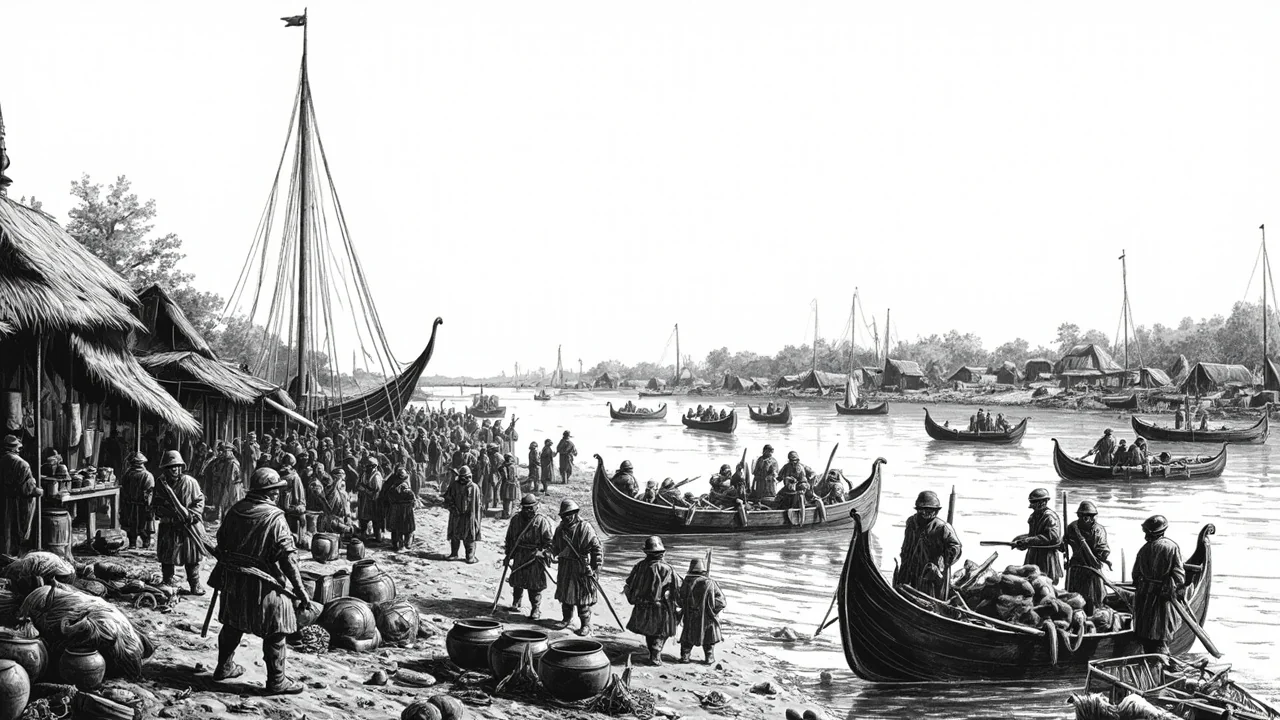
The ochre exchange did not exist in isolation. The study positions it within a broader network of long-distance trade that flourished during the late Stone Age. Concurrently, people were moving amber from the Baltic region and slate ring ornaments manufactured at Lake Onega into and across Finland. These trade routes connected communities across Northern Europe, facilitating the flow of both practical goods and items of ritual significance. The movement of heavy, bulk materials like specific types of earth implies established social contacts, shared cultural practices, and possibly even early forms of specialised procurement and distribution.
This network reveals a level of social organisation and inter-group cooperation not typically attributed to the period. The ability to source, transport, and ritually utilise materials from distant locations indicates complex social structures and communication channels spanning the Scandinavian and Russian forests.
A First for Finnish Archaeology
This project marks the first time archaeological red ochre and its geochemical composition have been systematically studied in Finland. Previous archaeology often noted its presence but lacked the scientific tools to trace its origins. The use of modern geochemical fingerprinting techniques allowed researchers to match archaeological samples to specific mineral sources, effectively mapping the 6,000-year-old trade routes. The methodology opens a new window into the prehistoric economy, transforming humble clumps of coloured earth into data points charting ancient human interaction.
The findings have significant implications for understanding the Comb Ceramic culture (c. 4200–2000 BCE). Rather than viewing them as simple, localised bands, we must now consider them as participants in a wide interactive sphere. The conscious selection of ochre based on its origin for specific rituals points to a rich symbolic world where materials carried their own history and meaning, woven into the social fabric of life and death.
Rewriting Prehistoric Narratives
The discovery forces a reassessment of Finland's prehistory. The evidence of structured long-distance exchange over 5,500 years ago places Finnish societies firmly within dynamic Nordic and Baltic interaction networks. It suggests that the roots of trade and complex social organisation in the region run much deeper than the arrival of agriculture or metalworking. The hunter-gatherer communities of the Stone Age were not merely surviving, they were cultivating relationships, exchanging knowledge, and attributing deep cultural significance to materials that connected them to places far beyond their immediate horizon.
What other connections might lie undiscovered in the soil? Researchers now plan to expand the analysis to other sites and materials, hoping to further chart the social and economic landscape of ancient Finland. As one archaeologist noted, the story is no longer just about where people were, but about the connections they maintained and the meanings they moved across the ancient landscape.