
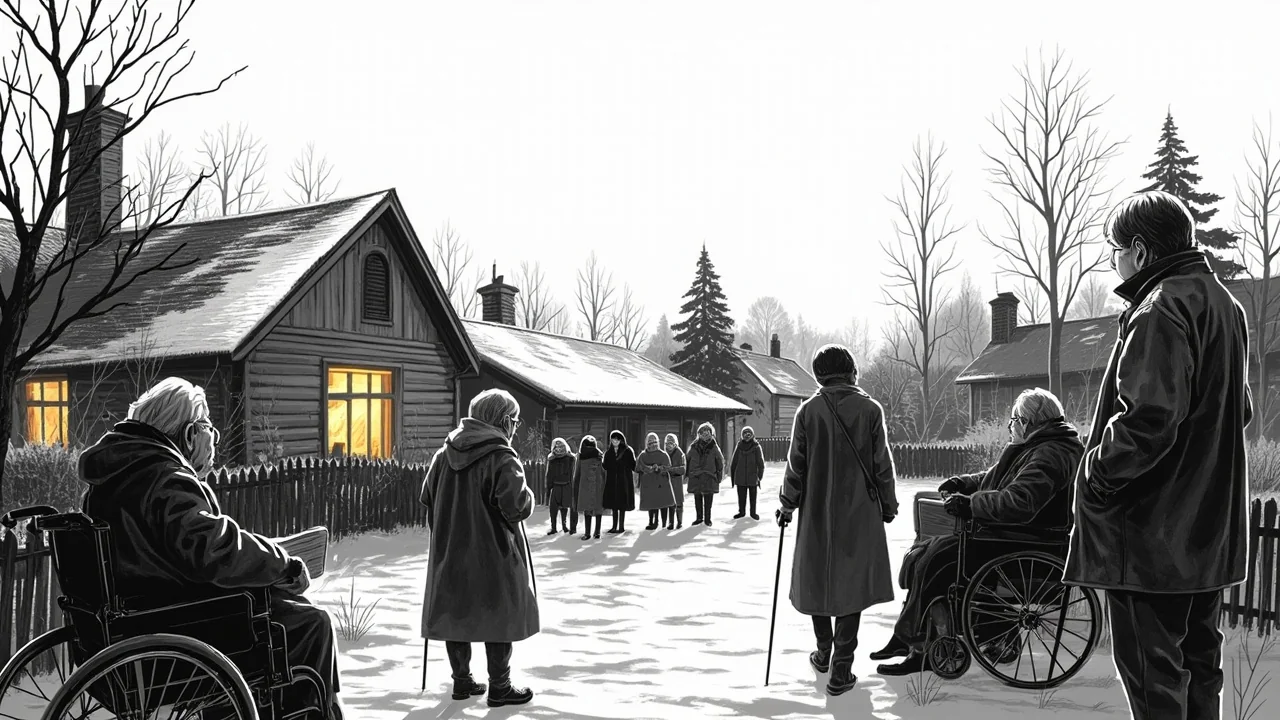
Finland's smallest municipality faces the loss of its final 24/7 care unit as Kivijärvi has filed a formal appeal with the Hämeenlinna Administrative Court against the Central Finland Welfare Region's decision to close the Hopearanta residential facility. The municipal council argues the December 9th decision by the welfare region's board is unlawful and demands its reversal, marking a significant clash between local autonomy and regional health authority power.
A Municipality's Legal Challenge
Kivijärvi's appeal, filed this week, contends that closing Hopearanta—the last remaining residential care unit within the entire municipality—requires exceptional diligence, detailed impact assessments, and substantial justification under Finnish law. The municipality's statement explicitly challenges the welfare region's rationale, stating that a mere savings target does not meet this legal requirement. The closure does not represent routine adjustment of the service network but the complete removal of a service model from the locality, the appeal document asserts. Kivijärvi has also requested an injunction to halt the decision's implementation until the court reaches a final, legally binding ruling.
The Central Finland Welfare Region's Mandate
The decision was made by the board of the Central Finland Welfare Region, one of 21 new wellbeing services counties established in 2023 under Finland's massive social and healthcare reform, known as ‘sote’. These regions are responsible for organising health, social, and emergency services, consolidating duties previously held by individual municipalities. This structural change aims to curb rising costs and ensure equality of service but has sparked tensions in rural areas like Kivijärvi, where residents fear centralisation leads to service erosion. The welfare region's board operates under fiscal constraints and a mandate to manage its region-wide budget, often making difficult choices about facility viability based on usage, costs, and long-term sustainability projections.
Historical Context and Demographic Pressures
Kivijärvi, with a population of just over 1,100, exemplifies the challenges facing Finland's aging rural communities. The municipality has seen a steady decline in population for decades, a trend common across rural central and eastern Finland. This demographic shift increases the per-capita cost of maintaining local services like Hopearanta. The closure represents more than a budgetary line item, it signifies the removal of a cornerstone institution where elderly residents can receive round-the-clock care within their home community, close to family and familiar surroundings. For many families, the alternative means placing relatives in facilities tens or even hundreds of kilometers away, in larger towns like Äänekoski or Jyväskylä, which are within the Central Finland Welfare Region's jurisdiction.
The Legal Argument and Precedent
The core of Kivijärvi's case rests on Finnish administrative law, which governs how public authorities must execute their duties. The municipality argues the welfare region failed in its obligation to conduct a proper and thorough assessment of the closure's impacts, particularly its effects on the vulnerable elderly population and their families' right to family life. Finnish law requires that decisions affecting fundamental services consider proportionality and necessity. Kivijärvi's lawyers will likely cite previous administrative court rulings where closures were overturned due to inadequate investigation or a failure to properly consider reasonable alternatives. The case could set a precedent for how much weight regional authorities must give to local accessibility versus broader economic efficiency.
The National Debate on Rural Services
This local legal battle taps into a fierce national political debate about the future of Finland's countryside. The government’s programme includes commitments to safeguard vital services in rural areas, but the practical execution falls to the independent welfare regions. Members of Parliament from the Centre Party, which draws strong support from rural municipalities, have repeatedly raised concerns in the Eduskunta about service centralisation. They argue the ‘sote’ reform, while necessary, must not become a mechanism for stripping rural communities of their basic service infrastructure. The outcome of Kivijärvi's appeal will be closely watched by dozens of other small municipalities facing similar pressures from their regional welfare boards.
What Happens Next?
The Hämeenlinna Administrative Court will now review the appeal. The process involves requesting a statement from the Central Finland Welfare Region, after which the court will evaluate the legality of the decision-making process. A ruling could take several months. If the court sides with Kivijärvi, it will nullify the closure decision and order the welfare region to re-evaluate the matter, potentially with a mandated, more comprehensive impact assessment. If the court rejects the appeal, Kivijärvi could pursue the matter to the Supreme Administrative Court, though such a process would extend the uncertainty for Hopearanta's residents and staff by over a year. Meanwhile, the municipality's request for an injunction is critical, if granted, it would temporarily stop any closure preparations, but if denied, the welfare region could proceed despite the ongoing appeal.
The case of Hopearanta is a microcosm of Finland's struggle to balance economic realities with the ethical and social contract to care for its aging population equitably across the entire country. The court's decision will deliver a verdict not just on one facility, but on the legal standards that will define service provision in the new era of regional governance.