
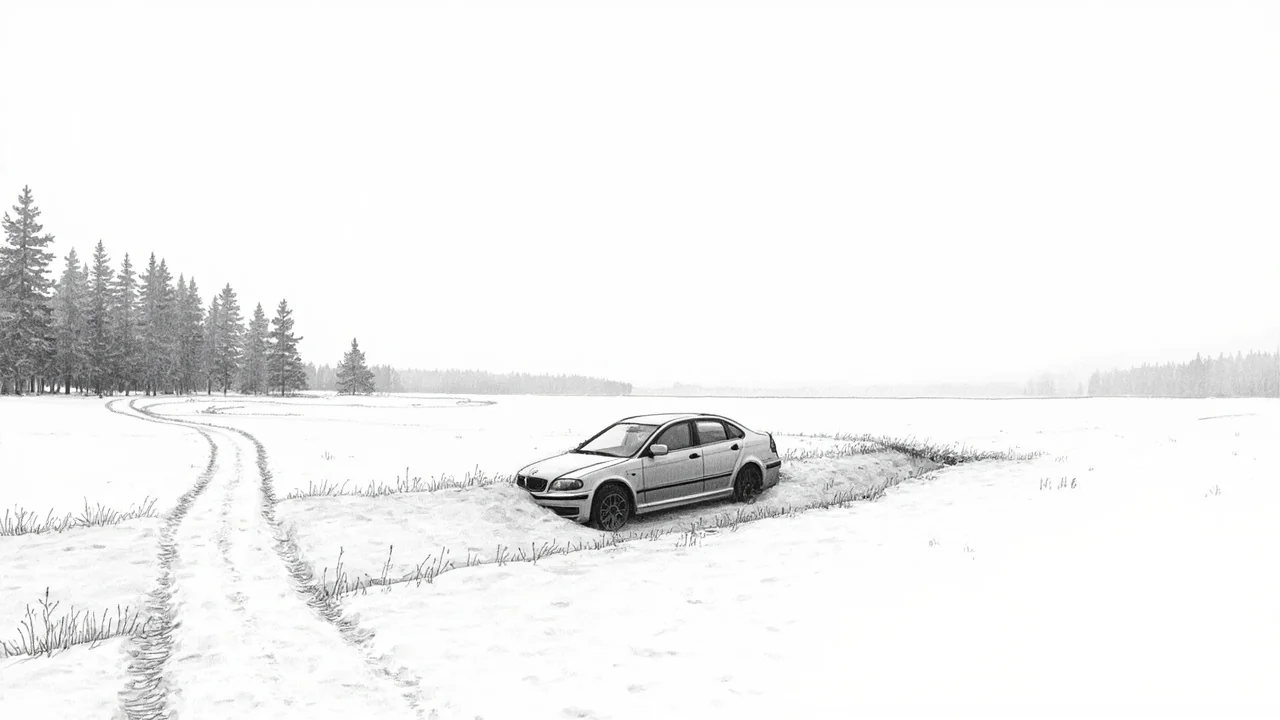
Finland's winter roads claimed another vehicle Tuesday evening when a car slid off a straight section of highway into a snowbank and ditch near Nurmijärvi. The incident occurred at 6:35 PM on Highway 45, between Nurmijärvi and Järvenpää, in the Nukari area. Remarkably, the sole occupant of the car emerged unscathed, awaiting a tow truck by the time rescue services arrived.
‘He had managed to get out of the car on his own. Emergency medical services were on scene, but they were not needed this time,’ said the on-duty fire chief for the Central Uusimaa Rescue Department. The official confirmed there were no personal injuries. While the precise cause remains unknown, the fire chief offered an educated guess rooted in typical winter driving hazards. ‘It was likely just carelessness or a lapse of concentration for some reason,’ he suggested.
A Common Winter Hazard
This single-vehicle incident mirrors hundreds of similar occurrences across Finland each winter. While dramatic multi-car pileups make headlines, the majority of winter traffic incidents involve vehicles leaving the roadway due to loss of control. Straight roads, like the section of Highway 45 where this crash happened, can be particularly deceptive, lulling drivers into a false sense of security before a slight overcorrection or moment of inattention leads to a slide.
The absence of injury in this case underscores the vital role of safety infrastructure and vehicle design. Modern safety cages, airbags, and the forgiving nature of deep snow drifts often prevent serious harm in low-speed run-off-road events. However, the outcome is never guaranteed and relies heavily on factors like speed, the point of impact, and whether other vehicles are involved.
The Data Behind Winter Driving Risks
Official statistics provide crucial context for understanding this common event. According to the Finnish Transport and Communications Agency, Trafi, slippery road conditions are a contributing factor in thousands of accidents annually. While the number of fatal accidents has decreased significantly over decades due to improved safety, property damage and personal injury accidents linked to winter conditions remain a persistent, costly issue for Finnish society.
December through February typically sees a marked increase in incidents where vehicles skid or lose control. This period demands heightened vigilance from all road users. The Finnish Transport Infrastructure Agency (FTIA) is responsible for winter maintenance, aiming to keep major highways like Highway 45 in safe condition through plowing and salting. However, as this Nurmijärvi case shows, even maintained roads require careful driving.
The Aftermath and Standard Procedure
Following such an incident, standard procedure involves securing the scene, assisting any injured persons, and clearing the vehicle to restore traffic flow. In this case, with the driver out and unhurt, the primary response shifted to recovery. The rescue service’s role was complete upon confirming no medical need, leaving the vehicle retrieval to a commercial towing service.
For the driver, the consequences typically involve dealing with vehicle damage, insurance claims, and a potential traffic fine if police determine a traffic violation, such as speeding for conditions, occurred. The police did not indicate any immediate suspicion of foul play or impairment in this instance, classifying it as a routine traffic accident.
A National Challenge of Seasonality
This minor incident in Nurmijärvi serves as a microcosm of Finland's annual winter mobility challenge. It highlights the successful outcome of a common risk: an attentive, properly equipped driver can walk away from a frightening situation. Yet, it also silently echoes the thousands of similar calls that rescue services respond to each year, taxing public resources and risking lives.
Investment in road maintenance technology, public awareness campaigns on winter driving, and stringent vehicle inspection requirements for tire quality are all part of Finland's systemic approach to mitigating these risks. The country's goal of ‘Vision Zero’ for traffic fatalities and serious injuries is tested most severely during these dark, icy months.
The story of the car in the Nurmijärvi snowbank is not unique. It is a seasonal reminder of the persistent dialogue between Finnish drivers and their environment—a dialogue where respect for conditions, preparedness, and a margin for error are the most valuable commodities. As the winter continues, this single uneventful rescue will be repeated in various forms across the country, each one a lesson in the delicate balance of movement and safety on frozen ground.