
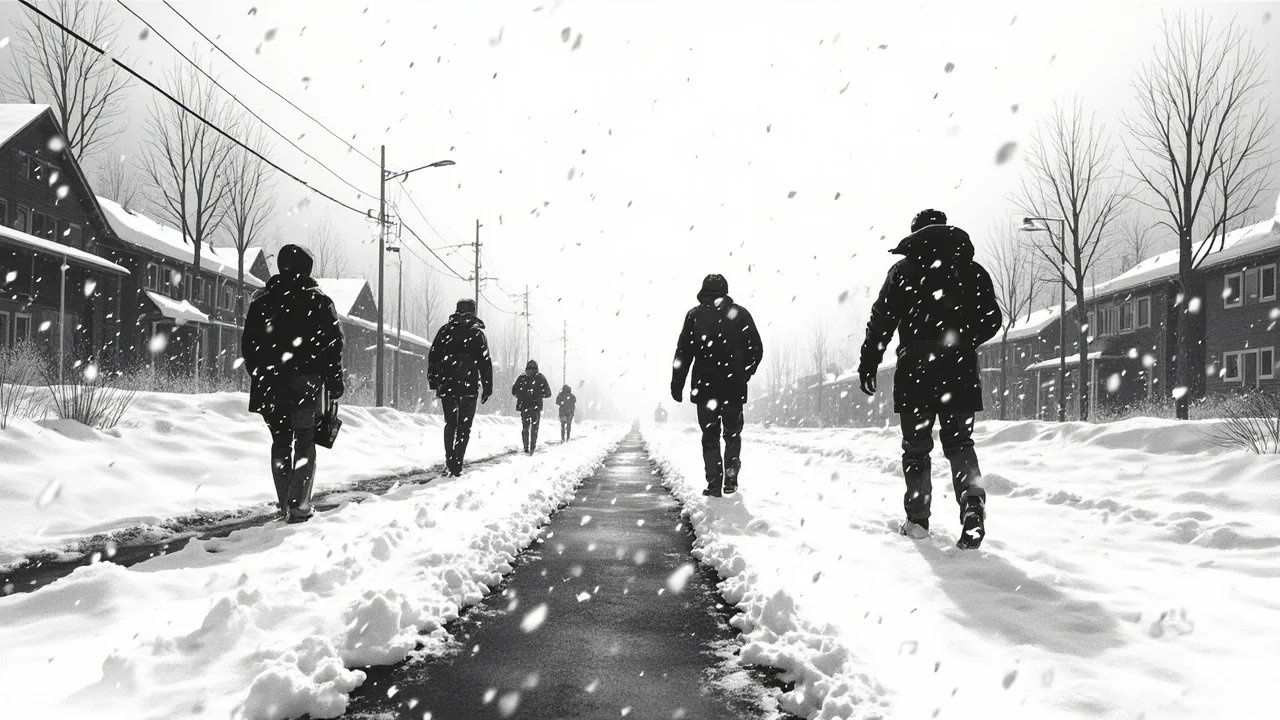
Finland's Meteorological Institute has issued a direct warning to drivers across central and southern regions, forecasting up to 5 centimeters of fresh snow and a significantly elevated risk of accidents from Tuesday afternoon. The agency stated road conditions will deteriorate rapidly, with snowfall reducing traffic flow and average speeds while increasing the danger of collisions. This specific weather warning for snowy and blowing snow conditions remains in effect until Wednesday morning, creating a hazardous commute for thousands. The forecast details a concentrated band of snow for central Finland on Tuesday, followed by more scattered showers moving across southern and central areas by Wednesday. Motorists are urged to exercise extreme caution, plan for longer journey times, and ensure their vehicles are prepared for winter driving conditions.
Immediate Hazard for Central Regions
The Ilmatieteen laitos (Finnish Meteorological Institute) pinpointed central Finland as the initial focal point for the most severe conditions starting Tuesday. Their official warning, communicated via a public weather alert and a detailed post on a social media platform, stated snow accumulations would primarily range between 1 to 5 centimeters. This sudden snowfall is expected to quickly cover roadways, reducing visibility and grip. The agency's warning map specifically highlights areas under threat from snowfall and blowing snow, which can create whiteout conditions and drifts. The core message from forecasters is unambiguous: driving will become difficult and more dangerous.
Widespread Disruption Expected
The impact of this weather system is not confined to a single day or region. While the concentrated snow hits central areas on Tuesday, the disturbance will affect a wider swath of the country as it moves. By Wednesday, scattered snow showers are predicted to sweep across southern Finland as well, prolonging the period of potential disruption. The Meteorological Institute's warning explicitly connects the weather to concrete travel consequences, noting that traffic fluency will deteriorate and average speeds will drop. This combination of fresh snow, possible blowing snow, and adapting driver behavior creates a high-risk environment where the probability of accidents rises substantially. All drivers in affected regions must account for this official assessment in their travel plans.
Context of Finnish Winter Mobility
Weather warnings of this nature are a critical component of public safety infrastructure in Finland, where winter driving conditions prevail for several months each year. The national Meteorological Institute operates as the authoritative source for such alerts, providing essential data that informs both public behavior and the readiness of municipal road maintenance crews. Timely warnings allow gritting and plowing services to prioritize routes and help the public make informed decisions about necessary travel. This specific alert for Tuesday and Wednesday serves as a stark reminder that even moderate snowfall requires adjusted driving techniques, increased following distances, and suitable winter tires, which are a legal requirement in Finland during the winter season.
Official Advice for Drivers
In line with the warning, the underlying advice from authorities is clear. Drivers should postpone non-essential travel in the hardest-hit areas during the peak of the snowfall on Tuesday afternoon and evening. For those who must travel, checking real-time road condition reports from agencies like the Finnish Transport Infrastructure Agency is essential. Ensuring a vehicle's windows, lights, and mirrors are fully cleared of snow and ice before departure is a basic but vital safety step. Drivers are also reminded to maintain a safe distance from other vehicles, as stopping distances can be dramatically longer on snow-covered roads. The warning period, extending into Wednesday morning, means commuters should prepare for potentially challenging conditions for the next 36 hours.
A Recurring Seasonal Challenge
This event fits into the predictable yet demanding pattern of Finnish winters, where rapid weather changes are common. The Finnish Meteorological Institute's role in issuing precise, location-based warnings is a key tool for mitigating risks. While snow is an expected part of the landscape from late autumn to early spring, each fresh snowfall presents its own set of hazards, particularly when it arrives during busy travel times. The institute's communication directly linking the snow to reduced traffic flow and higher accident risk is designed to cut through complacency. As the snow moves across the country, the vigilance of every driver on the road becomes the final, critical layer of safety.
Looking Beyond the Current System
While this particular warning expires on Wednesday morning, the broader winter season continues. The transition between autumn and full winter often brings these intermittent but impactful snow events that test driver preparedness. The data and models provided by the national meteorological service allow for a proactive rather than reactive approach to road safety. For residents, heeding these alerts is part of the social contract of Finnish winter life, ensuring not only personal safety but also contributing to smoother overall traffic flow during disruptive weather. The coming days will show how effectively this latest warning is heeded on the nation's roads.