
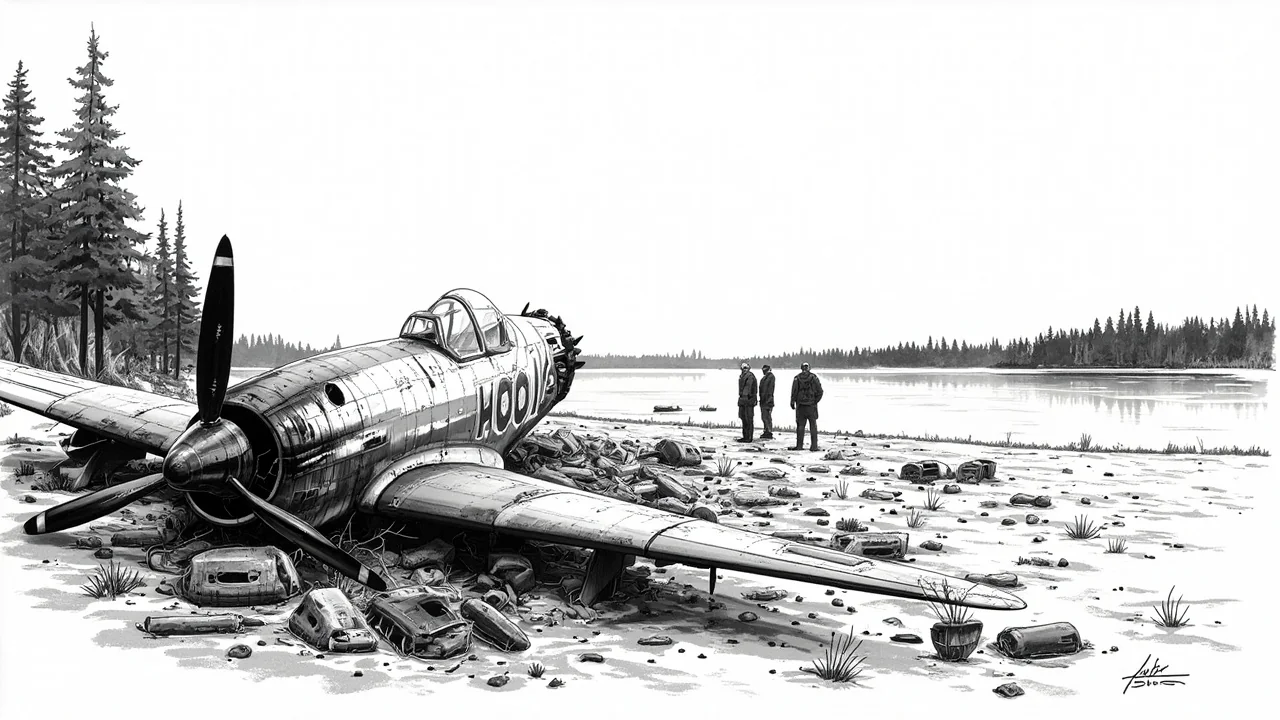
A fatal aircraft accident at Räyskälä airfield reveals critical safety gaps in Finland's vintage aircraft community, where crucial maintenance knowledge fails to transfer between owners of World War II-era planes. Source: Onnettomuustutkintakeskus (Otkes) - Finland's Safety Investigation Authority.
The October 2024 crash that killed two people stemmed from a defective fuel selector valve in an SNJ-3 warbird, according to Onnettomuustutkintakeskus (Otkes), Finland's Safety Investigation Authority. The engine shut down just 100 meters after takeoff, forcing the pilot into an impossible low-altitude turn back to the runway.
Knowledge transfer crisis in warbird community
The fuel valve problems were "known within the enthusiast community," lead investigator Janne Kotiranta noted, but this institutional knowledge never reached the new owner. The aircraft had recently changed hands, and the pilot had minimal experience with this specific type despite extensive general aviation background.
This knowledge gap proved fatal. The evening before the crash, the engine experienced running problems, but mechanics looked everywhere except the fuel system. The pilot, following instinct rather than procedure, attempted the textbook-forbidden turn back to the runway with predictable results.
Finnish society has roughly 200 vintage military aircraft in private hands, mostly concentrated around airfields like Räyskälä. These machines require specialized knowledge that exists primarily in the heads of aging mechanics and longtime owners. When planes change hands, critical maintenance insights often disappear.
Regulatory blind spot exposed
The investigation reveals a regulatory gap that extends beyond Finland. Otkes recommended that the Federal Aviation Administration warn all SNJ-3 operators globally about fuel valve aging risks, acknowledging that national authorities lack thorough oversight of vintage aircraft maintenance practices.
Unlike modern aircraft with detailed service bulletins and manufacturer support, warbirds rely on community knowledge and owner diligence. The SNJ-3's original fuel selector valve, likely installed decades ago, failed without warning signs that untrained eyes could recognize.
The pilot's decision to turn back violated handbook procedures, but Kotiranta noted the impossible timeline: "less than ten seconds" to process engine failure, assess options, and execute. Modern flight training emphasizes flying straight ahead after takeoff engine failure, but vintage aircraft pilots often lack type-specific emergency procedures.
Safety recommendations target global fleet
Otkes pushed responsibility upstream to the FAA, which certified the SNJ-3 design and maintains oversight of the global fleet. This reflects Finland's pragmatic approach to aviation safety: when domestic incidents reveal international design issues, Finnish authorities escalate rather than impose local bandaids.
The recommendation targets aging fuel system components across all SNJ-3 aircraft worldwide. These planes, originally built as military trainers, now serve as recreational aircraft with maintenance standards that vary between operators.
Expect the FAA to issue a service bulletin within six months requiring fuel system inspections for all SNJ-3 operators — potentially grounding dozens of aircraft until valve replacements are completed, at roughly €15,000 per plane.
Read more: Finland Faces €14.9 Billion Annual Deficits Through 2030.
Read more: Finland Sets €11 Billion Austerity Target as EU Debt Rules B....