
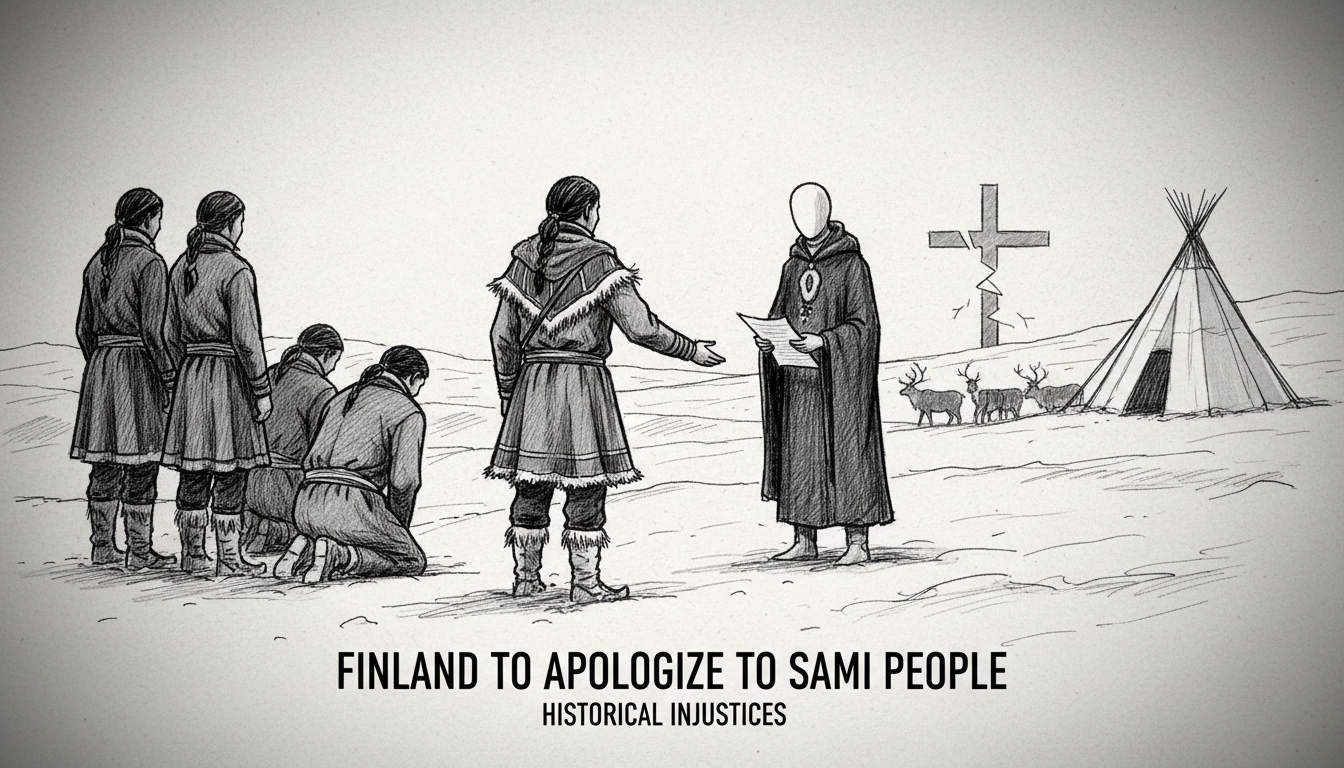
Finland's government will formally apologize to the Sami people for historical discrimination and state-led oppression. Prime Minister Petteri Orpo announced the decision following the completion of a four-year truth and reconciliation commission. The commission's final report contains nearly 70 recommendations for repairing the relationship between the Finnish state and its indigenous population. This move marks a pivotal moment in Nordic indigenous relations and reflects a broader regional reckoning with colonial histories. The Sami are the only recognized indigenous people within the European Union, with about 10,000 living in Finland out of a total population of 75,000 to 100,000 across the Nordic region and Russia's Kola Peninsula.
The truth commission documented systematic state abuses spanning decades. Authorities forcibly separated Sami children from their families, placing them in boarding schools where they were prohibited from speaking their native languages or practicing their culture. This deliberate assimilation policy severed cultural transmission for generations. Many children lost connection to their linguistic and cultural identity as a direct result. The effects remain visible today through endangered languages and persistent cultural loss within Sami communities. The commission's work explicitly links past state policies to contemporary social challenges.
Prime Minister Orpo stated it is clearly necessary for the state to apologize for these historical wrongs. A parliamentary group representing all political parties will now determine how and when the formal apology will be delivered. The report's additional proposals include appointing a Sami state secretary within the Prime Minister's Office to ensure indigenous perspectives inform high-level policy. This structural recommendation aims to prevent future marginalization by embedding Sami representation in the core of government. The apology process mirrors similar initiatives in neighboring Norway and Sweden, where truth commissions have also examined state treatment of Sami populations.
From a Danish society news perspective, this development underscores a fundamental Nordic tension. The region's celebrated welfare system and social policy frameworks have historically coexisted with the assimilation of minority groups. Denmark's own relationship with Greenlandic Inuit people involves parallel discussions about historical justice. The Finnish apology process offers a potential model for other nations grappling with how to address systemic discrimination within their social policy history. Successful integration in multicultural societies like Copenhagen requires acknowledging past failures to build genuine trust for the future.
The Sami cultural foundation is rooted in reindeer herding, fishing, and traditional crafts. Their connection to land and nature defines their identity. State policies that restricted these livelihoods compounded the cultural damage. The current reconciliation effort recognizes that economic and cultural rights are inseparable. Repairing the relationship requires more than words. It demands concrete actions to support language revitalization, protect land rights, and ensure self-determination. The Finnish parliament will continue debating the commission's detailed proposals in the coming months. The world will watch whether this apology translates into tangible change for Sami communities or remains a symbolic gesture. The outcome will test the integrity of Nordic commitments to human rights and social justice.