
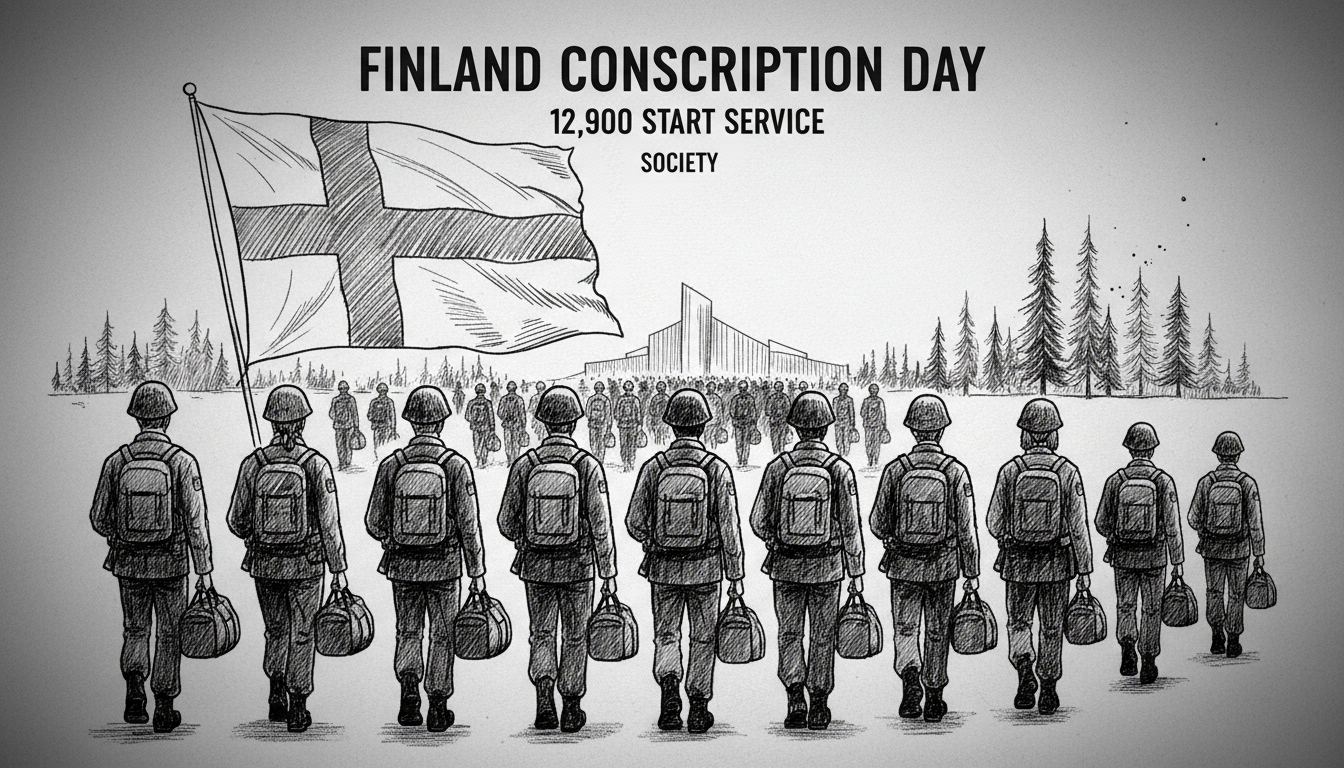
Finland's conscription system sees 12,900 new recruits beginning military service today, reinforcing a cornerstone of national defense in Helsinki. Across the country, young men arrive at barracks from Rovaniemi to Parola, carrying duffel bags and anticipation for the months ahead. This annual intake underscores a societal ritual that enjoys over 80% public approval, according to recent Eduskunta surveys.
Nearly 10,000 of these conscripts will train with the Finnish Army, the Maavoimat, forming the bulk of Finland's territorial defense force. Around 1,700 recruits report to the Merivoimat, the navy, while others join the Border Guard and Air Force. Service lengths vary from 165 to 347 days, depending on assigned roles like leadership or specialist training.
A System Rooted in Law and Consensus
Universal male conscription has been a legal requirement in Finland since 1950, mandated for all men after turning 18. Women can volunteer, and their participation has steadily increased, though they remain a minority in the ranks. The system is administered by the Finnish Defence Forces under the Ministry of Defence, with annual calls coordinated from Helsinki's government district.
Defence Minister Antti Häkkänen recently emphasized the system's importance in a parliamentary committee hearing. "Conscription is not just a military necessity; it is a unifying thread in Finnish society," Häkkänen stated. His remarks came during debates on defense appropriations, which have seen increases following Finland's NATO accession.
Public Support and Evolving Challenges
Public support for conscription remains consistently high, with polls showing it transcends traditional political divides. Experts attribute this to historical context, including the Winter War legacy, and a pragmatic approach to national security. Dr. Laura Saarenmaa, a defense policy analyst at the University of Helsinki, notes that the system is adapting to modern threats.
"The conversation in Eduskunta has shifted from whether to maintain conscription to how to optimize it for hybrid warfare and cybersecurity," Saarenmaa explains. She points to recent reforms that introduced more flexible training modules and emphasis on reservist readiness. These changes were ratified in a 2023 defense policy vote, with broad coalition support.
NATO Membership and Strategic Implications
Finland's entry into NATO in 2023 has added new layers to its defense planning, but conscription remains a domestic pillar. The Finnish model is now studied by other European nations facing recruitment shortages. Unlike many NATO allies relying on professional armies, Finland maintains a large, trained reserve estimated at 900,000 personnel.
This reserve system, activated through conscription, is seen as a deterrent factor along Finland's long border with Russia. EU defense initiatives, such as the Permanent Structured Cooperation (PESCO), complement rather than replace national service. Finnish officials stress that conscription ensures sovereign defense capabilities while enabling cooperation.
Gender Dynamics and Future Debates
While conscription is mandatory only for men, voluntary service for women has grown, with approximately 500 women starting service this year. Political parties are divided on expanding mandatory service to women. The Left Alliance and Green Party have proposed studies on gender-neutral conscription, but the governing coalition, led by the National Coalition Party, favors the current voluntary approach.
Parliamentary discussions on this issue are ongoing, with a report expected from the Defense Committee by late 2024. Social Minister Sanni Grahn-Laasonen commented that any change would require careful societal dialogue. "We must balance equality with practical defense needs," she said during a recent press briefing.
Economic and Social Impact
Conscription has significant economic implications, with the state covering costs of training, housing, and a modest allowance for recruits. The annual defense budget, approved by Eduskunta, allocates funds for conscript training, which also includes civic education components. This integration fosters a sense of national responsibility beyond military skills.
Local economies near training bases benefit from the influx of recruits and their families. Towns like Hämeenlinna and Mikkeli see seasonal boosts in activity. From a social perspective, conscription is often cited as a rite of passage that promotes cohesion across urban and rural divides.
Expert Analysis on Long-Term Viability
Defense experts like Colonel (ret.) Jukka Juusti highlight the system's adaptability but warn of demographic pressures. "Finland's aging population could strain conscription numbers in the coming decades," Juusti notes. He suggests that technological integration, such as simulated training, may help maintain effectiveness without increasing duration.
The Finnish Security Intelligence Service (SUPO) has also emphasized conscription's role in countering disinformation and building societal resilience. Their reports indicate that trained reservists are better equipped to identify hybrid threats, a point reiterated in EU security forums where Finland participates actively.
Looking Ahead: Conscription in a Changing Europe
As Europe's security landscape evolves, Finland's conscription model offers a case study in comprehensive defense. The upcoming defense review in 2025 will likely address service lengths and specialization needs. With regional tensions persisting, this system remains a key element of Finland's strategy, blending tradition with innovation.
Will conscription continue to enjoy unwavering support amid societal changes? The answer may depend on how well it integrates new technologies and responds to gender equality debates. For now, the 12,900 recruits starting today embody a enduring commitment to national security, rooted in Finnish law and collective will.