
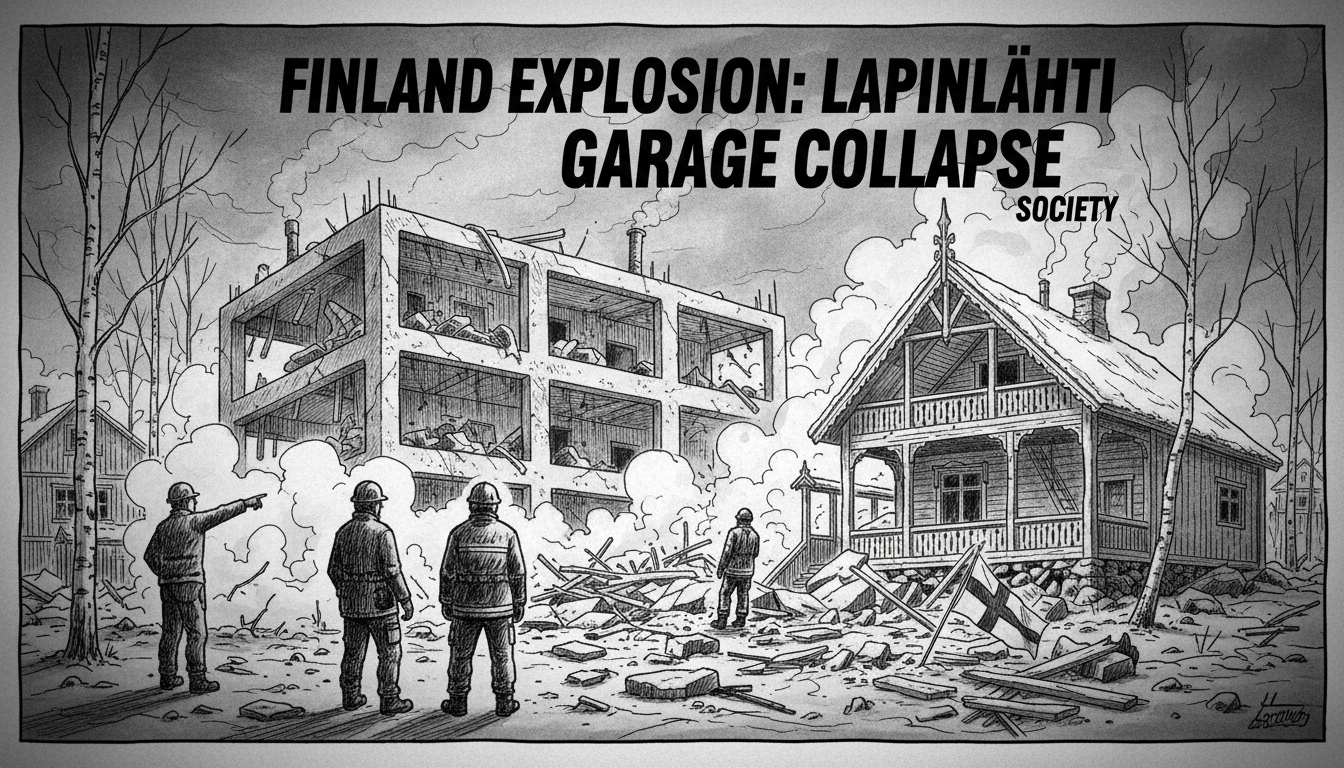
Finland's North Savo rescue services are investigating a powerful explosion that caused a detached house garage to collapse in the municipality of Lapinlahti on Saturday afternoon. The blast at a property on Ahvenkuja street occurred at 1:28 PM, triggering an emergency response from multiple fire and rescue units. Remarkably, authorities confirm the incident resulted in zero injuries, a fact attributed to the homeowner's absence and a neighbor's swift action with a fire extinguisher.
Pohjois-Savon pelastuslaitos, the regional rescue department, maintains a presence at the site over an hour after the initial alert. The force of the explosion caused the standalone garage structure to fail completely. A subsequent small fire was extinguished before the arrival of professional firefighters, limiting further damage to the surrounding property.
Investigation Focuses on Unexplained Cause
The precise cause of the blast remains unknown, a point underscored by on-duty fire chief Ville Tuovinen in official communications. Finnish rescue services follow strict protocols for such incidents, with initial work securing the scene to allow for a systematic investigation. Officials will methodically rule out potential sources, starting with the most common.
This process typically involves examining the premises for signs of a liquefied petroleum gas (LPG) leak from heating systems or grilling equipment, a known risk in detached housing. Investigators will also look for evidence of flammable chemicals, batteries, or other volatile materials sometimes stored in residential garages. Structural failure alone rarely causes such a violent event, making the search for an ignition source paramount.
Rapid Neighbor Response Prevented Escalation
Early reports highlight the critical role played by a nearby resident who used a portable fire extinguisher to douse the initial flames. This immediate intervention is a key reason the incident did not escalate into a major structure fire threatening the adjacent home or neighboring properties. Finnish building codes often recommend, and in some cases require, fire extinguishers in residential settings, a measure that proved its value in Lapinlahti.
The homeowner was not present during the explosion, which authorities state was a significant factor in preventing casualties. The complete collapse of the garage structure suggests anyone inside would have faced severe or fatal injuries. The incident serves as a stark reminder of the latent dangers present in common domestic outbuildings.
Rural Finnish Municipalities and Emergency Preparedness
Lapinlahti, with a population of approximately 9,500, is situated in the picturesque Finnish Lakeland region of North Savo. Its rural character means emergency response times can be longer compared to urban centers, placing greater emphasis on community-level preparedness. Incidents like Saturday's explosion test the capacity of local volunteer fire brigades and the regional rescue service's ability to coordinate across large geographical areas.
Finland's comprehensive emergency response network, which integrates municipal and regional resources, is designed for such challenges. The dispatch of several units to Lapinlahti reflects a standard protocol for explosions, where the potential for hidden threats like unstable structures or secondary explosions necessitates a substantial initial response.
Expert Analysis on Residential Explosion Risks
While statistically rare in Finland, residential explosions generate intense scrutiny due to their destructive potential. Safety experts consistently emphasize proper storage and handling of fuels, gases, and chemicals. Regular maintenance of gas lines and appliances is equally critical, especially in garages and sheds that may not receive frequent inspection.
"An unexplained explosion demands a thorough forensic investigation," explains a Helsinki-based fire safety engineer familiar with such cases. "The goal is never just to understand what happened in one garage, but to identify a risk that could be present in thousands of others. Was it a faulty valve, a forgotten container, or something less common? That determination informs public safety advisories."
The intact main residence next to the destroyed garage will likely undergo safety inspections by authorities. Engineers may check for shock damage to foundations, wiring, and plumbing before the occupant can safely return, a standard procedure ensuring long-term safety after a major blast event.
Context of Safety in Finnish Residential Areas
Finland enjoys a strong reputation for residential safety and strict building codes. Such sudden, violent incidents in peaceful residential neighborhoods are uncommon, which amplifies their local impact and news value. The community in Lapinlahti will likely experience a heightened awareness of potential hazards in the wake of this event.
Local authorities may use this incident as a catalyst for public information campaigns on garage and shed safety. Common recommendations include ensuring adequate ventilation, avoiding the storage of gasoline near ignition sources, and having gas installations serviced by certified professionals. The effectiveness of the neighbor's fire extinguisher will also be a powerful anecdote for safety advocates.
The investigation's findings, once concluded, will be documented by the rescue department. While not all details may be made public, any discovery of a widespread product fault or systemic risk would trigger a national safety alert through the Finnish Safety and Chemicals Agency (Tukes).
Looking Ahead: Recovery and Lessons
The coming days will involve insurance assessments and cleanup operations for the Lapinlahti property owner. The psychological shock of such an event, even without physical injury, should not be underestimated for the homeowner and neighbors. The visible wreckage of the garage serves as a powerful local reminder of how quickly normalcy can be disrupted.
For Finland's rescue services, the incident adds another data point to their operational records. Each response provides lessons in logistics, communication, and investigation techniques in a rural setting. The successful prevention of injuries, thanks to circumstance and quick-thinking neighbors, will be noted as a positive outcome amid the destruction.
Will this isolated event in North Savo lead to broader public discussion about storage habits in Finnish homes? The answer depends on the investigation's conclusion. If a specific, preventable cause is found, it could ripple into safety recommendations across the country, transforming a local garage collapse into a national lesson in preventative safety.