
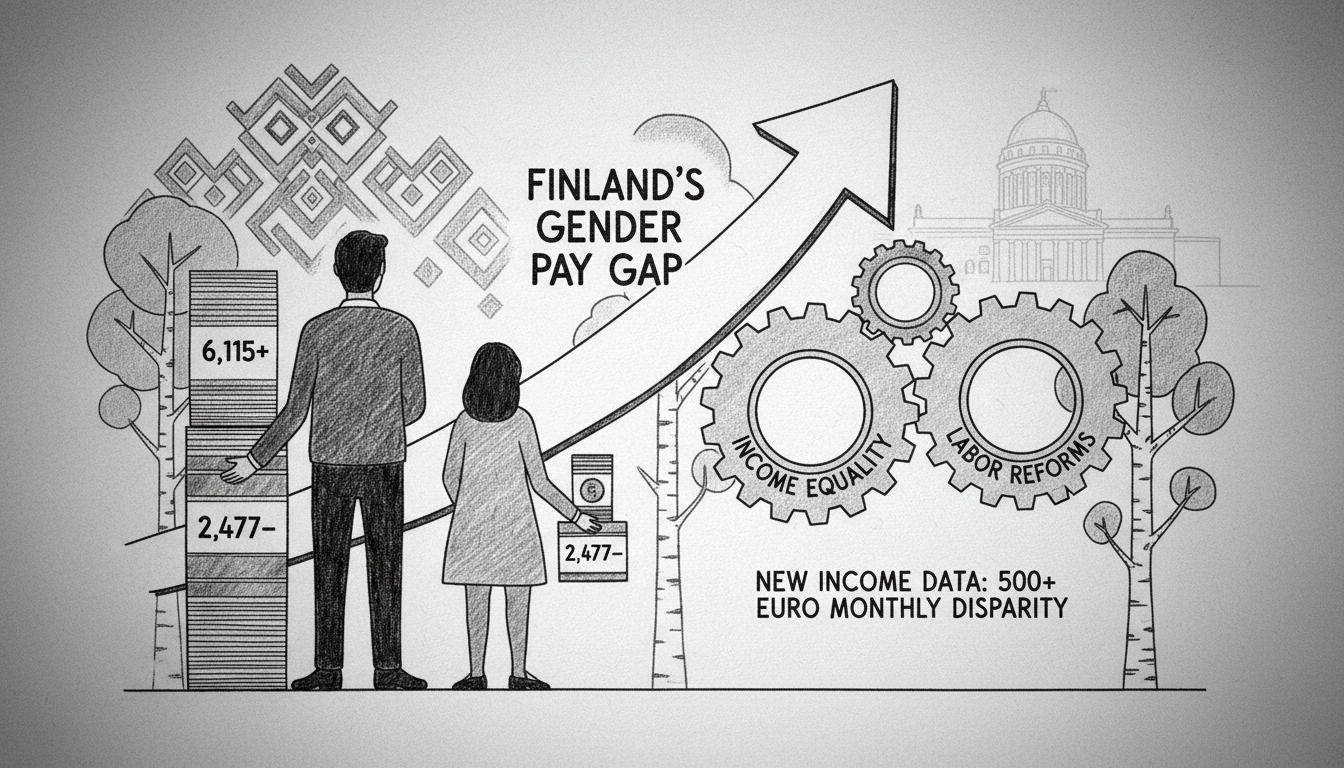
Finland's Statistics Centre has released comprehensive wage structure data showing a persistent gender pay gap among full-time employees. Men's median total earnings reached 3,884 euros monthly while women earned 3,373 euros, creating a difference exceeding 500 euros. The overall median income for all full-time workers stood at 3,611 euros monthly, with average earnings across all workers reaching 4,070 euros. Men's average total earnings measured 4,370 euros compared to women's 3,747 euros, demonstrating continued income inequality despite Finland's reputation for gender equality.
Education level emerged as the dominant factor determining earnings potential. Workers with research-oriented academic qualifications achieved substantially higher incomes than those with lower educational attainment. The smallest median earnings belonged to workers without post-basic education degrees or those with missing qualification data. This educational divide highlights structural challenges within Finland's labor market that extend beyond gender considerations.
Finland's top income decile earned at least 6,115 euros monthly during the reporting period. The lowest-paid decile received under 2,477 euros monthly, revealing significant economic stratification within Finnish society. These statistics capture approximately 1.7 million full-time employees' earnings data plus an additional 700,000 part-time workers, providing the most comprehensive wage picture available. The expanded data collection methodology means these figures cannot be directly compared with previous statistical releases.
Median income represents the middle wage point when all salaries are arranged from smallest to largest. Half of workers earn more than this amount while half earn less. Total earnings include regular working hours compensation plus overtime and supplementary pay components. The figures exclude one-time payments like performance bonuses or holiday allowances. All amounts represent gross earnings before tax deductions or other withholdings.
This wage data arrives amid ongoing parliamentary discussions about income equality policies. Several government ministers have emphasized addressing structural wage disparities through education reform and labor market interventions. The persistent gender gap particularly challenges Finland's self-image as a Nordic equality leader. Previous government initiatives have attempted to narrow these differences through transparency measures and corporate reporting requirements.
International readers should understand that Finland's wage structure reflects complex historical labor market developments. The country's tripartite negotiation system between government, employers and unions has shaped earning patterns for decades. While Finland generally outperforms many European nations on gender equality metrics, these latest figures demonstrate that substantial work remains. The data provides crucial context for understanding Finnish economic policy debates and social development priorities.