
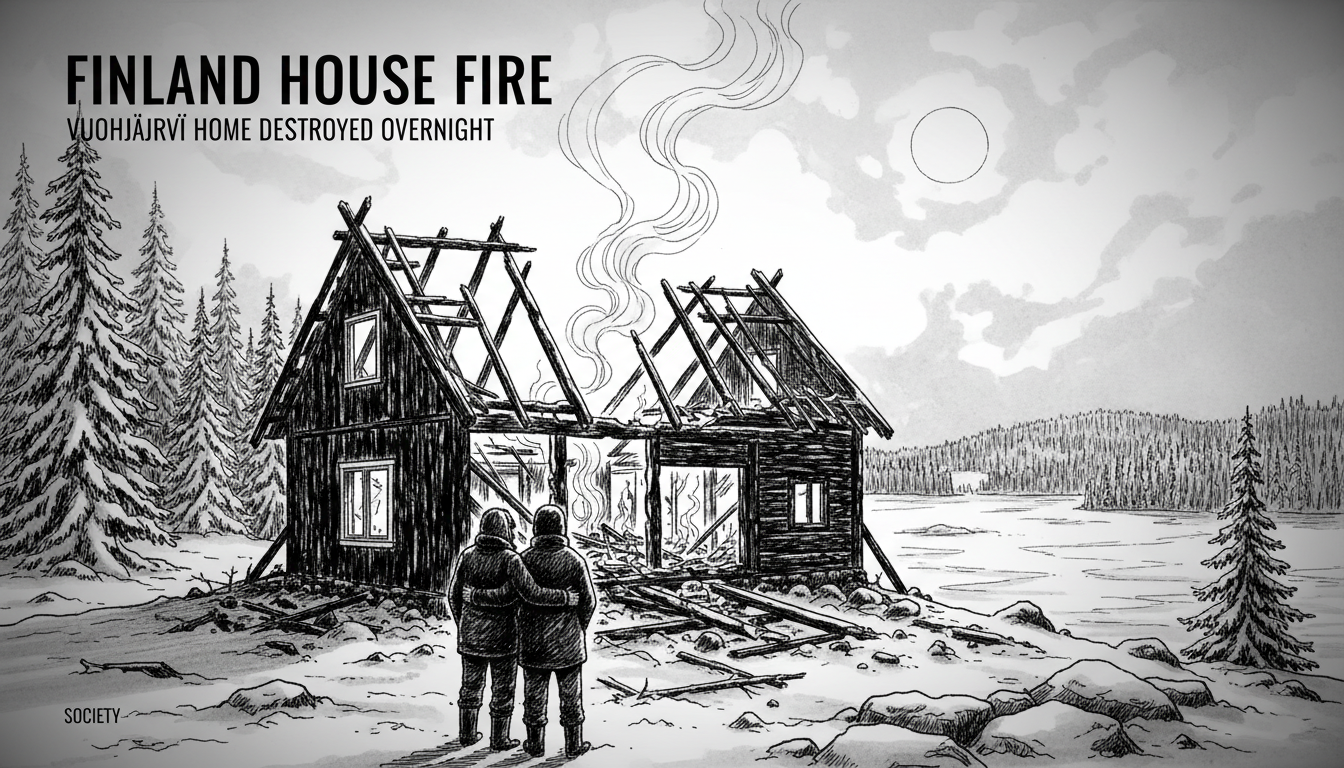
Finland house fire destroyed a two-story detached home in Vuohijärvi during the early hours of Thursday morning. The sole resident escaped without serious injury, but the property was a total loss after flames engulfed the structure. Rescue services received the alarm around 2 AM, arriving to find the ground floor fully ablaze. This incident highlights the ever-present risk of residential fires, even in a nation with stringent safety codes and rapid emergency response.
A Nighttime Emergency in Vuohijärvi
The fire broke out in the quiet community between Wednesday night and Thursday morning. When rescue units arrived at the scene, the ground floor of the wooden house was already in what firefighters term the 'full fire phase.' This indicates the blaze had progressed beyond its initial growth stage, generating intense heat and consuming available fuel. Crews from the local rescue department immediately began aggressive firefighting operations to contain the destruction and prevent it from spreading.
The resident managed to evacuate the building independently before emergency services arrived. Paramedics from the emergency medical services assessed the individual at the scene. While shaken, the person did not require immediate hospital transport, a fortunate outcome in a situation where every second counts. The psychological impact of losing one's home and possessions, however, is profound and often long-lasting.
The Long Haul of Fire Suppression and Investigation
Firefighting and subsequent overhaul work continued into Thursday morning. Overhaul involves searching for and extinguishing hidden fires within walls, ceilings, and debris to prevent rekindling. The complete destruction of the property suggests the fire burned fiercely and for an extended period, complicating these final stages. The cause of the ignition remains unknown and is now the subject of a joint investigation by the police and the rescue department's fire investigators.
This investigative process is methodical. Experts will sift through the charred remains, looking for clues like electrical arc marks, the patterns of burn damage, and potential heat sources. They will also interview the resident to understand the events leading up to the fire. Determining a cause can take days or weeks, but it provides critical data for fire prevention efforts nationwide. A ruling of accidental electrical fault, for instance, carries different public safety implications than a malfunctioning heating appliance.
Finland's Relationship with Fire Safety
While Finland's vast forests define its landscape and its managed burning is a traditional practice, house fires represent an unwelcome and dangerous threat. The country experiences residential fires year-round, with common causes including electrical system faults, issues with fireplaces or sauna stoves, and unattended cooking. Finnish building codes are among the world's strictest, mandating fire-resistant materials, compartmentalization to slow spread, and multiple escape routes in larger buildings.
Detached homes, especially older ones, remain vulnerable. National and local rescue services are highly trained and well-equipped, with a focus on rapid intervention. The response in Vuohijärvi, reaching a rural location in the middle of the night, underscores this capability. Yet, the ultimate first line of defense resides within the home itself: working smoke detectors. Fire safety experts consistently stress that early warning is the single most effective factor in saving lives, providing those crucial extra minutes to escape.
The Human Cost Beyond the Ashes
The physical structure can be assessed in square meters lost and estimated euro value. The human impact is less quantifiable but far more significant. Losing a home means losing a place of security, personal history, and irreplaceable belongings. Community support systems in Finnish municipalities often activate in such cases, with local social services assisting with immediate needs like temporary housing, clothing, and crisis counseling.
The resident of the Vuohijärvi house now faces the daunting task of rebuilding life from scratch. Insurance processes, dealing with authorities, and finding a new permanent home create a heavy administrative and emotional burden. While material possessions can eventually be replaced, the sense of safety and stability takes much longer to restore. This single event will ripple through the individual's life and the small community for months to come.
A Preventable Tragedy? Lessons from the Ruins
Every serious fire serves as a stark, unwelcome reminder. Prevention campaigns by Finland's Rescue Services (Pelastuslaitos) and organizations like the Finnish National Rescue Association (SPEK) tirelessly promote simple, life-saving habits. These include regularly testing smoke alarms, having a practiced escape plan, keeping flammable materials away from heat sources, and ensuring electrical systems are in good order, particularly in older properties.
The investigation in Vuohijärvi will seek to answer whether any of these factors played a role. Could a newer smoke detector have provided an earlier warning? Was there a known issue with wiring or an appliance? The answers are not about assigning blame but about generating knowledge that could prevent the next fire. Data from thousands of such incidents across Finland helps shape better safety standards, public information campaigns, and even the design of everyday household products.
As the cleanup in Vuohijärvi continues, the story shifts from emergency response to recovery and reflection. The charred footprint of the house will remain a visible scar in the neighborhood, a silent testament to the destructive power of fire and the fragility of our domestic safety. It reinforces a universal truth: vigilance is the constant price of security, and preparedness is the only effective response when the unthinkable happens in the dead of night.