
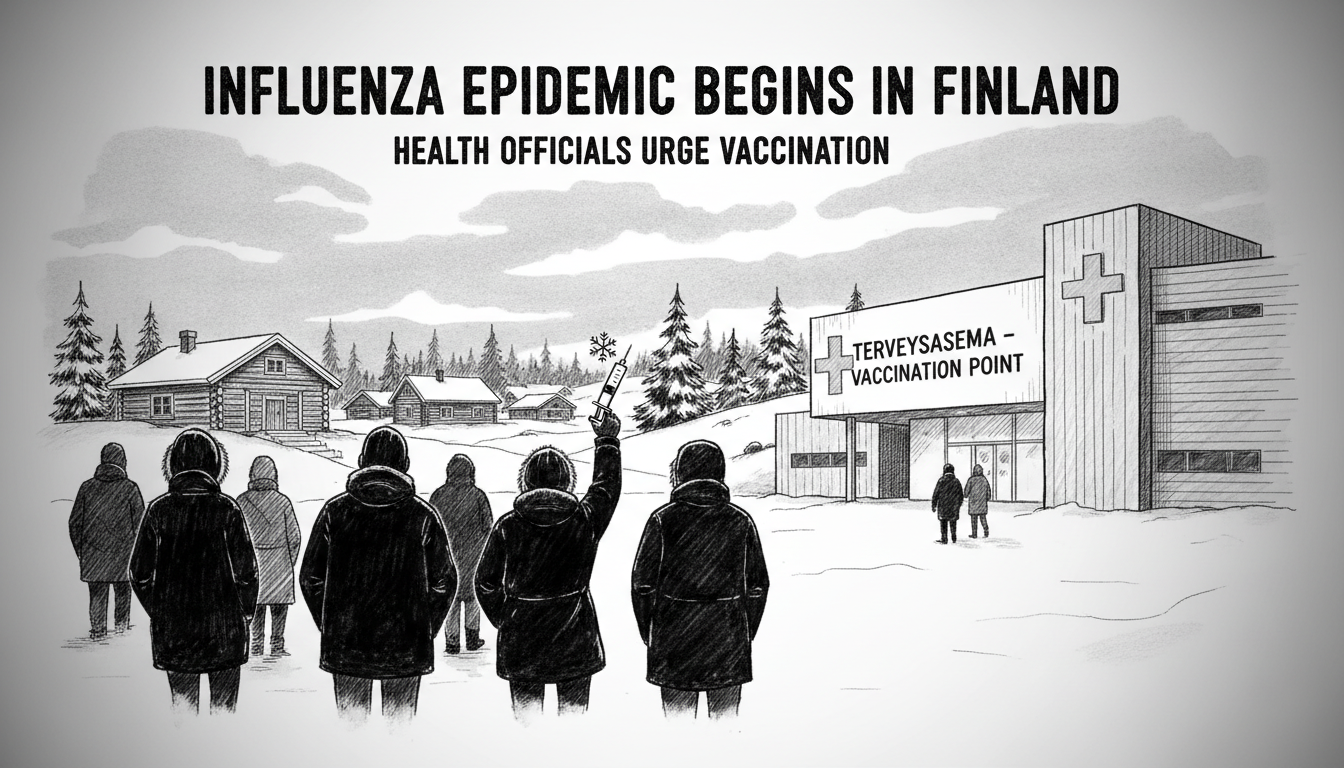
Finland has officially entered influenza epidemic territory this week with health authorities confirming the threshold for widespread transmission has been crossed. The National Institute for Health and Welfare reported Wednesday that both healthcare visits and laboratory-confirmed cases have reached epidemic levels across the country.
Chief Specialist Niina Ikonen stated that primary healthcare facilities observed increasing influenza-like illness consultations in recent weeks. Laboratory surveillance data shows confirmed influenza cases rising steadily across Finnish healthcare districts. Most influenza cases never receive laboratory confirmation since the majority of infected individuals recover at home without formal testing.
This seasonal development follows predictable patterns but arrives amid ongoing coronavirus monitoring. Current COVID-19 infection rates remain below last autumn's levels according to national surveillance data. The parallel tracking of respiratory illnesses demonstrates Finland's robust public health infrastructure.
Finnish health authorities maintain comprehensive vaccination programs targeting vulnerable populations each autumn. The national vaccination campaign began months ago with specific outreach to elderly citizens and individuals with chronic health conditions. Public health centers across Helsinki and other urban centers continue offering influenza immunizations.
Seasonal influenza typically peaks during the coldest winter months in Nordic countries. Finland's northern latitude and harsh climate create ideal conditions for respiratory virus transmission during extended indoor periods. The current epidemic declaration comes slightly earlier than some previous years but falls within expected seasonal parameters.
Healthcare providers anticipate increased pressure on primary care services throughout the epidemic period. Municipal health centers have implemented standard surge protocols including extended hours and dedicated influenza consultation lines. Hospital emergency departments prepare for potential increases in severe complications among high-risk patients.
The Finnish approach to epidemic management emphasizes prevention through vaccination and public awareness. Unlike many European counterparts, Finland maintains high public trust in health authorities and generally strong vaccination uptake. This social contract between citizens and health systems contributes to better outcomes during seasonal health challenges.
International residents and visitors should note that Finland's healthcare system remains well-prepared for seasonal epidemics. English-language health information is available through the National Institute for Health and Welfare website and major urban healthcare centers. Travelers experiencing symptoms can access care through municipal health services or private providers.
This epidemic declaration serves as routine seasonal monitoring rather than emergency response. Finland's transparent public health communication reflects the Nordic commitment to evidence-based policy and preventive healthcare. The system's resilience will be tested throughout the winter months as influenza circulates alongside other seasonal respiratory pathogens.