
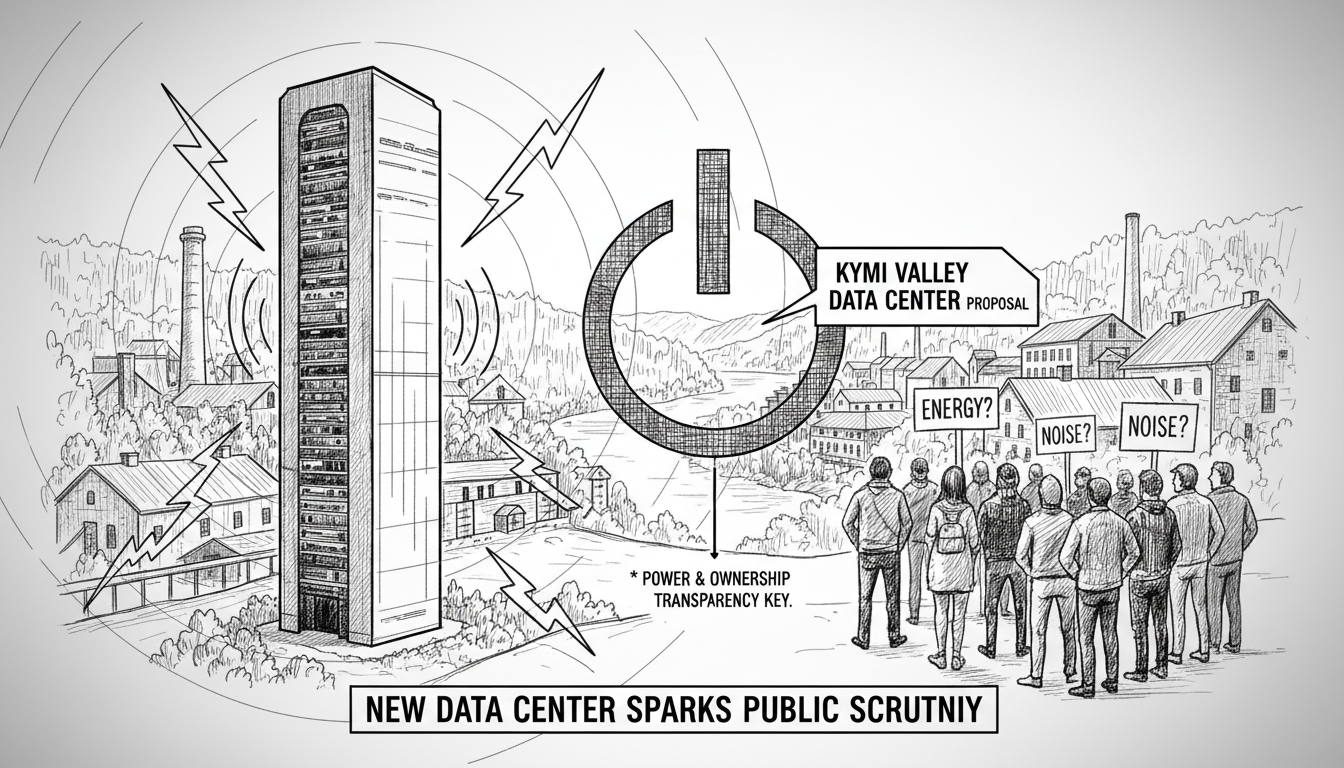
A proposed data center development at the historic Kymi Ruukki industrial site in Kuusankoski, Finland, has drawn significant public attention and scrutiny. Dozens of local residents attended an information session at the Pato Arena on Monday to question project officials about the facility's environmental impact and ownership structure. Operational Director Bernard Mah sought to reassure the community, stating the new data center would integrate with the surrounding environment. The project's scale, however, raises immediate questions about its electricity consumption and noise emissions in the Kymi River valley region.
The interest in this project reflects a broader national and European trend. Finland has actively positioned itself as a prime location for data centers, capitalizing on its cool climate, stable political system, and growing renewable energy capacity. Major international tech firms have already established significant server farm operations in other parts of the country. The Finnish government's national strategy views digital infrastructure as critical for economic competitiveness and sovereignty. This push is further amplified by EU directives aimed at strengthening the bloc's digital autonomy and green data handling standards.
Locating a data center at Kymi Ruukki, a site with deep industrial heritage in paper and steel production, represents a symbolic shift from traditional industry to the digital economy. The project must navigate Finland's stringent environmental permitting processes and local zoning laws. Community concerns are not merely procedural. They touch on core issues of sustainable development, land use, and the tangible impacts of the digital world on local communities. Residents are right to ask for detailed plans on power sourcing, water usage for cooling, and long-term traffic management.
From a policy perspective, the project sits at the intersection of municipal planning authority and national energy policy. The Finnish Ministry of Economic Affairs and Employment promotes data center investments, but local municipalities hold decisive power over construction permits. The project developers will need to demonstrate how the facility aligns with Finland's ambitious carbon neutrality targets. This likely means committing to power purchase agreements for renewable energy, such as wind or solar, rather than increasing strain on the national grid.
The public session indicates that transparency will be crucial for the project's social license to operate. While data centers bring investment and potential high-tech jobs, they are often criticized as offering limited local employment after construction. The community's focus on the owners' backgrounds suggests a desire to understand the long-term commitment of the investors. This is a practical concern in a small town, where a major facility's future ownership changes could have substantial consequences. The next steps will involve formal environmental impact assessments and detailed submissions to the Kouvola city planning board. The level of detail and community engagement in those documents will determine whether this digital vision for Kymi Ruukki becomes a reality or faces sustained opposition.