
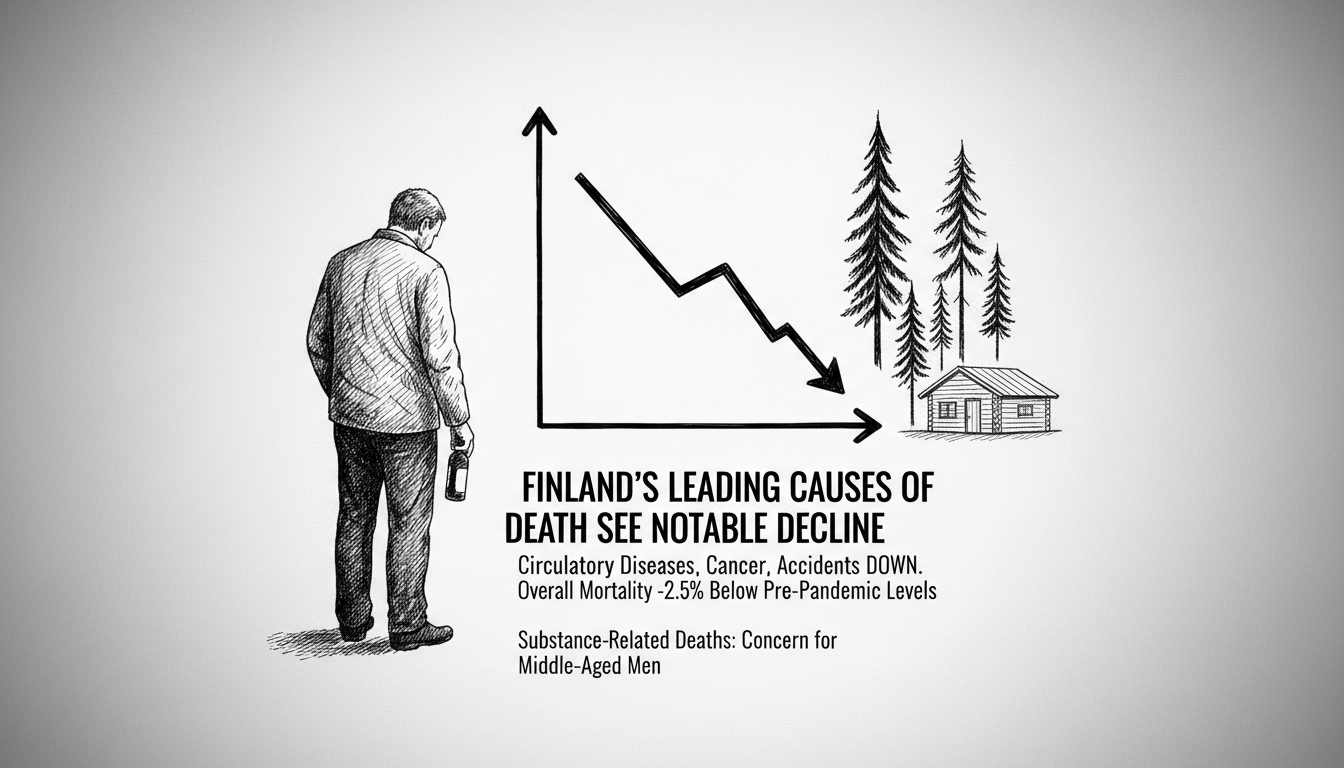
Finland recorded fewer deaths across all major cause-of-death categories last year. The country's most common cause of death remained circulatory diseases, claiming 18,400 lives. This represents nearly 1,000 fewer deaths than the previous year.
Circulatory diseases were the underlying cause in almost every third death nationwide. Statistics Finland reported the age-standardized mortality rate for these conditions dropped over 7% from the previous year.
Mortality from heart and vascular diseases now sits nearly 10% below pre-pandemic levels, according to chief actuary Airi Pajunen. The long-term declining trend in circulatory disease mortality continued through last year, officials confirmed.
Cancer mortality also decreased, with tumors causing approximately 13,700 deaths. This made cancer the second most common cause-of-death category. The age-standardized cancer mortality rate fell over 3% for both men and women.
Cancer remained the most common cause of death among working-age Finns. People dying from cancer tend to be younger than those succumbing to circulatory diseases, Pajunen noted.
Lung cancer and pancreatic cancer caused the most cancer deaths. Among men, lung cancer and prostate cancer were most fatal, while women most commonly died from breast cancer and lung cancer.
Dementia and Alzheimer's disease ranked as the third leading cause of death, responsible for every fifth death. Mortality from memory disorders decreased nearly 5% from the previous year.
However, the age-standardized mortality rate for memory disorders remained about 3.5% higher than before the COVID-19 pandemic in 2019.
Accidental deaths also showed positive development. The population-adjusted accidental mortality rate fell almost 6% from the previous year. Falls and poisonings remained the most common accidental death causes.
Deaths from poisonings decreased significantly, particularly accidental drug overdoses. These dropped by 51 cases compared to the previous year, said actuary Kati Taskinen.
Despite this improvement, clearly over half of all drug-related deaths resulted from accidental poisonings. Total drug-related deaths reached 247 last year.
Drug deaths among young people decreased notably. Fewer than 25-year-olds dying from drugs numbered just 40, less than half the previous year's figure.
The median age of drug-related deaths rose from 35 to 38 years. The 40-44 age group recorded the most drug fatalities.
Men accounted for 80% of drug deaths and 74% of alcohol-related deaths, reflecting similar gender patterns for both substance types.
Alcohol caused approximately 1,600 deaths, over 130 fewer than the previous year. The age-standardized alcohol mortality rate decreased about 7% for both genders compared to the previous year.
Since 2019, alcohol-related disease and poisoning mortality has dropped over 11% for men but less than 4% for women.
COVID-19 caused fewer than 700 deaths, less than one-third of the previous year's total. The median age of COVID-19 deaths remained 85 years.
Finland's overall mortality rate, adjusted for population size and age structure, decreased 7.1% from the previous year. The rate now sits about 2.5% lower than before the pandemic in 2019.
Working-age mortality declined for both men and women. The age-standardized mortality rate for working-age people has dropped over one-third during the past two decades.
While mortality has followed a downward trend throughout the 21st century, the decline has been particularly strong among working-age men. Women's mortality rates have also decreased.
The consistent decline across multiple death categories suggests Finland's public health measures are having effect, though substance-related deaths remain concerning given their preventable nature.