
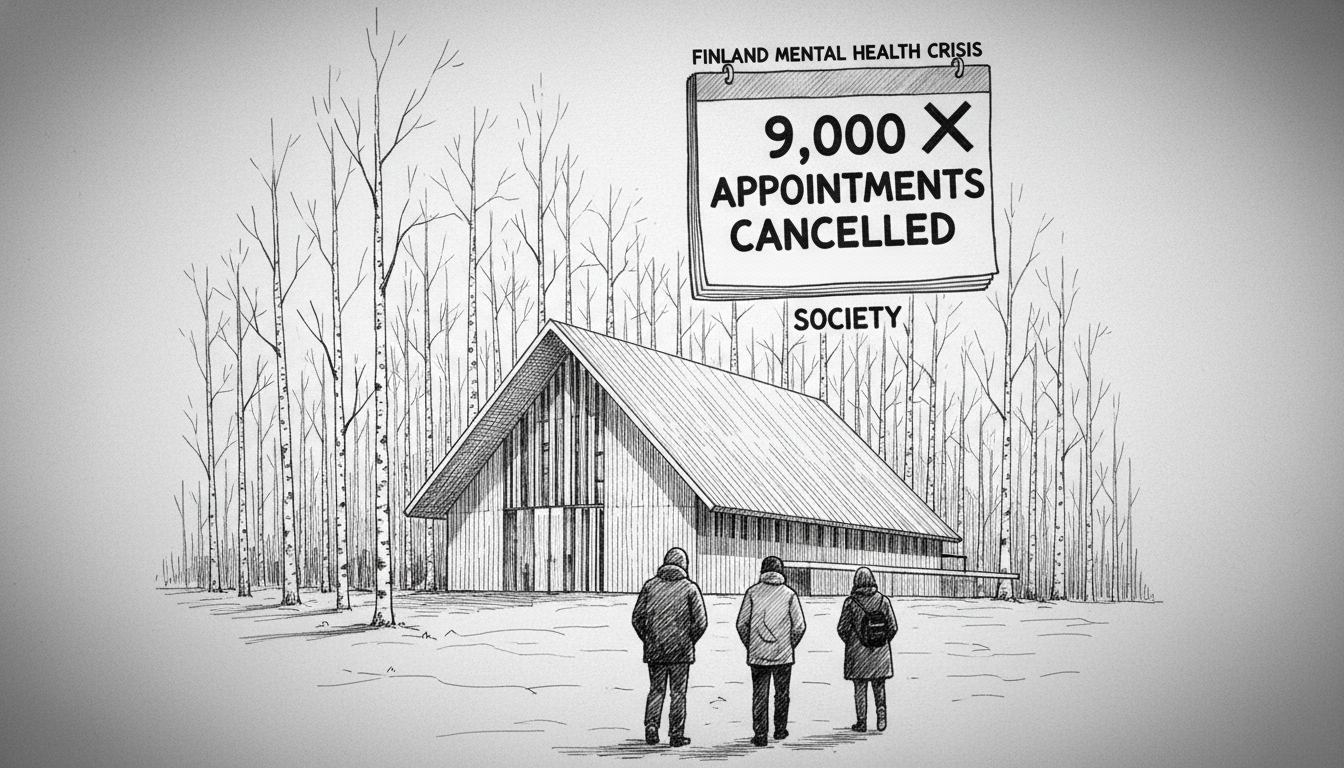
Finland's mental health services are facing a critical paradox. In the Pirkanmaa region, home to the city of Tampere, an estimated 9,000 psychiatry appointments will go unused this year. This staggering number represents a massive waste of clinical resources while thousands of patients remain on waiting lists, unable to access timely care. The situation has alarmed even seasoned professionals, with Pirkanmaa well-being services county's psychiatric division head, Chief Physician Hanna-Mari Alanen, stating she was startled by the scale of the problem.
This systemic failure occurs within a Nordic welfare model globally admired for its universal healthcare. The unused appointments, spanning consultations with psychologists, psychiatric nurses, and specialist doctors at Tampere University Hospital (TAYS), highlight a deep fracture between service provision and patient access. Each cancelled slot is a double loss: a waste of taxpayer-funded specialist time and a missed opportunity for someone in need.
A Startling Admission from the Front Line
Chief Physician Hanna-Mari Alanen's reaction underscores the severity of the issue. For a senior figure within Finland's reformed 'hyvinvointialue' (well-being services county) system to express surprise suggests the data reveals a problem larger than routine administrative inefficiency. The 9,000 figure pertains specifically to specialized psychiatric care within the Pirha region, indicating a bottleneck at the secondary care level after initial primary care contact.
"Many clients are missing their appointments with a psychologist or psychiatric nurse," Alanen noted, pointing to a breakdown that occurs after a referral is made. This isn't about a lack of available slots being created; it's about created slots not being filled by the intended patients. The result is a perverse scenario where resources are technically allocated but functionally idle, while demand, evidenced by waiting lists, continues to grow.
The Ripple Effect of Empty Chairs
The impact of nearly 9,000 no-shows extends far beyond an empty consultation room. Economically, it represents a significant misallocation of public funds. Each unused appointment consumes administrative costs, blocks a highly trained specialist's time, and occupies physical infrastructure that could be repurposed. More critically, it exacerbates wait times for other patients. When a slot is booked and then goes unused, it cannot be instantly reassigned to the next person on the list, creating dead time in the system and lengthening the queue.
From a clinical perspective, missed appointments disrupt continuity of care, which is crucial in psychiatry. Treatment for conditions like depression, anxiety, or more severe disorders often relies on consistent, scheduled therapy and medication management. Gaps in this continuity can lead to regression, crisis, and increased strain on emergency services. The problem thus shifts costs and complications from planned, preventive care to reactive, acute interventions, which are less effective and more expensive for the system.
Unpacking the Causes: Why Do Patients Disengage?
Experts point to a complex web of factors causing this disengagement. Patient ambivalence is a significant challenge; the very nature of mental illness can sap motivation and energy, making it difficult for individuals to attend appointments. Stigma, though reduced in Finland compared to many nations, still persists, causing some to avoid services. Practical barriers are equally formidable: lack of transportation, inflexible work schedules, and childcare issues can make attending a scheduled time impossible.
There are also systemic failures. Communication breakdowns can occur, with patients not receiving clear reminders or instructions. The referral pathway itself can be daunting and slow, causing individuals to lose hope or find alternative, often inadequate, coping mechanisms by the time an appointment is offered. Some may have experienced a crisis when referred, but by the time the appointment arrives weeks or months later, their immediate urgency has faded, even if underlying needs remain.
A Test for Finland's Healthcare Reforms
This crisis presents a direct challenge to Finland's recent healthcare and social services reform, which created 21 well-being services counties to manage these duties. The Pirkanmaa case is a critical test of the new model's ability to ensure efficiency and equity. The reform aimed to integrate services and bring decision-making closer to citizens, but the 9,000 unused appointments suggest a gap between structural change and operational reality.
The Finnish Parliament, the Eduskunta, which legislated the reform, will be watching closely. Persistent inefficiencies in core services like mental health could trigger political pressure for adjustments to the well-being counties' funding or operational mandates. The situation in Pirkanmaa may not be isolated, raising questions about resource planning and patient pathway management across the country.
Potential Pathways to a Solution
Addressing this requires multi-faceted strategies. Proactive patient engagement is essential. This goes beyond simple SMS reminders to include pre-appointment check-in calls from care coordinators to address potential barriers, confirm understanding, and reinforce the appointment's importance. Flexible scheduling, including more evening and weekend slots, and a significant expansion of secure telehealth options could dramatically reduce practical obstacles.
Systemically, there needs to be a review of the referral and booking process to minimize delays and confusion. Implementing dynamic waiting lists, where patients who cancel can be quickly replaced, could improve efficiency. Furthermore, integrating peer support workers or low-threshold community mental health points could help maintain patient engagement during waits for specialist care, ensuring they are supported and more likely to attend when their time comes.
The Bigger Picture in Nordic Welfare
Finland's struggle mirrors challenges across the Nordic region, where high taxes fund comprehensive welfare states now straining under demographic pressures and rising demand. The mental health gap—between policy promises of universal access and the reality of missed appointments and long waits—is a vulnerability. It tests the social contract and public trust in the system. For a nation consistently ranked high for happiness and quality of life, effectively treating mental illness is not just a healthcare issue but a foundational societal one.
The 9,000 unused appointments in Pirkanmaa are more than a statistic; they are a symptom of a system struggling to connect with those it is designed to serve. Solving it requires viewing patients not as passive recipients of care but as active participants whose practical and psychological barriers must be systematically identified and removed. The success of Finland's renowned welfare model may depend on its ability to solve this very modern paradox of plenty and scarcity in mental health care.