
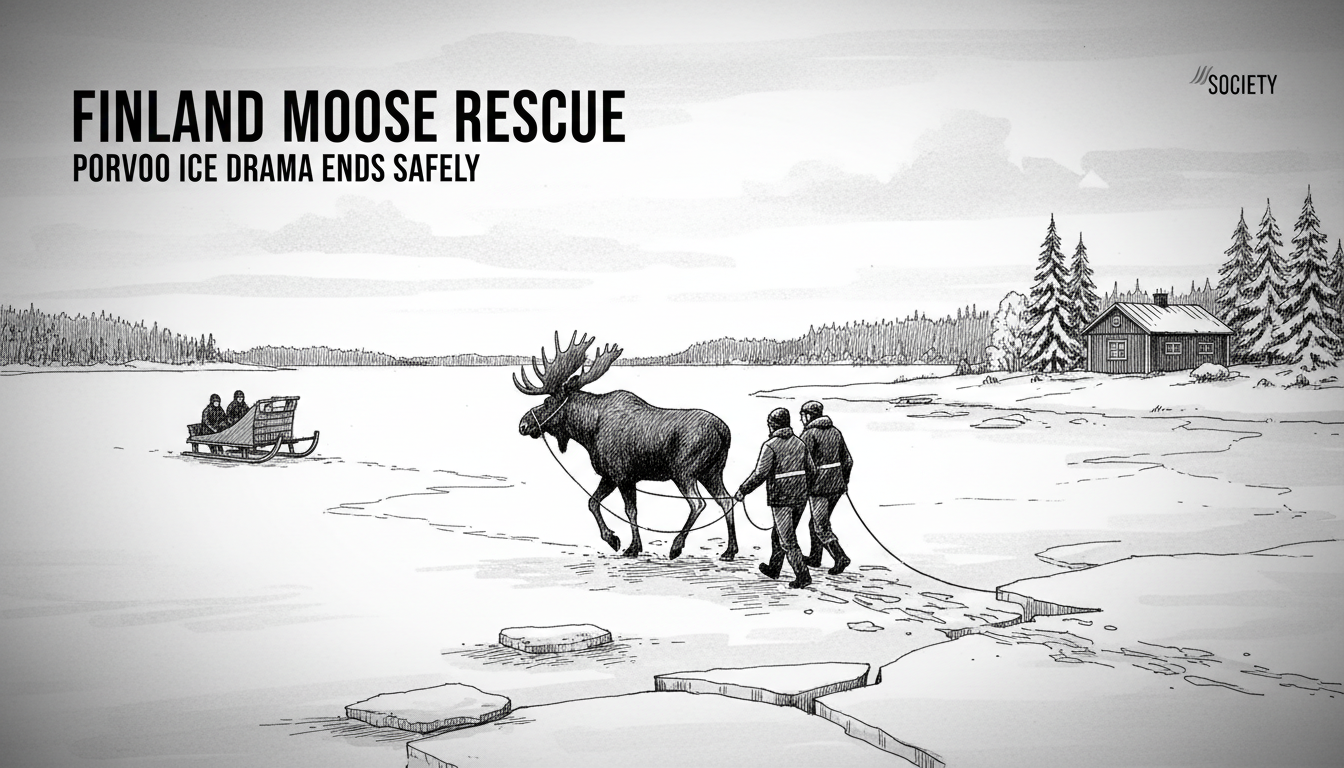
Finland's Eastern Uusimaa Rescue Department received an urgent call at 2:38 PM on Saturday. The report came from the rural coastal area of Porvoo, where a large animal was in distress on the ice near Kardragin rantatie. A female moose, known locally as a 'hirvilehmä,' had broken through the thin ice and was trapped in the freezing water, unable to free herself. Eyewitnesses reported her calf watching the unfolding drama from a safer distance on the shore.
This triggered a rapid response from the Pellinge Volunteer Fire Brigade, a local unit familiar with the archipelago's unique challenges. The scene presented a complex rescue operation, balancing human safety with animal welfare on unstable early spring ice. The operation highlights a recurring seasonal challenge in Finnish communities where wildlife and human infrastructure intersect.
A Delicate Operation on Unstable Ice
Volunteer firefighters from Pellinge, equipped with ice rescue suits and flotation gear, carefully approached the stranded animal. The primary risk was the ice itself, which can be dangerously thin during seasonal transitions, especially near shorelines and in coastal archipelagos. A moose, an adult female of which can weigh between 400 and 800 kilograms, represents a significant and unpredictable rescue subject.
"The animal was clearly exhausted and in a state of panic, which always adds a layer of difficulty," a rescue official familiar with such operations noted. The team's objective was to secure the moose and create a path for her to climb out onto solid ice without causing further breakage or endangering the rescuers. Such operations require specific training, as stressed animals can be dangerous.
The Role of Finland's Volunteer Fire Brigades
The successful outcome in Porvoo underscores the critical role played by Finland's network of volunteer fire brigades, or vapaapalokunnat. These community-based units, often serving remote and rural areas, are frequently the first responders to a wide range of emergencies, from house fires to traffic accidents and, notably, animal rescues. Their local knowledge of terrain, roads, and seasonal conditions is invaluable.
In coastal towns and lake-rich regions, ice rescue training is a standard part of their curriculum. While designed primarily for saving humans, the principles and much of the equipment—ropes, sleds, buoyancy aids, and protective suits—are adaptable for animal emergencies. The Pellinge brigade's involvement is a classic example of this community-first response system in action, where local volunteers provide essential public safety services.
A Seasonal Hazard for Finnish Wildlife
This incident is not an isolated one. Each year, particularly during the autumn freeze-up and the spring thaw, numerous animals in Finland encounter peril on ice. Moose, deer, and even domestic animals can misjudge ice thickness or be forced onto frozen waterways while fleeing or foraging. The Eastern Uusimaa Rescue Department and similar agencies across the country handle dozens of such calls annually.
Animal welfare experts point to the narrow window for a successful rescue. Hypothermia and sheer exhaustion from struggling in cold water can kill a large animal relatively quickly. A prompt public report, like the one made in Porvoo, is often the most critical factor for survival. The presence of the calf in this case added an emotional and biological urgency to the mission, as orphaned young have low survival rates without their mothers.
Aftermath and Release
Following a tense period on the ice, the rescue team managed to secure the moose and assist her out of the water. Once on stable ground, she was given space to recover from the ordeal. Observers reported that after a period of rest and disorientation, the moose reunited with her waiting calf. The pair then moved away from the shoreline and disappeared into the surrounding forest.
This positive conclusion is a testament to the effective coordination between the public who reported the incident, the regional rescue dispatch center, and the skilled volunteers on the ground. No injuries to the rescuers or the animals were reported. The rescue service typically does not sedate animals in such ice situations unless absolutely necessary, as sedation carries its own risks of hypothermia and drowning.
The Bigger Picture: Coexistence in the Nordic Wilderness
The Porvoo moose rescue is a small but poignant snapshot of life in Finland, where vast forests and urban areas exist in close proximity. It illustrates the everyday reality of human-wildlife interaction in a nation with a large moose population. These encounters range from hazardous traffic collisions to peaceful sightings and, occasionally, demanding rescue missions.
Such operations also spark ongoing conversations about wildlife management and conservation. While moose are hunted in regulated seasons, there is a broad cultural and legal emphasis on treating animals with respect and minimizing suffering, a principle reflected in the mobilization of rescue services. The effort expended to save a single animal is seen by many as a reflection of this societal value.
The story of the Porvoo moose had a happy ending, but it serves as a seasonal reminder of the dangers posed by unstable ice. Authorities consistently warn the public to avoid walking on ice during thaw periods and to immediately report any animal or person in distress. This incident, resolved successfully by trained volunteers, reinforces the strength of Finland's localized rescue response and the enduring challenges of sharing a landscape with majestic, wild neighbors like the moose.