
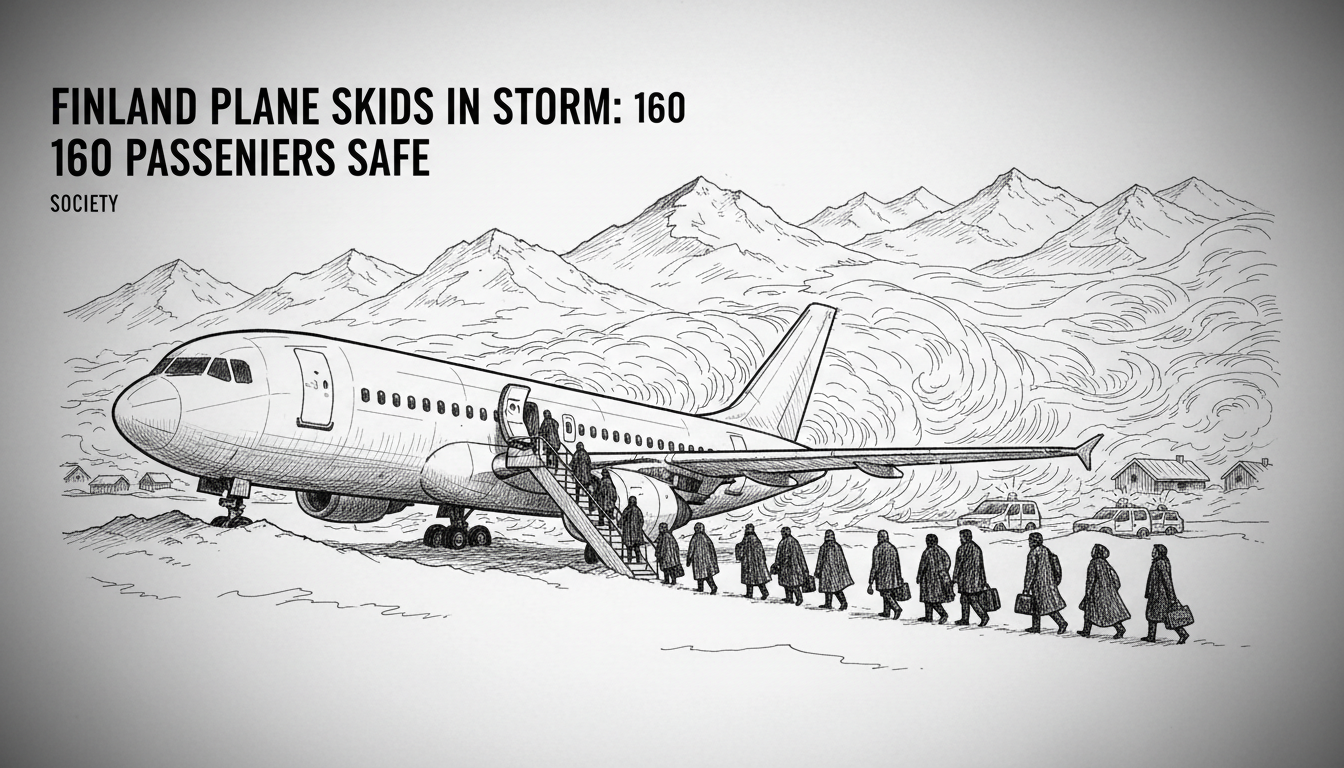
Finland’s Kittilä Airport saw two passenger aircraft blown off a runway by severe storm winds on Saturday, plunging them into a deep snowdrift. The incident, involving approximately 160 people across two planes, triggered a major emergency response but resulted in no reported injuries. The event highlights the intense challenges of Arctic aviation and infrastructure as a powerful storm named Hannes, also known as Johannes, battered the region.
Nine rescue vehicles rushed to the scene after the alarm sounded around 4 p.m. local time. A larger aircraft carrying about 150 people and a smaller plane with fewer than ten passengers were both pushed from the tarmac by the gale-force winds. All passengers and crew were safely evacuated into the bitter cold. “The planes ended up in a snowbank beside the runway,” a rescue official said in a statement, confirming the successful evacuation. The incident forced the immediate suspension of all air traffic to Kittilä and other parts of Lapland, a critical hub for winter tourism.
A Region Paralyzed by Wind and Snow
The aviation incident was just one part of a widespread crisis caused by Storm Hannes. The same winds that pushed the planes severed power lines across western and northern Finland. By Saturday evening, the national grid operator confirmed tens of thousands of households were without electricity. Initial reports indicated over 80,000 homes lost power, with western Finland facing the most severe outages. Rescue services across the north reported a relentless series of calls related to the storm. Fallen trees blocked roads, and roofs were torn from houses, though authorities reported no serious injuries from these secondary incidents.
The disruption strikes at the heart of Lapland's economy. Kittilä Airport serves as a main gateway for tourists seeking ski slopes and Northern Lights viewings. Its closure, for an undetermined period, creates immediate logistical and financial headaches for the local industry. The storm’s timing during a peak travel weekend magnifies the impact, leaving travelers stranded and plans in disarray. Regional authorities must now balance clearing wreckage, restoring power, and assessing when safe flight operations can resume.
Aviation Safety in the Extreme North
Experts note that while such incidents are rare, they underscore the unique perils of operating in high-latitude environments. “Airports in the Arctic Circle are engineered for severe weather, but there are always limits,” said a Finnish aviation safety analyst, speaking on background. “Protocols for high winds are extremely strict. This event will likely lead to a thorough review of those thresholds and parking procedures during active storms.” The fact that no one was hurt points to successful emergency preparedness and robust aircraft design capable of withstanding a ground collision with snow.
Pilots operating in Lapland undergo specialized training for winter conditions, including low visibility, icing, and sudden weather changes. Saturday’s event involved a wind-related ground accident, a different category of risk. The investigation will focus on the precise wind speeds at the time of the incident, the decisions leading up to it, and the effectiveness of the airport's wind monitoring and alert systems. The safe outcome demonstrates the value of rigorous crew resource management and passenger safety drills.
Climate Change and Northern Resilience
Meteorologists are increasingly connecting the intensity of such winter storms to broader climate patterns. While Finland is no stranger to powerful storms, the frequency and strength of these events pose new questions for infrastructure resilience. “A warming atmosphere holds more energy and moisture, which can fuel more intense winter storms,” explained a climatologist at the University of Helsinki. “What we plan for historically may not be sufficient for the future. This applies to power grids, transport networks, and building codes across the Nordic region.”
The extensive power outages reveal a vulnerability in the system. Finland generally has a highly reliable electricity network, but sprawling overhead lines in forested areas are susceptible to falling trees during violent storms. This event may accelerate discussions about grid hardening, including the potential for burying more power lines in critical areas, though the cost in a vast, sparsely populated region is prohibitive. The conversation mirrors those happening in Denmark and Sweden about adapting social and physical infrastructure to a new climate reality.
Moving Forward from the Snowdrift
For now, the focus in Kittilä remains on recovery. Utility crews are working around the clock to restore power to remote communities. Airport technicians must inspect the runway and the affected aircraft, which sustained damage from the impact and snow immersion. Insurance assessments will begin, and passenger rebooking will be a complex task for airlines. The community’s response, however, is well-rehearsed. Mutual aid agreements between municipalities and a strong culture of civic preparedness help Finland manage these northern crises.
The incident serves as a stark reminder of nature's power over even our most advanced technology. In the serene, snow-covered landscape of Lapland, a sudden storm can halt travel, plunge homes into darkness, and push massive aircraft off course. Yet, the successful evacuation of 160 people from the snowdrifts also tells a story of resilience, planning, and calm execution under pressure. As the clean-up continues, the key question is not just about repairing today’s damage, but about how to invest in resilience for the more turbulent winters that may lie ahead.