
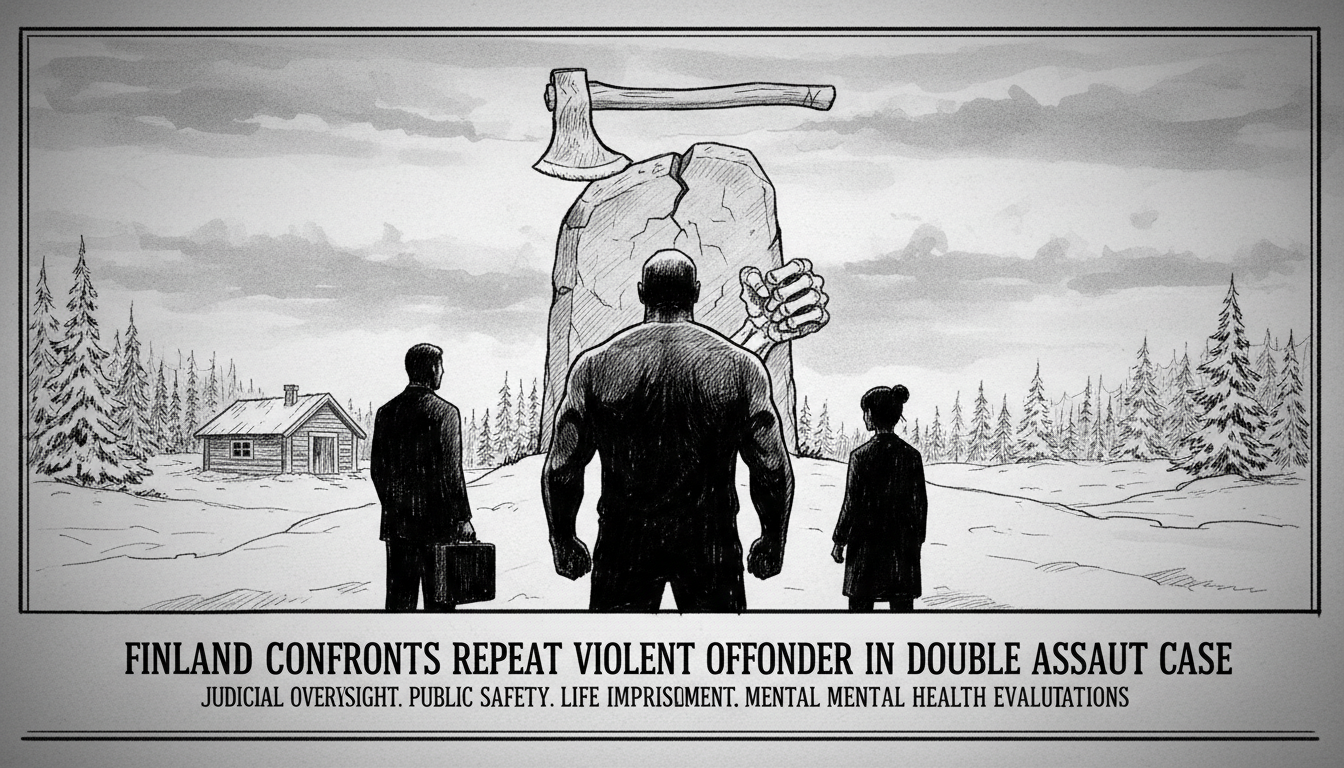
Finnish authorities face mounting questions about judicial oversight as a 39-year-old man previously convicted of homicide now faces new violent assault charges. The defendant stands accused of a brutal axe attack against a woman in Lapua just months before his fatal stabbing of an elderly man in the same region. Prosecutors describe a coordinated home invasion where two men armed with axes and knives targeted a sleeping woman in her residence.
The July assault involved calculated deception as the perpetrators tricked the victim into opening her door before forcing entry. Court documents detail how the attackers struck the woman multiple times with an axe head, causing significant head injuries. The bleeding victim managed to escape to her balcony and scream for help, prompting the assailants to flee the scene together.
This violent incident occurred while the same defendant awaited trial for the May homicide of a defenseless elderly man in his own bed. That victim suffered fifteen stab wounds to the head in what prosecutors characterize as an exceptionally brutal killing. The suspect fled the homicide scene using the victim's electric moped while still covered in blood evidence.
Finland's judicial system now confronts difficult questions about how a defendant facing serious assault charges remained free to commit fatal violence months later. The Lapua case exposes potential gaps in Finland's pretrial detention protocols for violent repeat offenders. Local courts ordered psychiatric evaluation for the defendant following both incidents, suggesting mental health considerations complicate legal proceedings.
Prosecutors seek substantial prison terms exceeding two years for the July assault charges while pursuing life imprisonment for the subsequent homicide. The timing between these violent crimes raises legitimate concerns about public safety protocols in rural Finnish communities. Legal experts note that Finland's emphasis on rehabilitation sometimes conflicts with protective detention for high-risk defendants.
The case unfolds in Etelä-Pohjanmaa district court, where judges must balance mental health assessments with community protection demands. Finland's criminal justice system typically emphasizes rehabilitation over punitive measures, but this double violence case tests those principles. Court observers await the psychiatric evaluation results that will determine whether the defendant stands trial for murder or faces alternative mental health disposition.
Regional police departments face scrutiny about monitoring known violent offenders between court appearances. The consecutive serious crimes in Lapua's quiet community have sparked broader discussions about resource allocation in rural law enforcement. Interior Ministry officials acknowledge the need to review protocols for tracking defendants with demonstrated capacity for extreme violence.
Finnish legal experts point to systemic challenges in predicting which defendants pose imminent danger to public safety. The country's relatively low violent crime rates create operational dilemmas when confronting individuals who commit multiple severe offenses within short timeframes. This case may prompt parliamentary review of pretrial detention standards for defendants with escalating violent behavior patterns.