
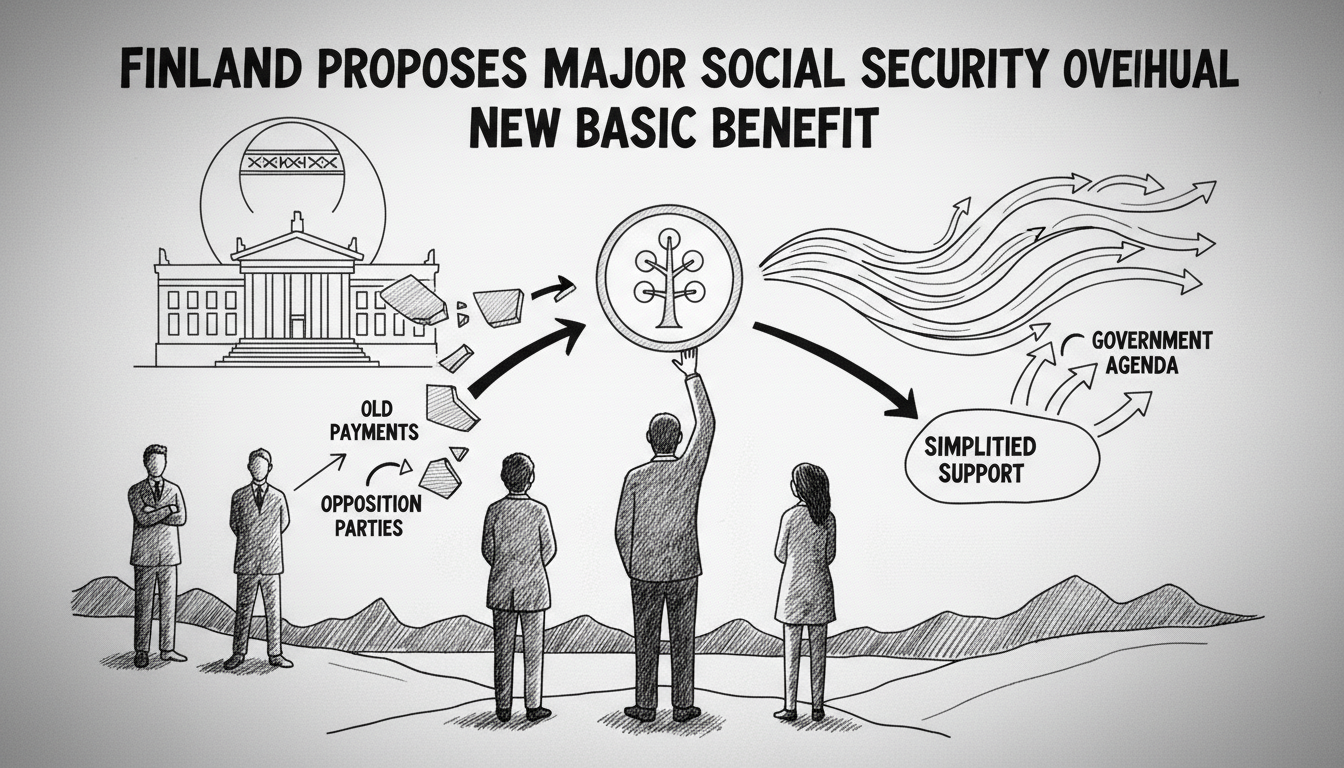
The Finnish Parliament's Social Affairs and Health Committee has finalized its report proposing comprehensive social security reform through new universal benefit legislation. This landmark proposal would replace basic unemployment benefits and labor market support with a single streamlined payment system. Prime Minister Petteri Orpo's government coalition advances this initiative as part of their broader social security simplification agenda. The reform aims to gradually consolidate multiple existing benefits into one fundamental security payment that covers basic living needs.
The initial implementation phase would merge basic daily allowance and labor market support into the new universal benefit structure. The Social Insurance Institution would administer these payments to unemployed jobseekers who either lack earnings-related unemployment benefit eligibility or have exhausted their existing entitlements. Monthly payment amounts would mirror current benefit levels at approximately 800 euros, with daily rates set at 37.21 euros. Future benefit adjustments would link to the national pension index, though the next scheduled review won't occur until 2028 due to government austerity measures.
This represents Finland's most substantial welfare system restructuring in recent decades, moving toward needs-based assessment rather than standardized payments. Unlike traditional labor market support, the universal benefit wouldn't feature standard duration limitations and would extend partial eligibility to individuals residing with parents. The system would incorporate a 21-week waiting period for applicants lacking vocational training credentials. Current statistics indicate approximately 526,000 Finns receive basic unemployment benefits or labor market support, with government projections suggesting most recipients would experience no change in payment amounts.
Approximately 5,000 individuals might see reduced benefits under the needs-based assessment model, while around 2,700 could receive increased support. Opposition parties including the Social Democrats, Greens, and Left Alliance submitted dissenting opinions during committee deliberations, advocating for the proposal's rejection based on adequacy concerns. The legislation now proceeds to parliamentary plenary session for final voting, targeting implementation in early May 2026. This reform reflects broader European trends toward simplified welfare administration while maintaining Nordic social protection principles.
The government's push for streamlined benefits comes amid ongoing debates about welfare efficiency versus adequacy in Finland's evolving economic landscape. This structural change could fundamentally alter how Finns interact with their social security system, moving from multiple specialized benefits toward integrated support. The proposed timeline allows for substantial system adjustments and stakeholder preparation before full implementation.