
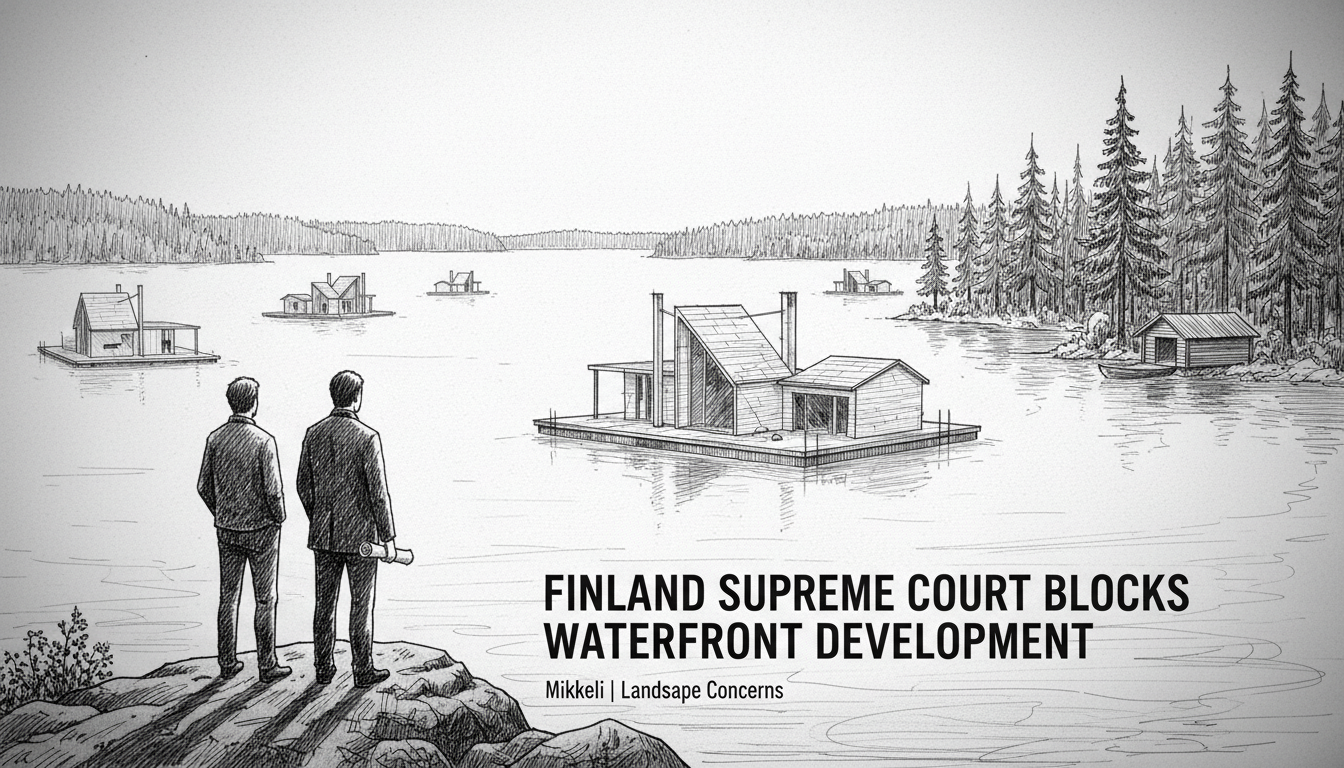
Finland's Supreme Administrative Court has overturned a controversial shoreline development plan in the Heimari area of Mikkeli, delivering a landmark decision that prioritizes landscape preservation over construction projects. The court ruled that building on water surfaces would fundamentally compromise the area's scenic values regardless of construction methods employed. This decision nullifies the municipal zoning plan approved two years ago by Mikkeli City Council for the lakeside resort development.
The court's precedent-setting ruling states that construction planned for water areas would create landscape elements clearly deviating from existing development patterns. The legal challenge targeted St. Michel Resort's ambitious proposal to construct floating villas directly on Lake Saimaa waters. Property development company St. Michel Resort had envisioned creating luxury waterfront accommodations that would float on the lake surface.
This judicial intervention represents a significant victory for environmental protection advocates and sets important legal parameters for future shoreline development disputes across Finland. The Supreme Administrative Court serves as the final arbiter in Finnish administrative cases, making this decision binding for all similar municipal zoning disputes. Finnish environmental law places strong emphasis on preserving natural landscapes, particularly in the country's extensive lake district regions.
Mikkeli's location in the Eastern Finland lake district makes landscape protection particularly sensitive given the region's tourism-dependent economy and fragile aquatic ecosystems. The city government had initially approved the development plan during the previous municipal term, hoping to boost local tourism revenue and create construction jobs. Local political leaders now face the challenge of balancing economic development objectives with environmental conservation requirements.
Finland's strict environmental regulations often clash with municipal development ambitions, creating tension between local decision-making and national oversight mechanisms. The Supreme Court's ruling reinforces that landscape values cannot be compromised even for economically promising tourism projects. This decision will likely influence ongoing debates about shoreline construction throughout Finland's extensive archipelago and lake regions.
International observers should note that Finland's robust judicial system frequently intervenes in municipal planning decisions to uphold environmental standards. The country's constitutional protection of nature and comprehensive environmental legislation creates strong legal foundations for such judicial reviews. Similar cases have emerged in recent years concerning coastal developments in the Archipelago Sea and construction near protected national parks.
The ruling demonstrates Finland's commitment to sustainable development principles even when facing economic pressures. For foreign investors and developers, this case serves as a crucial reminder that Finnish environmental regulations receive rigorous judicial enforcement. The decision will likely delay or prevent similar floating construction projects planned for other Finnish lakes and coastal areas.
What comes next for the Heimari area remains uncertain, with local officials needing to reconsider development options that comply with the court's landscape preservation requirements. The property developer may explore alternative construction approaches that maintain shoreline integrity while still creating tourism infrastructure. This case will undoubtedly influence how Finnish municipalities approach waterfront zoning decisions for years to come.