
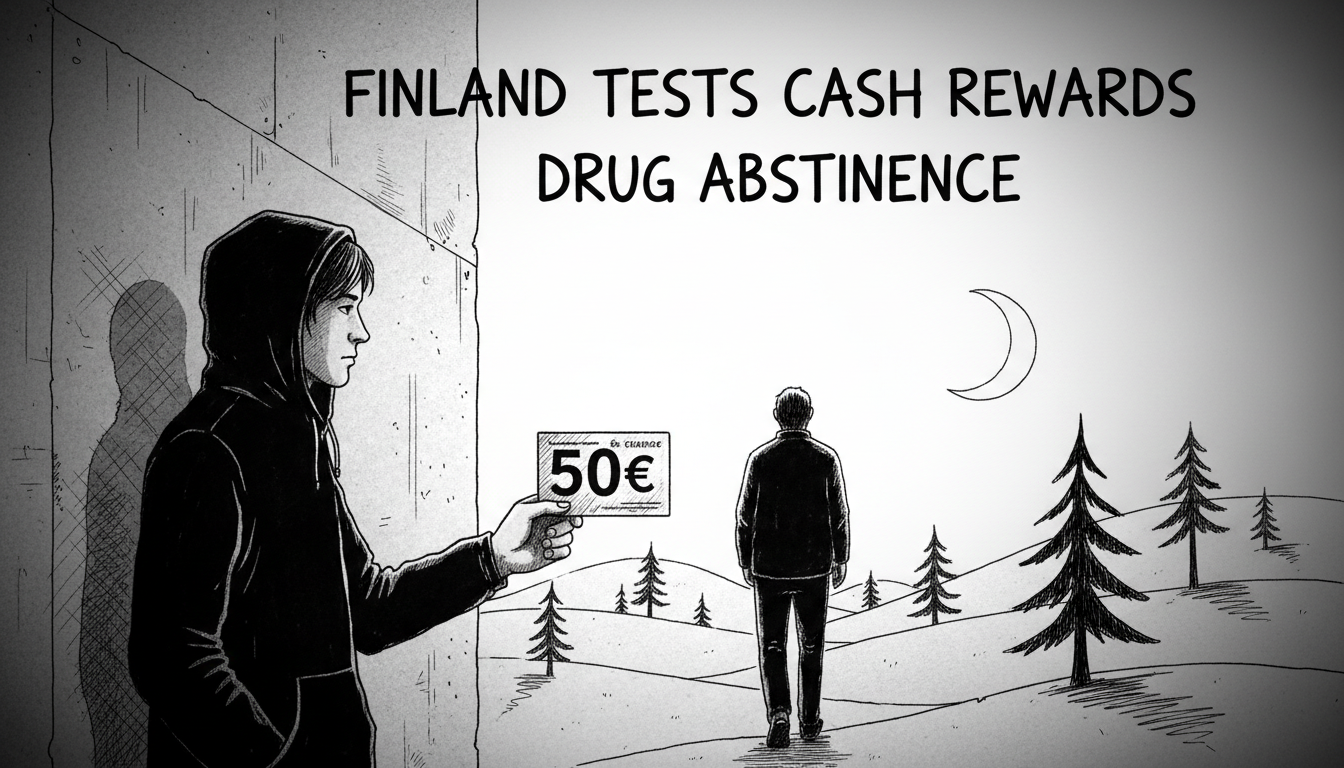
Finland's capital Helsinki is launching a controversial pilot program that will pay drug users to stay clean. The city will offer gift cards, worth up to 50 euros, to young users of the synthetic stimulant alfa-PVP as a reward for negative drug tests and consistent participation in treatment. The initiative, set to begin this year at a new detoxification unit in the Laakso hospital district, targets users under 25 and represents a significant shift in Finland's approach to its growing substance abuse crisis.
Pia Pulkkinen, head of Helsinki's addiction services, confirmed the plan to local media. "The idea of reward-based treatment is to quickly encourage the client's efforts towards sobriety and commitment to treatment with readily available rewards," Pulkkinen said. This method, known as contingency management in clinical practice, uses tangible incentives to reinforce positive behavioral change. Participants will accumulate points for milestones like a clean weekly drug screen, which can then be exchanged for vouchers.
A Radical Shift in Finnish Drug Policy
The pilot marks a pragmatic, if contentious, turn for Finnish social and health policy. Finland has traditionally emphasized strict drug laws and abstinence-based models, but rising drug-related deaths are forcing a reevaluation. The national government, led by Prime Minister Petteri Orpo's coalition, has pushed municipalities to develop more effective, evidence-based interventions. Helsinki's experiment directly responds to this pressure, applying a behavioral economics lens to a persistent public health challenge.
"We are in a situation where traditional methods are not reaching everyone," explained a senior official from the Ministry of Social Affairs and Health, speaking on background. "When we face a potent and dangerous substance like alfa-PVP, we must be willing to test all tools that have international evidence of reducing harm and saving lives." The program will also include users addicted to amphetamine and methamphetamine, indicating its focus on stimulant use disorders where such reward-based protocols have shown particular promise in studies.
How the Helsinki Incentive Program Will Work
Operational details are still being finalized by Helsinki's social services and health department. The pilot will be confined to institutional care settings initially, starting with the new detox unit. Clients under 25 who use synthetic cathinones like alfa-PVP will be the primary group. They will agree to a structured program where verified abstinence and therapy attendance earn points. A full week of sobriety could translate directly into a gift card.
A key bureaucratic hurdle remains. Authorities must determine if classifying the gift card as a reward, rather than income, will prevent it from affecting a participant's social security benefits. This technicality is crucial; if the incentive reduces their unemployment or housing support, it would undermine the entire effort. City officials are confident a solution will be found before the February launch. The 50-euro maximum value is seen as a meaningful but not excessive motivator for the target demographic.
International Evidence and Ethical Debates
Pulkkinen stated that international evidence supports the reward-based method. Numerous peer-reviewed studies, particularly from the United States and Canada, demonstrate that contingency management can improve treatment retention and short-to-medium-term abstinence rates for stimulant addiction. The approach is based on operant conditioning—reinforcing desired behavior to make it more likely to recur.
However, the initiative is sure to spark ethical and political debate. Critics often argue that paying people not to use drugs is a form of bribery that undermines intrinsic motivation and personal responsibility. Some may question the use of public funds for direct payments to drug users. Proponents counter that addiction is a chronic medical condition that alters brain circuitry, including reward pathways, and that these incentives help rewire those circuits towards healthy behaviors. They also point to the substantial long-term cost savings of successful treatment versus repeated emergency care, incarceration, or social support.
"The ethical question isn't whether we should offer an incentive," argues Dr. Eeva-Liisa Rantanen, a professor of social psychiatry at the University of Helsinki. "The real ethical dilemma is whether we can justify withholding a scientifically supported intervention that could engage a young person in treatment and potentially save their life, simply because it makes us uncomfortable. We don't call it a bribe when we use similar reward systems in corporate wellness programs or to encourage recycling."
Finland's Broader Struggle with Synthetic Drugs
The pilot arrives against a grim national backdrop. Deaths from drug-related causes have increased in Finland over the past decade, with new psychoactive substances like alfa-PVP posing a particular challenge. This synthetic stimulant, sometimes sold as "flakka," is known for its potent and unpredictable effects, including severe paranoia, aggression, and cardiovascular risk. Its users are often difficult to engage with traditional outreach and counseling services.
The Finnish Institute for Health and Welfare (THL) has repeatedly called for expanded and diversified treatment offerings. Helsinki's pilot aligns with the institute's recommendations to adopt evidence-based practices from abroad and tailor them to the Finnish context. The city's approach is notably more direct than other Nordic experiments; while supervised consumption sites exist in some countries, direct financial incentives for abstinence are rare in the region's welfare state model.
A Look Ahead: Evaluation and Potential Expansion
The success of the pilot will be measured by concrete metrics: participant retention in treatment, frequency of clean drug tests, and progression to longer-term rehabilitation programs. Helsinki officials have committed to a rigorous evaluation phase. If results are positive after the initial run, the city council could consider expanding the program to other addiction service units and older age groups.
This move is being watched closely by other major Finnish cities like Tampere, Turku, and Oulu, which face similar challenges. The national government may also use the findings to inform future health policy and funding directives. The experiment represents a fascinating test case for the Nordic welfare state: can it adapt its principles to incorporate pragmatic, incentivized solutions for complex social problems without compromising its foundational values? The answer, starting with 50-euro gift cards in a Helsinki clinic, could reshape addiction treatment across Finland.