
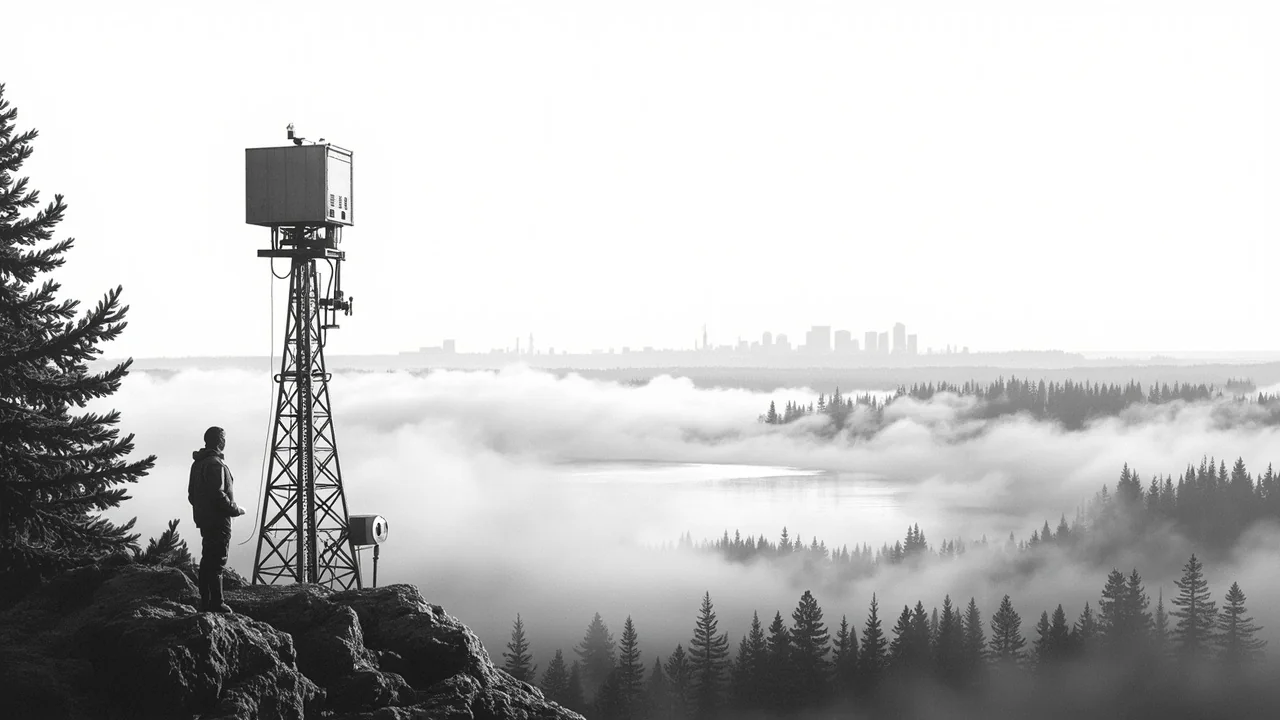
Sunday's dense fog across southern Finland revealed why the country spends more per capita on weather monitoring than any other EU nation — and why that investment pays off during transport disruptions. Source: Finnish Meteorological Institute (English).
Visibility dropped to 320 meters in Helsinki as fog blanketed the region from Kotka to Turku. But Finland's response highlighted a €45 million weather infrastructure upgrade completed in 2023, giving Ilmatieteen laitos real-time monitoring capabilities that exceed EU meteorological standards.
Economic justification for weather spending
Finland allocates €8.50 per citizen annually to weather monitoring, compared to €3.20 across the EU average, according to European Centre for Medium-Range Weather Forecasts data. The investment reflects harsh economic reality: weather disruptions cost Finnish transport networks €180 million yearly.
Sunday's fog triggered coordinated responses between Ilmatieteen laitos, Fintraffic, and port authorities within 15 minutes — faster than Denmark's 25-minute average response time for similar conditions. Maritime traffic in Helsinki activated reduced-visibility protocols automatically through integrated warning systems.
Duty meteorologist Iiris Idoko said the fog followed predictable patterns as rain moved from Varsinais-Suomi toward central Finland, leaving high humidity and 2-5°C temperatures that prevented more dangerous ice fog formation.
Nordic climate adaptation spending gap
Finland's weather monitoring budget dwarfs regional neighbors despite similar climate challenges. Norway spends €6.80 per capita, Sweden €4.90, while Denmark allocates just €3.40 — creating response time disparities during extreme weather events.
The spending gap reflects different infrastructure priorities. Finland prioritizes automated monitoring stations and real-time coordination systems, while Sweden focuses more on long-term climate modeling. Norway splits investment between Arctic monitoring and southern population centers.
Finland's flat southern terrain and Baltic proximity create frequent fog formation when pressure systems interact with moisture-laden air — conditions that occur 40-60 days annually across the southern coast. The country's monitoring network now provides 5-minute updates compared to 15-minute intervals used by most EU meteorological services.
Transport disruption costs justify the investment. A 2023 VTT Technical Research Centre study found that improved weather coordination reduces annual transport delays by 12%, saving logistics companies an estimated €22 million yearly.
What Nordic weather spending reveals
Finland's weather infrastructure investment exposes a broader Nordic policy divide: whether to prioritize immediate response capabilities or long-term climate adaptation planning.
Finland chose immediate response, betting that faster coordination during routine weather events delivers better economic returns than sophisticated climate modeling. Sunday's fog response — seamless coordination, minimal transport disruption, accurate predictions — suggests they're right. Other Nordic countries are watching.
Read more: Finnish Energy Bills Drop as Spring Weather Cuts Heating Dem....
Read more: Finland's Pension Reform Hits Early Retirees With Double Cut.