
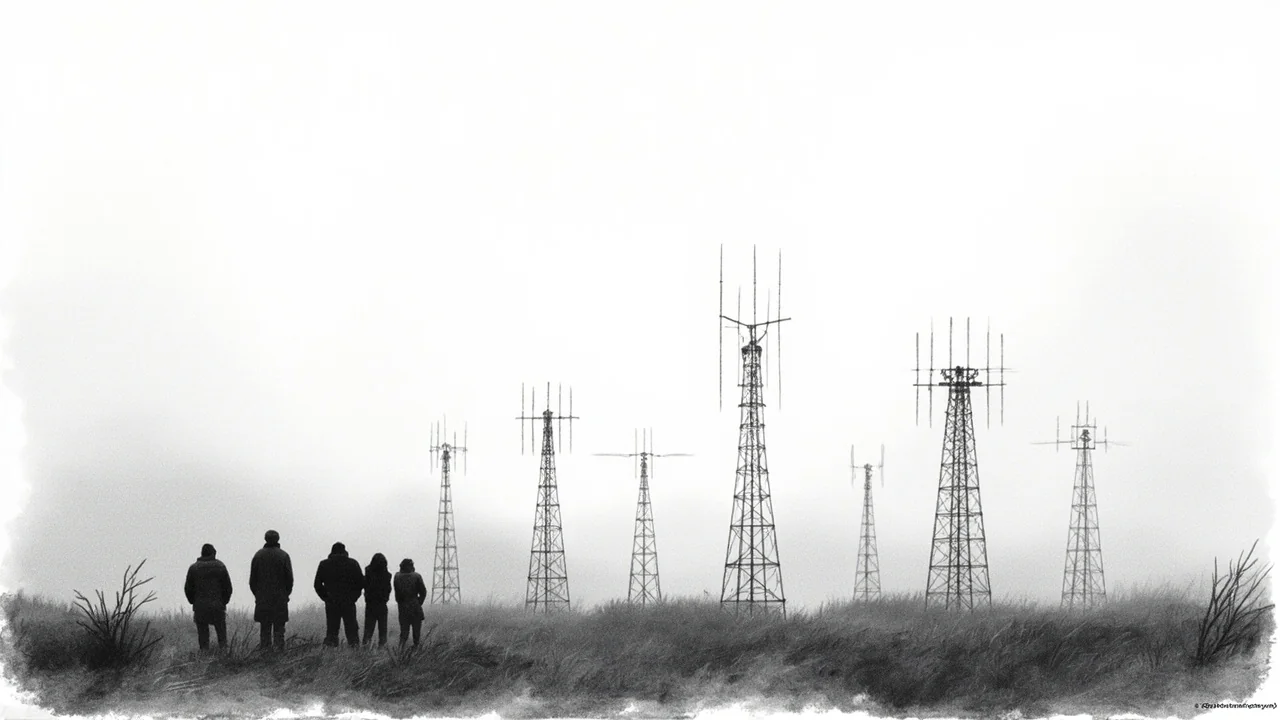
Finland's national broadcast network operator Digita will conduct a frequency change at the Pihtipudas radio and television station on Tuesday, January 13th, causing a signal interruption for up to two hours. The technical work, scheduled from 8:00 to 18:00, will impact the C-band multiplex, affecting seven high-definition channels: TV5 HD, Kutonen HD, TLC HD, STAR Channel HD, Frii HD, National Geographic HD, and Viaplay TV HD. The shift to the 490 MHz frequency, previously used for antenna TV broadcasts, represents a routine but essential piece of national infrastructure management that impacts viewing habits across Central Finland.
This planned disruption highlights the continuous, often unseen, technical maintenance required to sustain Finland's terrestrial television network. For residents in the Pihtipudas area relying on traditional antenna reception, checking their television settings after the work is complete will be necessary to restore service. The Ministry of Transport and Communications oversees such spectrum management, which balances the needs of broadcasters with the growing demands for mobile broadband data across the European Union's radio frequency allocation plan.
The Silent Switchover
While the Pihtipudas change is localized, it forms part of a nationwide strategy for efficient spectrum use. The Finnish Transport and Communications Agency, Traficom, is the regulatory body responsible for planning and assigning these frequencies. Their work ensures that television broadcasts, mobile networks, and other wireless services can coexist without interference. The decision to reuse the 490 MHz band is a direct application of national spectrum policy, which aims to maximize the utility of a finite public resource.
This technical adjustment is not happening in a political vacuum. The Centre Party, with its strong roots in rural regions like Central Finland, has consistently emphasized the importance of reliable digital infrastructure across the entire country. Ensuring that broadcast network updates proceed smoothly, even in smaller municipalities like Pihtipudas, aligns with the party's commitment to regional equality. A disruption, however brief, serves as a tangible reminder of the state's role in maintaining the fundamental services that connect citizens.
Why Pihtipudas Matters
The choice of Pihtipudas for this work is technically strategic. Its transmission site serves a specific geographic area, making it an ideal location for targeted frequency retuning without causing widespread national disruption. From a political correspondent's perspective, such locations are critical test cases. The smooth execution of these technical plans in rural areas demonstrates the operational competence of state-backed operators like Digita and validates the policy frameworks set in Helsinki.
Any significant problems or extended outages would quickly become a local political issue, potentially raised by municipal councils or the area's Member of Parliament. The two-hour maximum window for the blackout is a carefully calculated promise, balancing engineering needs with public tolerance for service interruption. This exemplifies the Finnish model of technocratic governance, where expert agencies like Traficom implement policies developed through legislative processes in the Eduskunta.
Behind the Technical Jargon
For viewers, the term "C-band multiplex" is the key to understanding the disruption. A multiplex is a single digital stream that packages several television channels together. The C-band is one of several such streams broadcast from terrestrial masts across Finland. When Digita engineers adjust the transmitter in Pihtipudas to output this multiplex on a new frequency, every television receiver in the coverage area must recognize this new signal pathway.
Modern digital televisions and set-top boxes with automatic channel search functions should handle this change seamlessly once the transmission resumes. However, older devices or manually tuned sets may require viewers to initiate a new channel scan. This small burden on the citizen underscores a larger policy truth: the state provides the infrastructure, but individuals bear some responsibility for maintaining compatible equipment. Public service announcements from Digita and the broadcasters themselves are crucial in bridging this gap.
A European Context
This frequency change, while local, connects to a continental framework. The 490 MHz frequency resides within the 470-694 MHz band, known as the UHF band, which is harmonized across Europe for terrestrial broadcasting and wireless microphones. However, a major EU-wide reform, the Digital Dividend, has progressively reallocated parts of this spectrum (the 700 MHz band) from broadcasting to mobile data services. Finland completed this 700 MHz transition in 2020.
The ongoing adjustments within the remaining UHF band, as seen in Pihtipudas, are partly about optimizing the "post-Dividend" spectrum landscape. The European Commission pushes for efficient spectrum use to foster a connected digital single market. Finland's proactive management of these assets, including timely site updates, ensures the country meets its EU obligations while preserving a robust, free-to-air television network—a service still valued by millions of Finns, particularly outside major urban centers.
The Human Dimension
For two hours on a Tuesday, several hundred households may find their regular viewing of National Geographic or Viaplay interrupted. This minor inconvenience is the tangible outcome of highly complex state planning. It reflects a social contract where temporary disruptions are accepted for long-term system stability and modernization. The policy success is measured by how minimal and predictable the disruption remains.
The incident also highlights the diversity of Finland's media landscape. The affected multiplex carries commercial and entertainment channels, distinct from the public service Yle channels on other multiplexes. This diversity is a direct result of media policy decisions made in the Eduskunta, governing licensing and spectrum allocation to ensure a pluralistic offering. The uninterrupted operation of Yle's multiplexes during this work further illustrates the layered resilience built into the national network design.
As Finland continues to evolve its digital infrastructure, these quiet, scheduled interruptions will persist. They are the necessary maintenance of a system that delivers entertainment, news, and emergency broadcasts to every corner of the nation. The work in Pihtipudas is a small but telling chapter in Finland's broader narrative of technological governance, where meticulous planning meets practical execution, always with an eye on the European horizon and the needs of citizens in their living rooms. The ultimate goal remains clear: a stable, reliable, and future-proof broadcasting network that serves all of Finland, from Helsinki's city center to the quieter districts of Central Finland.