
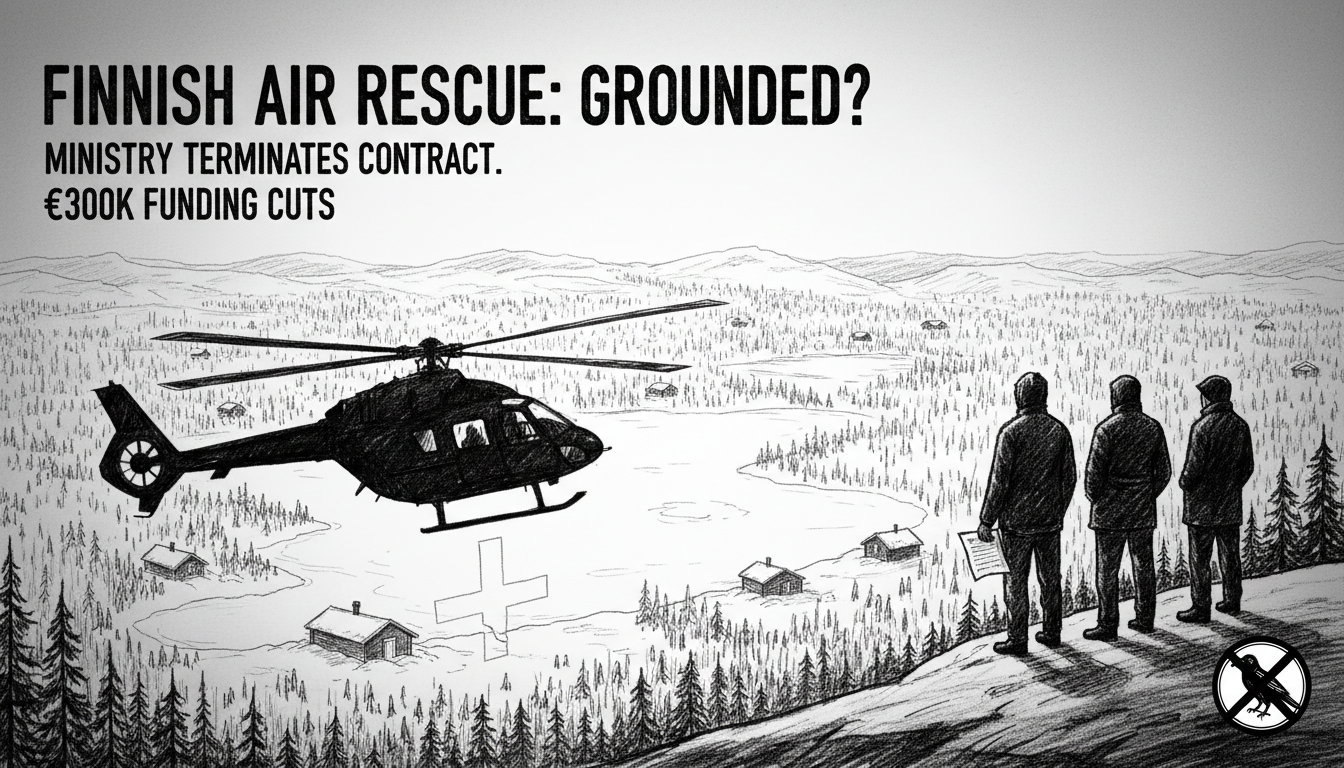
The Finnish Air Rescue Society faces potential shutdown after the Ministry of the Interior terminated their long-standing cooperation agreement. The organization previously received 300,000 euros annually from the ministry to maintain its emergency response capabilities.
The funding cut threatens the society's core operations, including national emergency standby services and mission coordination. The Air Rescue Society serves as one of three coordination organizations for Finland's Voluntary Rescue Service.
This development raises serious questions about Finland's emergency response infrastructure. The society provided crucial support through search and surveillance flights, volunteer training, and specialized missions. Their work included fire spotting flights and locating oil spills, storm damage, and flood zones.
Arto Kupiainen, the society's preparedness manager from Jyväskylä, expressed grave concerns about the situation. He stated that the organization's key functions are now at risk following the contract termination.
The ministry ended the cooperation agreement one year ago, with the contract concluding at the end of October. This decision leaves a significant gap in Finland's voluntary rescue capabilities.
Finland's unique geography and sparse population outside urban centers make air rescue services particularly vital. The country's extensive forest areas and numerous lakes create challenging conditions for ground-based rescue operations.
The Air Rescue Society's volunteer pilots and crews have responded to emergencies across Finland's diverse landscape. Their specialized equipment and training enabled rapid response to remote incidents that would otherwise take hours to reach.
This funding termination reflects broader challenges facing volunteer organizations in Nordic countries. Many such groups struggle with sustainable funding models despite providing essential public services.
The situation highlights the delicate balance between government support and independent volunteer operations. While maintaining operational independence, these organizations often rely on public funding for equipment and training costs.
What happens next remains uncertain. The society must now explore alternative funding sources or risk complete operational shutdown. This could leave gaps in Finland's emergency response network, particularly in remote regions.
Local municipalities and other rescue organizations may need to fill the void left by the Air Rescue Society's potential closure. The financial implications of replacing these services could exceed the previous funding amount.
International observers note that Nordic countries typically maintain robust volunteer rescue networks. Finland's situation may signal shifting approaches to emergency service provision across the region.
The coming months will determine whether the Air Rescue Society can secure alternative funding. Their survival may depend on private donations, corporate sponsorship, or revised agreements with regional authorities.