
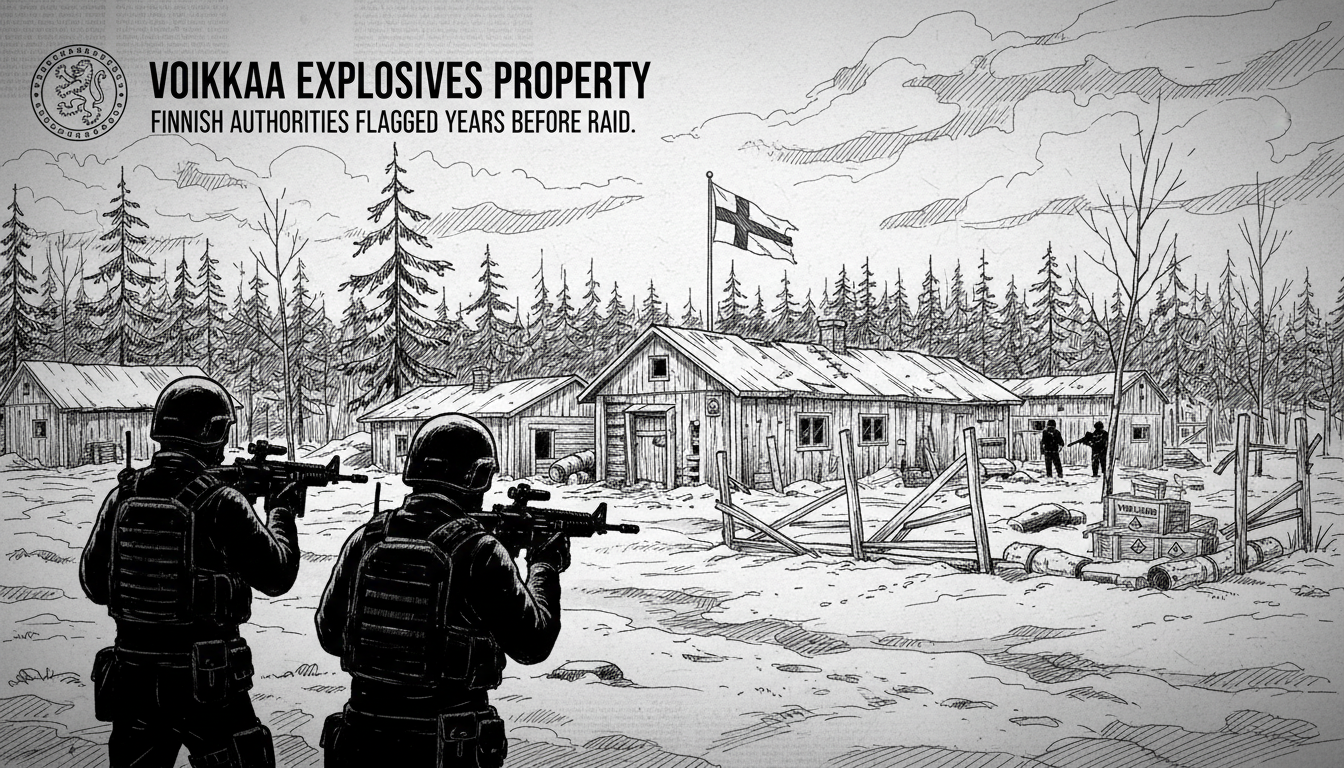
Finnish authorities first raised concerns about a property in Voikkaa, Kouvola, years before police and defense forces discovered a massive cache of weapons and explosives there in late summer. The property owner had appealed to an administrative court against a municipal cleanup order and associated fines. This case reveals systemic challenges in Finnish property enforcement and raises questions about inter-agency coordination in national security matters.
The Kouvola municipality issued the initial cleanup notice for the Voikkaa property. Officials cited an untidy yard and potential code violations. The property owner contested this order through Finland's administrative court system. This legal process can delay enforcement actions for months or even years. Finnish law provides strong protections for property owners, but critics argue this can hinder public safety interventions.
Police and the Finnish Defense Forces conducted a joint operation at the Voikkaa site between August and September. They reported finding firearms, ammunition, and explosive materials in substantial quantities. The discovery prompted a major security response in the Kymenlaakso region. Authorities have not disclosed the exact nature of all materials found or potential motives.
This incident highlights a tension in Finnish governance. Municipal authorities focus on visible code violations, while national security agencies monitor different threat indicators. The timeline suggests these streams of information did not converge quickly enough. Finland's interior security apparatus, including the Finnish Security and Intelligence Service (SUPO), typically investigates such threats. It remains unclear what specific intelligence, if any, was available before the raid.
Finnish property law grants municipalities power to enforce cleanliness and safety standards. The Administrative Court handles appeals, which creates a procedural buffer. In this case, that buffer may have allowed a dangerous situation to persist. The Finnish Parliament, the Eduskunta, has debated streamlining such processes, especially for properties posing clear public risks. No major legislative changes have resulted yet.
For international observers, this case illustrates Finland's generally robust but sometimes slow bureaucratic systems. The country maintains high trust in public institutions, but complex cases can test procedural efficiency. The discovery of weapons in a residential area is exceptionally rare in Finland, a nation with strict firearm regulations and low violent crime rates. This anomaly makes the Voikkaa case particularly noteworthy for security analysts.
The broader implication involves EU security cooperation. Finland shares intelligence on weapons trafficking and extremist activities through Europol and other channels. A domestic case with potential cross-border elements would typically trigger information sharing. Finnish ministers have emphasized the need for vigilance, citing the EU's evolving security landscape. The government is likely to review internal reporting protocols between municipal, police, and defense authorities following this episode.
What happens next? The criminal investigation will determine charges. The administrative case regarding the property may conclude separately. This dual-track approach is standard but can frustrate public demands for swift resolution. The Finnish government faces pressure to demonstrate that its security and regulatory frameworks can adapt to prevent similar situations. The coming months will show if policy adjustments emerge from the Voikkaa discovery.