
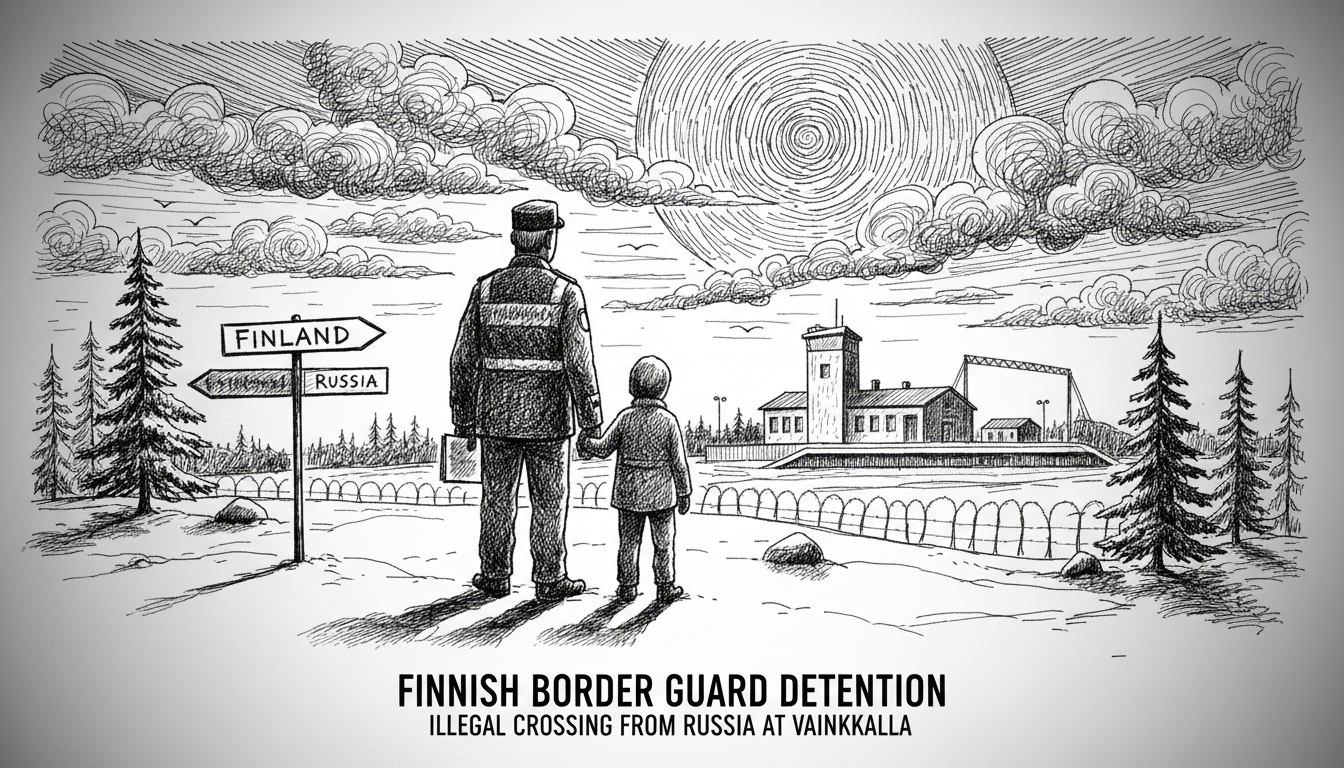
Finnish border authorities detained one person for illegally crossing the national border from Russia on foot near Vainikkala in the southeast. The Kaakkois-Suomen rajavartiosto, or Southeast Finland Border Guard, reported the incident occurred on Tuesday evening. Officials apprehended the individual close to the border on suspicion of a state border violation. The person remains in the custody of the Border Guard while the investigation continues.
The Vainikkala crossing point is a railway border station located in Lappeenranta, approximately twenty kilometers south of the main Nuijamaa road crossing. This area has seen heightened security monitoring since the complete closure of Finland's eastern border to asylum seekers. The Border Commander for Southeast Finland has been in contact with their Russian counterpart in Vyborg regarding the incident. Authorities have stated they will not release further details at this preliminary stage of the inquiry.
This event represents a notable breach of Finland's fortified eastern frontier. The Finnish government, led by Prime Minister Petteri Orpo, implemented a full closure of all border crossing points with Russia last year. That decisive policy shift responded to what Helsinki labeled as a hybrid influence operation, where Russian authorities were allegedly orchestrating the arrival of third-country migrants without proper documentation. The closure remains a cornerstone of Finland's national security strategy and its approach to managing relations with its powerful neighbor.
From an EU perspective, Finland's border actions have received strong backing from European institutions. The situation underscores the broader challenges facing the EU's external borders, particularly in the wake of the instrumentalization of migration. Finland's strict stance, supported by the Eduskunta, sets a precedent for border management under extreme pressure. The Finnish model combines physical barriers, enhanced legal frameworks, and close intelligence cooperation with EU agencies like Frontex.
Historical context is crucial here. The Finland-Russia border has been a sensitive line since the country's independence. The current government's policy marks the most restrictive phase in decades, a direct result of deteriorating relations following Russia's full-scale invasion of Ukraine. Finland's accession to NATO has fundamentally altered the security calculus for the entire Nordic-Baltic region. Every illegal crossing attempt is now analyzed not just as an immigration issue, but through the lens of national and alliance security.
What happens next involves a meticulous legal process. The individual will be processed under Finnish law, which carries severe penalties for state border violations. The case will also be reviewed to determine if it was an isolated attempt or part of a broader pattern. Finnish officials are likely to maintain their firm public messaging, reiterating that the border remains closed and any attempts to cross illegally will be met with a swift response. This incident, while minor in scale, reinforces the tense and complex reality of Finland's eastern frontier today.