
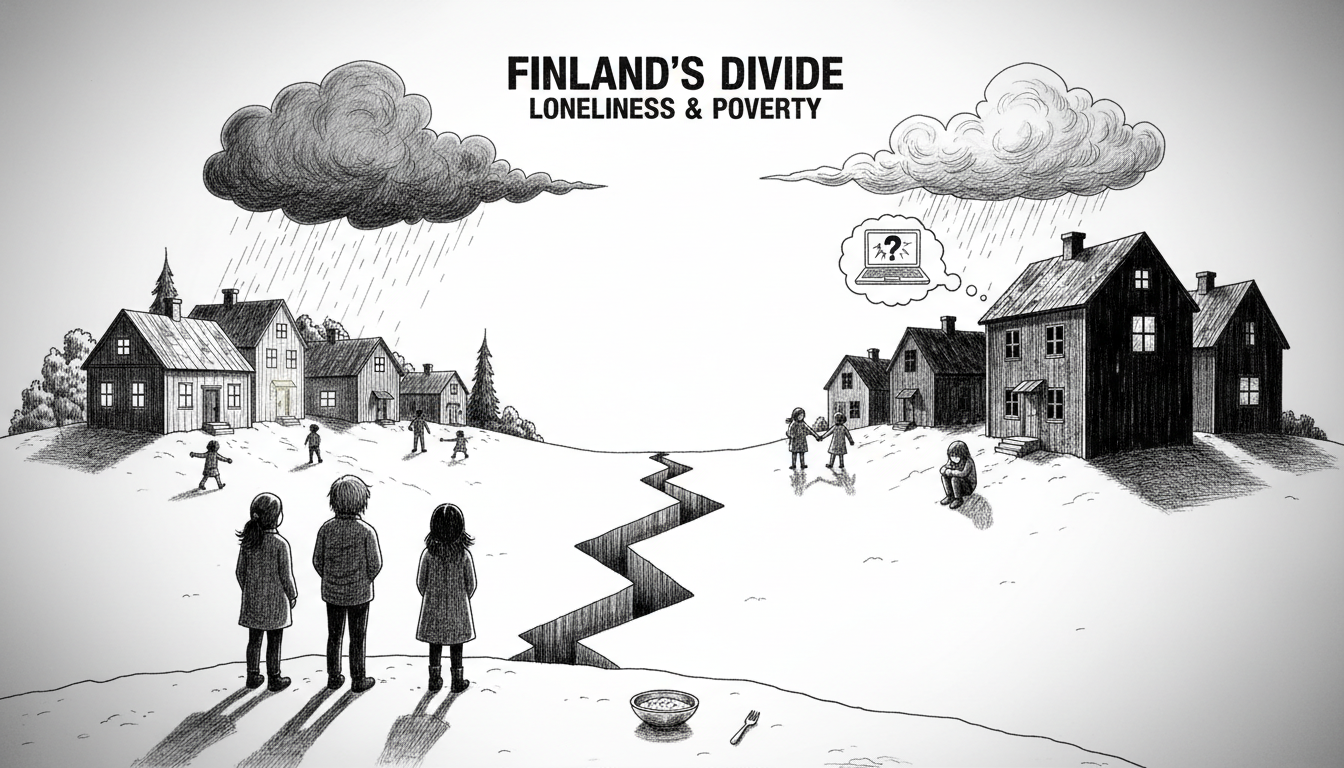
A new study reveals a widening economic gap among Finnish children. Daily life increasingly separates along family income lines according to research by Save the Children.
About one-fifth of children from low-income families report not getting enough food at home. Many children from financially struggling households feel excluded when peers participate in activities they cannot afford.
The annual Children's Voice survey gathered responses from 2,241 children and young people. Nineteen percent of respondents identified as coming from low-income backgrounds.
More than half of children from low-income families say their financial situation has worsened in recent years. Only 18 percent of all respondents shared this view.
Aino Sarkia, a special expert at Save the Children, said social security cuts are weakening young people's faith in the future.
The report indicates poverty forces some children to mature too quickly.
For children in poor families, daily reality includes money shortages for medicine, clothing, and hygiene products. Buying shampoo might wait until the next payday.
Thirty-six percent of children from low-income families lack their own computer or tablet because families cannot afford one.
One young respondent said, 'I have to wait for payday even for new socks. We rarely cook my favorite meals because they're expensive.'
Many described parents working long hours. Children from struggling families reported feeling guilty about asking parents for money.
'Food isn't always varied. Mom has to work a lot, so I mostly take care of myself. I often clean and cook alone,' one youth responded.
Another said, 'It's awful seeing Mom worry about money daily. We often discuss where to find more money for food and medicine.'
One financially struggling youth described feeling inferior to peers without money problems. They blamed themselves and feared going without food.
Responses from well-off children indicated no daily shortages or purchase concerns.
Just over half of all surveyed youth view their future hopefully. But about 40 percent described their future as hopeless.
One young person said, 'A more certain future would help me take risks. The current world situation guarantees no one a bright future.'
Over half of children from low-income families worry about household finances. Forty-two percent worry about their parents' coping ability. Only 13 percent of children from well-off families share these concerns.
'I rarely ask for money because I know there isn't any,' one youth noted.
Many respondents linked mental health concerns to school bullying, racism, or loneliness. Relationship problems also affected mental wellbeing.
'I'm always alone during free time. I play PlayStation too, but often alone,' one young person shared.
Another said, 'School is exhausting with lots of homework. My family argues over small things. I feel disliked.'
Surveyed youth want adults to listen to them. They feel frustrated when their opinions get dismissed.
'Phones aren't always the problem. Listen to young people and take us seriously,' one respondent urged.
Others said, 'Take youth mental health seriously early on.'
The survey exposes how economic pressures create both material deprivation and emotional isolation for Finland's most vulnerable children. When children describe waiting for payday to buy basic necessities, it reveals systemic failures in one of Europe's traditionally strongest welfare states.