
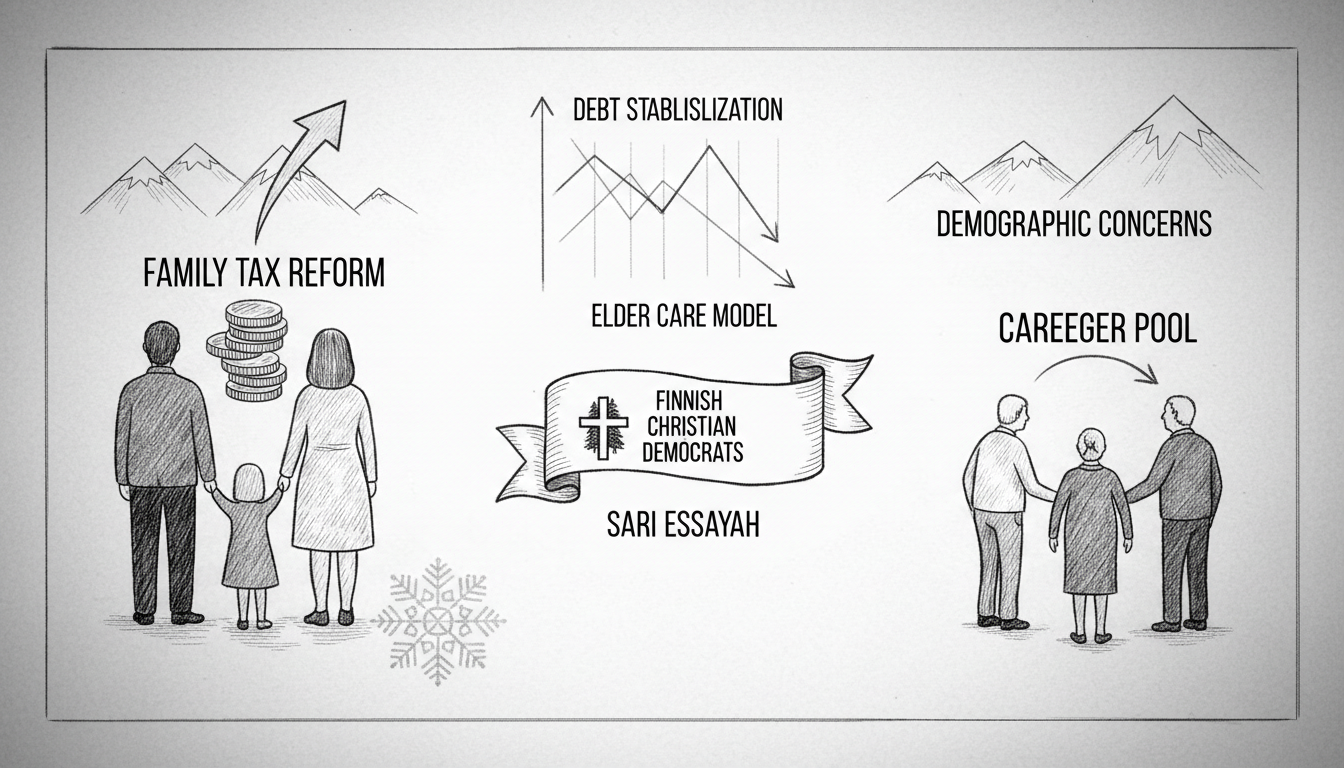
Finnish Christian Democrats leader Sari Essayah has unveiled ambitious policy proposals targeting family taxation and elderly care during her party's council meeting in Jyväskylä. The party advocates for implementing a progressive family taxation system that would calculate household taxes as a single unit based on the number of children. This model would apply to families with minor dependents and reach full implementation for households with three or more children. Single parents would receive additional child deductions under the proposed system.
Essayah emphasized the government's responsibility to ease rather than complicate family life while speaking to party delegates. The Christian Democrats simultaneously introduced a 'caregiver pool' concept designed to address Finland's elderly care challenges. This innovative approach would establish permanent care relationships between individual caregivers and their clients, potentially creating more humane working conditions while delivering affordable home-based services.
The party leader expressed cautious optimism about Finland's demographic trends, noting recent increases in birth rates after years of decline. While acknowledging that political decisions alone cannot reverse demographic challenges, Essayah stressed the importance of family-friendly policies. She reaffirmed the Orpo government's primary objective of stabilizing public debt ratios while maintaining security spending despite economic pressures.
In a sharp critique of opposition parties, Essayah warned that alternative budget proposals would continue irresponsible debt accumulation despite Finland's recent placement under EU economic monitoring. She specifically targeted the Centre Party's agricultural stance, accusing them of failing to support farmers while proposing imaginary savings. The Christian Democrats' parliamentary group leader Peter Östman separately addressed international double standards in human rights discussions, highlighting growing antisemitism and inconsistent responses to global crises.
Östman pointed to disproportionate attention given to certain conflicts while Christian persecution in Africa receives minimal international reaction. He questioned why Sudan's civil war and similar African conflicts generating serious human rights violations fail to mobilize Western street protests comparable to other global crises. This comprehensive policy presentation comes as Finland navigates complex economic challenges while maintaining its welfare state model.
The proposed family taxation reform represents a significant shift in Finland's approach to household taxation, potentially altering income distribution across family types. Meanwhile, the caregiver pool concept addresses critical workforce shortages in elderly care by potentially attracting former professionals who left due to excessive work pressures. These policy initiatives emerge against the backdrop of Finland's ongoing economic adjustments and demographic transitions, with the Christian Democrats positioning themselves as advocates for both family values and fiscal responsibility.
Political analysts note the Christian Democrats' strategic positioning attempts to distinguish their policy platform from both government partners and opposition parties. The detailed proposals reflect Finland's broader European context where many nations face similar challenges balancing family support, elderly care infrastructure, and public finance sustainability. The coming parliamentary debates will determine whether these initiatives gain traction within Finland's multi-party coalition government structure.