
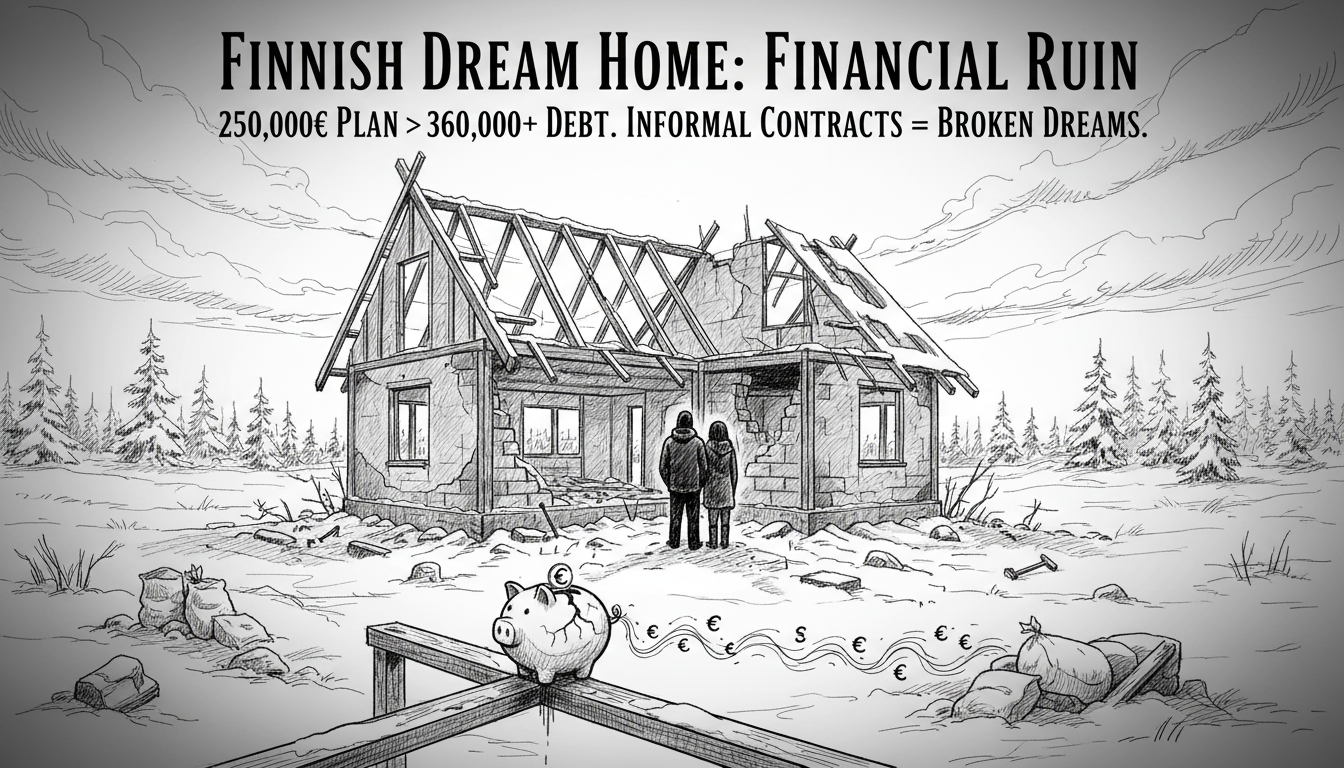
A Finnish couple from Muurame faces a devastating financial loss after a home construction project spiraled out of control. Their plan for a new detached house, budgeted at approximately 250,000 euros, has now consumed over 360,000 euros. The result is a plot of land with only a dilapidated structure deemed fit for demolition. The situation highlights critical risks in Finland's private construction sector and the vulnerabilities of informal contracting agreements.
The couple began planning their dream home five years ago. The woman's mother suggested using her long-term boyfriend, a professional in the field, and his son as the builders. Initial discussions centered on a budget between 220,000 and 230,000 euros. This common scenario, where trust in personal connections overrides formal due diligence, often leads to complex disputes when projects fail. Finnish consumer protection authorities frequently warn against such arrangements without clear, legally binding contracts.
Finland has strict building codes and consumer protection laws, but they offer limited recourse in cases of verbal agreements or contracts with unclear terms. The National Consumer Disputes Board handles thousands of similar cases annually. For international readers, this underscores a key cultural and legal point in Finland. While society operates on high trust, the construction industry demands rigorous formal agreements to protect all parties. The Finnish Competition and Consumer Authority (KKV) explicitly advises against paying large sums upfront and recommends using standard contractor agreements.
The financial and emotional toll on the couple is immense. They are left with a significant debt and no habitable home. Their case is not isolated. Similar stories emerge regularly in local media, pointing to systemic issues in small-scale construction. These projects often lack proper project management, phased payment schedules, and independent oversight. The situation raises questions about the adequacy of current regulations protecting consumers in one of Europe's most expensive countries for building materials and labor.
What happens next for the couple involves navigating Finland's legal system. They must gather all correspondence and financial records to potentially file a claim with the Consumer Disputes Board or pursue civil litigation. The process is lengthy and offers no guarantee of recovering their lost funds, especially if the builders lack assets or proper insurance. This case serves as a stark reminder for anyone considering a construction project in Finland. It demonstrates the absolute necessity of written contracts, verified contractor credentials, and escrow payment systems, regardless of personal relationships.
For expats and international investors in Finnish property, this story is a crucial lesson. The Nordic reputation for transparency and fairness does not eliminate risk in private transactions. Engaging a legally registered construction company with a solid track record and securing title insurance are essential steps. The dream of a Scandinavian home can quickly become a financial trap without these precautions. The couple's experience, while deeply personal, reflects a broader challenge in balancing trust with contractual security in the Finnish housing market.