
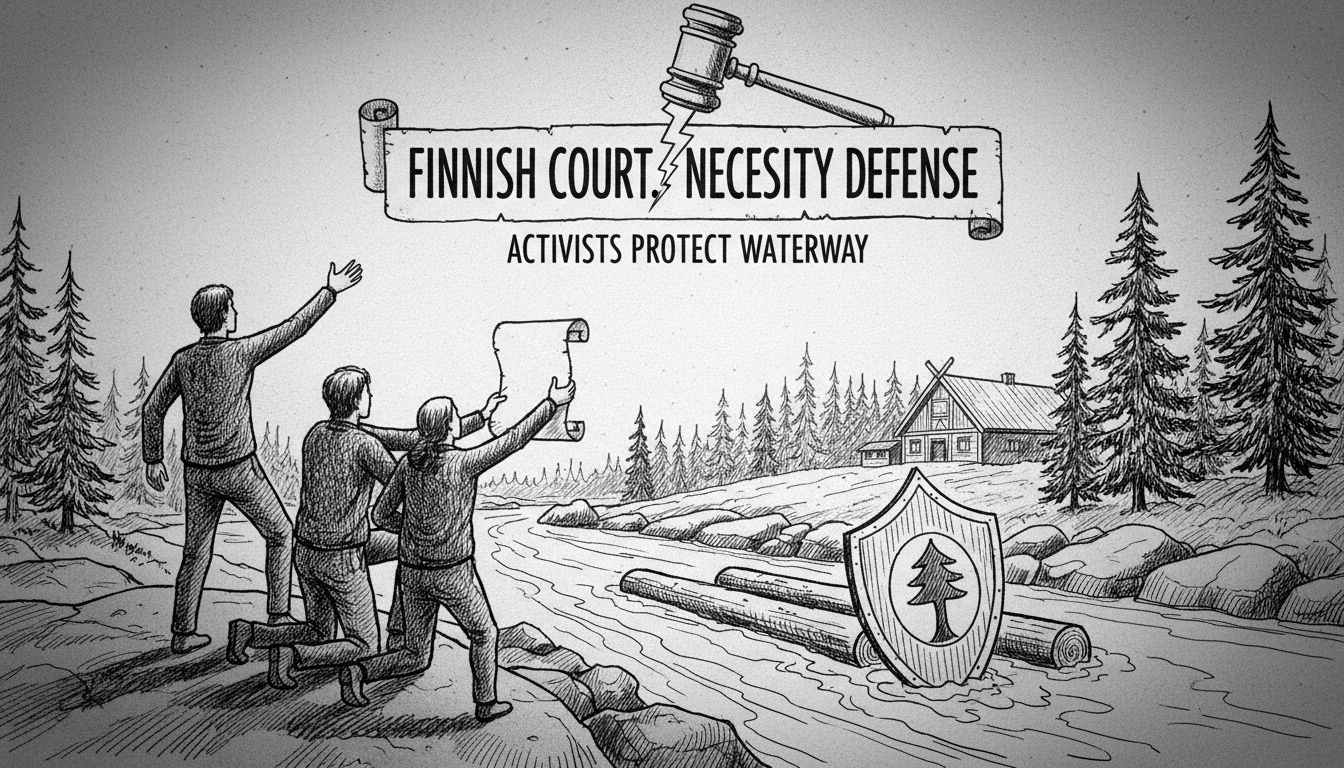
A Finnish district court has dismissed charges against forest activists who halted logging operations in Helsinki's Laajasalo district. The court found they acted under necessity to protect a legally protected stream.
The Helsinki District Court ruled that activists were justified in blocking timber harvesters in Stansvik forest during the third quarter. The activists aimed to protect a small watercourse safeguarded under Finland's Water Act.
Court documents show activist Aino Juvonen positioned herself in front of machinery to prevent destruction of the protected stream. Police arrested Juvonen after she refused to leave the area.
The court determined Juvonen had the right to disobey police removal orders. Judges noted she was defending a legally protected common good through last-resort measures.
This marks the first successful use of the necessity defense in Finnish environmental activism cases. The legal strategy argued activists committed minor offenses to prevent greater environmental harm.
The case represents a strategic environmental litigation effort funded by the Environmental Litigation Foundation. Their legal office defended activists who typically lack resources for major court battles.
Legal experts note this decision updates Finland's approach to environmental civil disobedience. It moves beyond a 1983 Supreme Court precedent that previously governed such cases.
Helsinki municipality planned the logging to enable residential construction in the Stansvik area. The city can appeal the district court's decision to higher courts.
The ruling creates an important precedent for future environmental protection cases across Nordic countries. It acknowledges that citizens may sometimes need to take extraordinary measures to defend legally protected nature.