
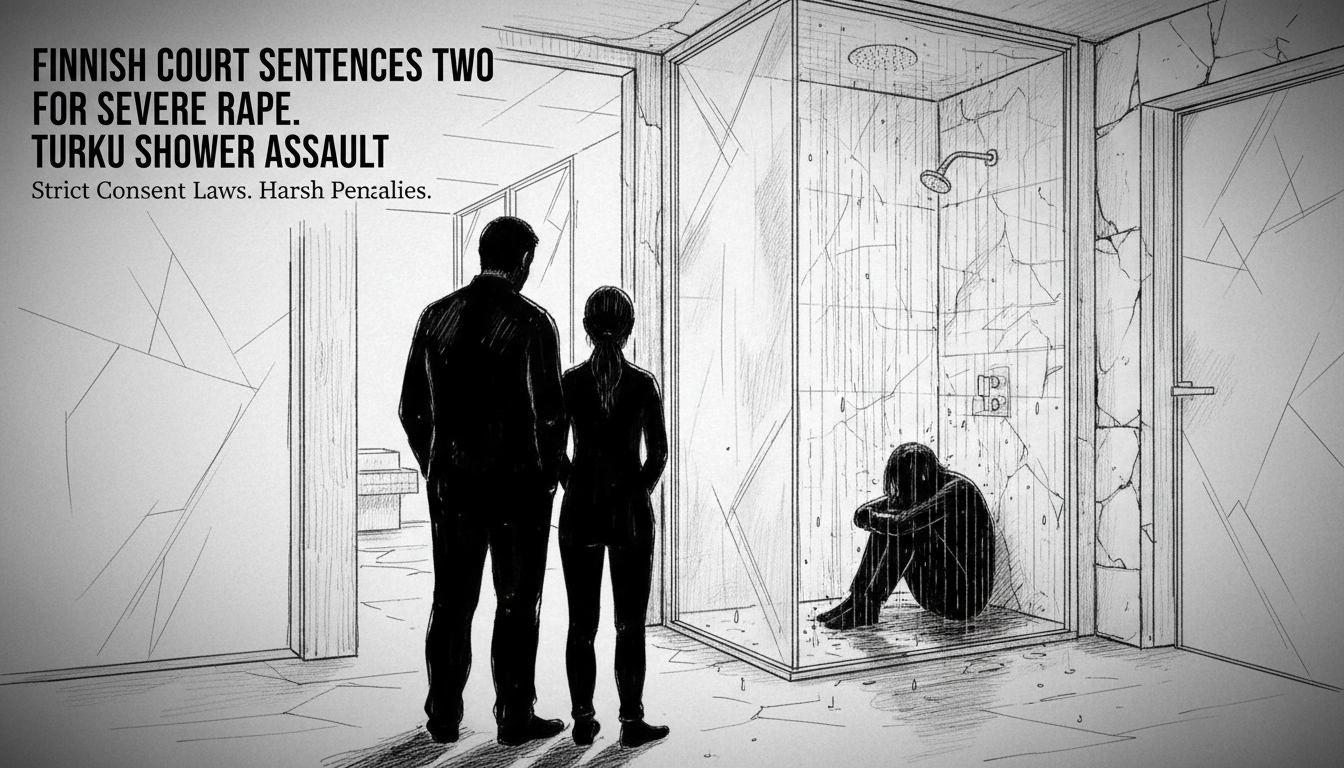
A Finnish district court has delivered a landmark ruling in a severe sexual assault case, sentencing a man and a woman to substantial prison terms for a brutal rape. The Varsinais-Suomen District Court found both defendants guilty of aggravated rape, a classification reserved for the most serious sexual offenses under Finnish law. The crime occurred in the southwestern city of Turku around the turn of the year.
The victim had initially consented to sexual activity with the pair at the man's apartment. The situation deteriorated horrifically when the man pressured the victim to use gamma-butyrolactone, a substance he falsely claimed was harmless and short-acting. The victim quickly became severely ill, vomiting on a balcony while naked. The defendants then carried the nearly unconscious victim to a bathroom and raped her while she was unable to move, speak, or give any form of consent. She later described the events in court as profoundly sick.
A critical element of the prosecution's case involved video evidence recorded by the man on his phone during the assault. These recordings, used in the court proceedings, clearly showed both perpetrators understood their actions were illegal and violated the victim's sexual autonomy. The audio captured the man giving instructions to the woman, who was heard laughing during the assault. The victim filed a police report days later after learning of the recordings.
In a disturbing post-assault communication, the man contacted the victim, accusing her of lying to police and attempting to extort money from him. He wrote that she would lose her case in court in a humiliating fashion and owed him a debt. He suggested he would drop his own compensation claims if she corrected her statement to police.
Both defendants denied committing aggravated rape. The man argued the victim had given consent earlier in the day, which he interpreted from her lack of resistance. The woman claimed she was merely caressing the victim and believed the prior consent remained valid. The court firmly rejected these arguments. It found no basis for either defendant to assume consent persisted after the victim lost consciousness. The court also dismissed the woman's claim of being in a subordinate position to the man, noting video evidence showed she had the opportunity to act differently.
The Varsinais-Suomen District Court emphasized several factors made the crime particularly severe, including the presence of two perpetrators and the recording of the violence. Teemu Joonas Hakala, 35, was sentenced to three years and ten months in prison. Vilma Helena Rantala, 26, received a three-year prison sentence. The court ordered them to pay the victim nearly 8,000 euros in joint compensation for damages, with Hakala liable for an additional 2,000 euros for mental suffering. The ruling is not yet legally binding and can be appealed.
This case underscores the strict interpretation of consent in Finnish sexual offense law, where clear, ongoing, and voluntary agreement is required. The use of intoxicants to incapacitate a victim and the recording of crimes are treated as serious aggravating factors. The verdict sends a clear message about the consequences of such predatory behavior within the Finnish justice system, which prioritizes victim protection in sexual crime cases. The outcome will be closely watched as it moves through potential appeals, testing the robustness of evidence standards in digitally recorded assaults.