
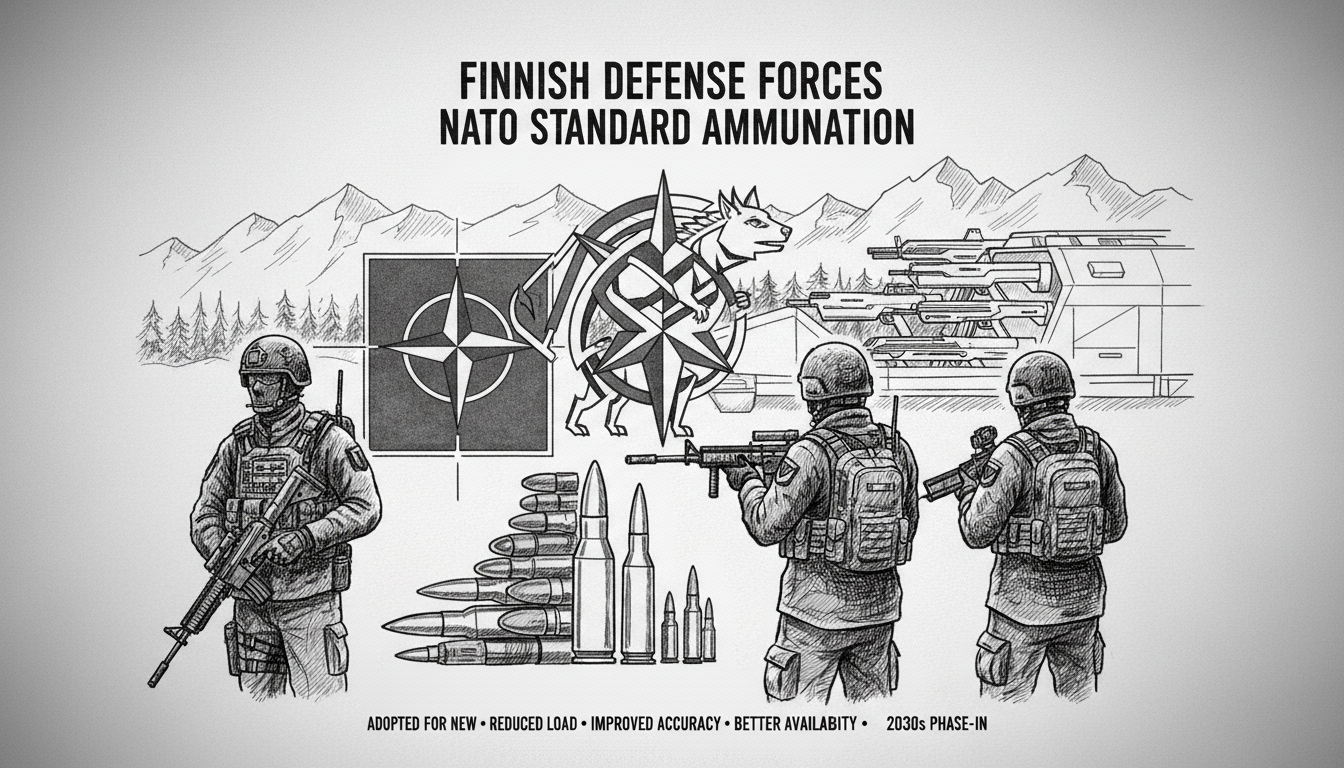
Finland's Defense Forces will transition to NATO-standard calibers for new service firearms. The army says this change is part of an ongoing small arms renewal program. The goal is for conscripts to begin using modern assault rifles by 2030.
The biggest change involves replacing the traditional 7.62x39 mm caliber with 5.56x45 mm for future assault rifles. Squad weapons will shift to 7.62x51 mm and 12.7x99 mm calibers. The pistol caliber remains 9x19 mm.
Brigadier General Sami-Antti Takamaa listed multiple benefits in a statement. He said the current assault rifle and ammunition weigh 8.9 kilograms. Switching to lighter weapons and ammunition could reduce this by up to 3.5 kilograms.
This weight reduction boosts soldier performance and allows carrying more ammunition. Soldiers now carry heavier loads due to night vision equipment, weapon attachments and new protective gear.
In Finnish conditions, small arms engagement distances are almost always under 200 meters. Assault rifles must still reach targets up to 600 meters away. The new caliber's higher bullet velocity and flatter trajectory improve hit probability.
This matters most when shooting at unknown distances or moving targets. The smaller, faster 5.56x45 mm bullet also penetrates materials better under 200 meters.
Lower recoil, straighter trajectory and cheaper ammunition make marksmanship training easier. The army says there is no significant difference in bullet stability through brush between current and new calibers.
NATO-standard ammunition availability is much better during normal and crisis situations. Very few European countries still use traditional 7.62x39 mm ammunition. NATO calibers are used and stored by nearly all allied and partner nations.
Western production capacity for these calibers is also substantially larger. Better availability and lower raw material needs make the new cartridges cheaper to procure.
They are lighter and pack into smaller spaces, reducing logistical burden. The war in Ukraine shows small arms ammunition gets consumed rapidly.
Stocks must be pre-positioned, but supplies must remain available during conflict. Domestic and Nordic production capacity for our calibers is crucial.
Shared calibers with allies allow using identical ammunition during peacetime exercises and emergencies. New calibers will be phased in as weapons are replaced gradually.
Current small arms calibers remain in service but won't receive further purchases. This decision enables continuing acquisition preparations for new personal and squad weapons.
The major small arms renewal affects assault rifles, machine guns, semi-automatic sniper rifles and M10 precision rifles. Army officials say weapon acquisitions will continue throughout the 2030s.
Field testing of new 5.56 mm ARG assault rifles from Sako begins next year. Test results will be analyzed to define detailed requirements before additional purchases.
The decision on replacing the current assault rifle comes later. Plans call for the new assault rifle to enter service around the turn of the decade.
The 7.62 RK 62 assault rifle remains functional and reliable. It will stay in service for a long time. Current weapons and ammunition suffice for normal and emergency needs.
The future assault rifle should be as dependable as the current 7.62 RK 62 has been. The renewal also replaces light machine guns.
The Defense Forces have tested various weapon options. Decisions regarding machine guns will be made between 2026 and 2028.
This transition clearly aligns Finland's military logistics with Western allies while addressing modern combat realities.