
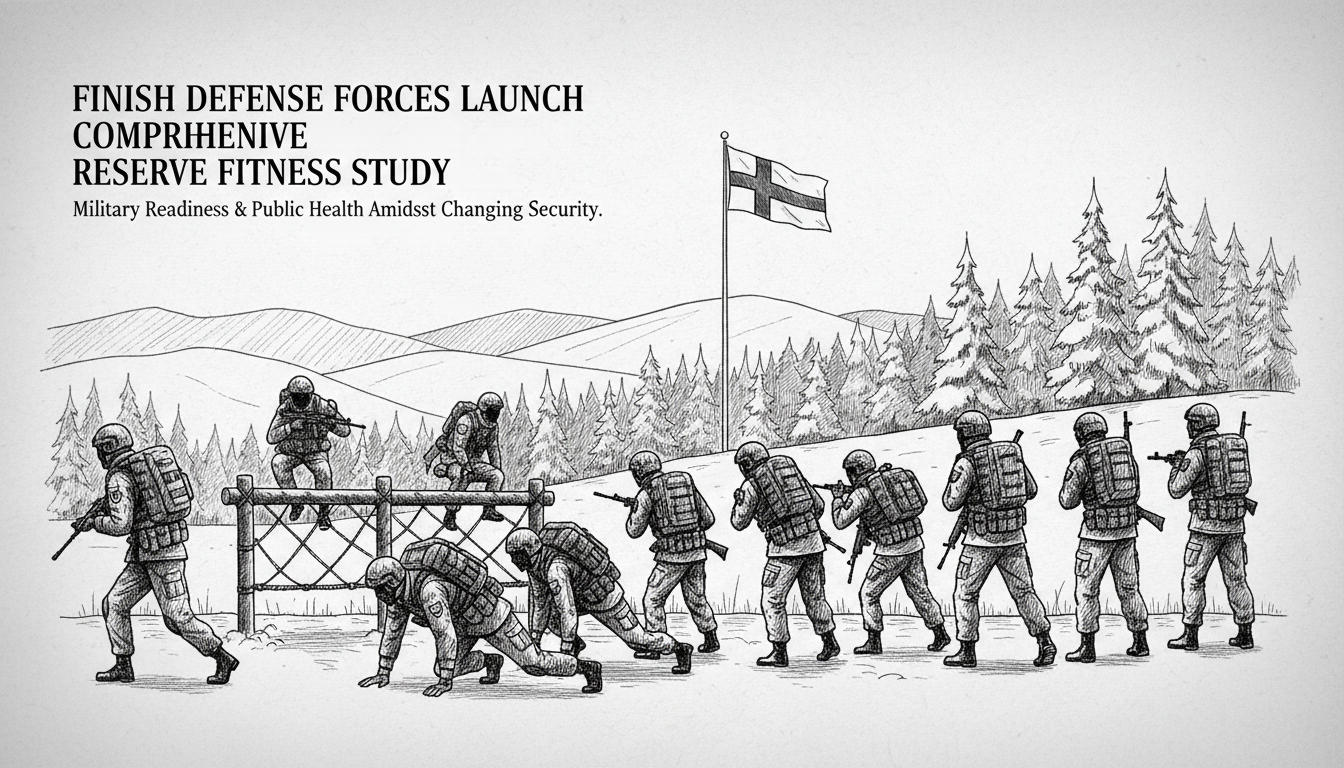
The Finnish Defense Forces have initiated a major research project examining the physical capabilities of reservists aged 20-40 for exceptional circumstances. This extensive study involves nearly one thousand volunteer reservists participating through standard refresher training exercises. Researchers will measure body composition, daily movement patterns, blood samples, and administer comprehensive health questionnaires to assess operational readiness. The project represents one of the most detailed examinations of reserve force fitness ever conducted in Finland.
The research consortium brings together military and academic expertise from across Finland's defense and health sectors. Collaboration includes the Defence Command's training department, the Finnish Defence Research Agency, the National Defence University, universities in Jyväskylä and Tampere, the Institute for Health and Welfare, the UKK Institute for Health Promotion Research, and the Centre for Military Medicine. This multi-institutional approach ensures comprehensive data collection and analysis that will inform both military planning and public health policy.
Finland maintains one of Europe's largest reserve forces relative to its population, with approximately 900,000 trained reservists supporting the nation's comprehensive security model. The study's timing reflects heightened security concerns across the Baltic region and aligns with broader NATO readiness requirements following Finland's recent alliance membership. Defense officials emphasize that understanding reservists' physical condition directly impacts operational planning and national security preparedness.
This research will provide crucial public health data about young Finnish adults' physical fitness, activity levels, and health behaviors. The findings will help shape both military training protocols and national health initiatives. Previous studies have indicated declining physical activity among young adults, making this current assessment particularly valuable for long-term security planning. The data will enable more precise resource allocation and training development for Finland's conscription-based defense system.
What practical implications will this study have for Finland's security policy? The results will likely influence future defense budget allocations, training requirements, and equipment procurement decisions. Military planners need current fitness data to properly structure training programs and deployment readiness standards. The research may also reveal regional health disparities that could affect reserve availability across different parts of the country.
The study represents a significant investment in understanding how societal health trends impact national security. As Finland adapts to its new NATO responsibilities, maintaining a physically capable reserve force becomes increasingly important for regional deterrence. The final report is expected to provide both immediate operational guidance and long-term strategic direction for Finland's unique security model that relies heavily on citizen-soldiers.