
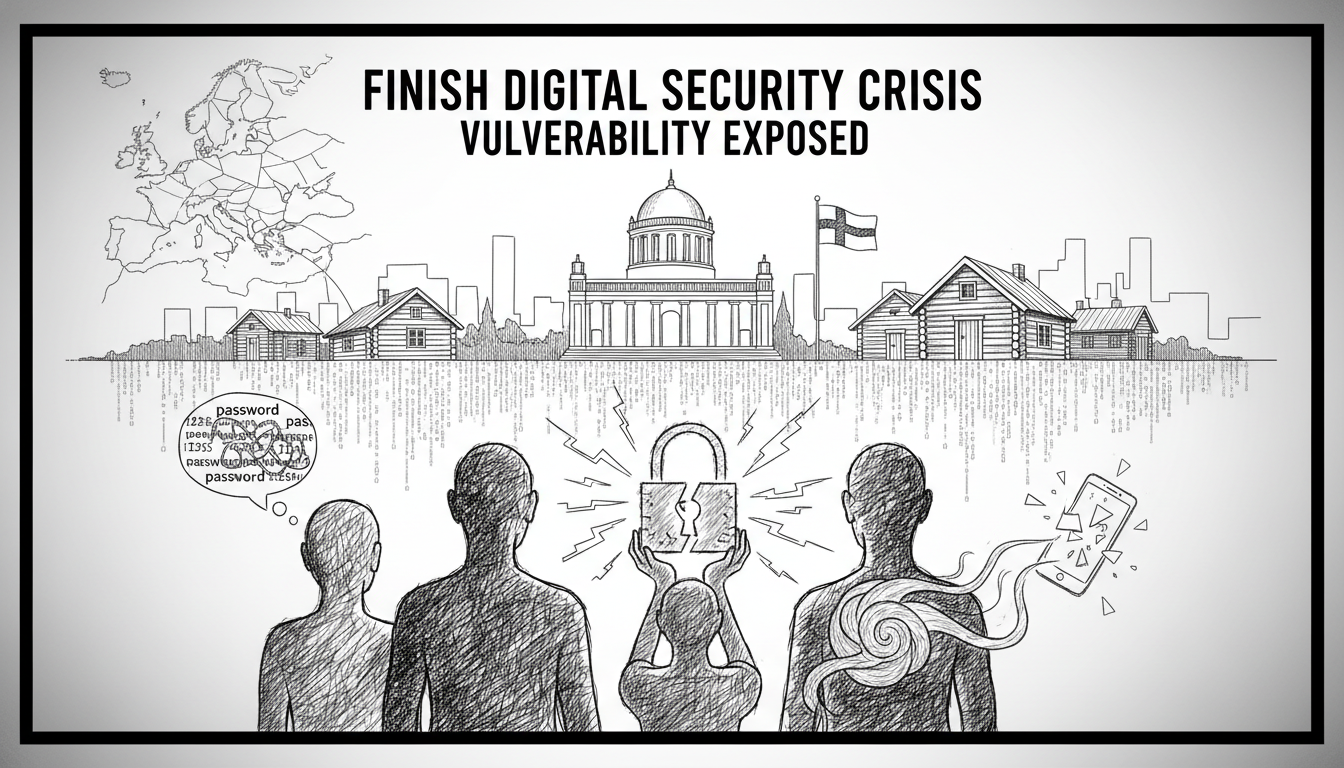
A new national survey reveals significant gaps in the digital skills of Finnish citizens, exposing many to financial fraud and data theft. The Digital Security Barometer, published by the Digital and Population Data Services Agency, indicates that over one-third of Finns do not know how to act if they suspect they have been targeted by an online scam. This finding presents a direct challenge to the government's digital policy objectives and raises questions about the effectiveness of current public education campaigns funded through the state budget.
One in four Finns reportedly does not know how to respond if a caller posing as a government official or bank employee asks for login credentials. Legitimate authorities never request such sensitive information via phone or text message. In these situations, the correct action is to completely ignore the request. Scammers often create a false sense of urgency and manipulate their targets emotionally, making identification difficult, especially when the fraudster appeals to feelings like affection or fear.
Marianne Lindroth, a researcher at Aalto University and project manager for the Ministry of Transport and Communications' Cyber Citizen initiative, advises people to pause and critically assess any message that triggers an emotional response. She points to decision fatigue as a key vulnerability. People make numerous decisions daily, and many actions become automatic. This lack of deep reflection is exploited in scams and frauds, Lindroth explained in a project statement.
Protecting personal data online is a crucial component of digital literacy. Yet, the survey shows that 40 percent of Finns do not know how to safeguard their personal information. A core aspect of this protection is using strong, unique passwords. Nearly half of Finnish citizens, however, reuse the same passwords across different online services, creating a massive security risk. This practice, if a single service is breached, can compromise a user's entire digital identity.
The implications for government policy are clear. These digital skill deficits undermine national security and economic stability. They increase the burden on law enforcement and financial institutions that must handle fraud cases. The Ministry of Finance and the Ministry of the Interior have previously allocated funds for digital inclusion programs, but these survey results suggest a need for a more targeted and impactful strategy. Future Eduskunta debates may focus on whether to increase funding for hands-on digital security training in municipalities or to mandate more comprehensive digital education in schools.
For international observers and EU partners, Finland's struggle is instructive. The country is often seen as a digital frontrunner with high internet penetration and a robust public digital infrastructure. This survey reveals that even in a technologically advanced society, human factors remain the weakest link in cybersecurity. The European Union's broader Digital Decade policy, which aims for 80% of citizens to have basic digital skills by 2030, faces similar hurdles across member states. Finland's experience highlights that achieving digital resilience requires continuous public engagement, not just infrastructure investment.
The situation calls for a coordinated response. Consumer protection agencies, banks, and telecom operators must work with the government to simplify and amplify security messaging. The next phase of the Cyber Citizen project will likely focus on these practical interventions. For now, the data presents a sobering reality. Widespread digital vulnerability is not just a technical issue but a societal one, with real consequences for personal finances and trust in digital public services.