
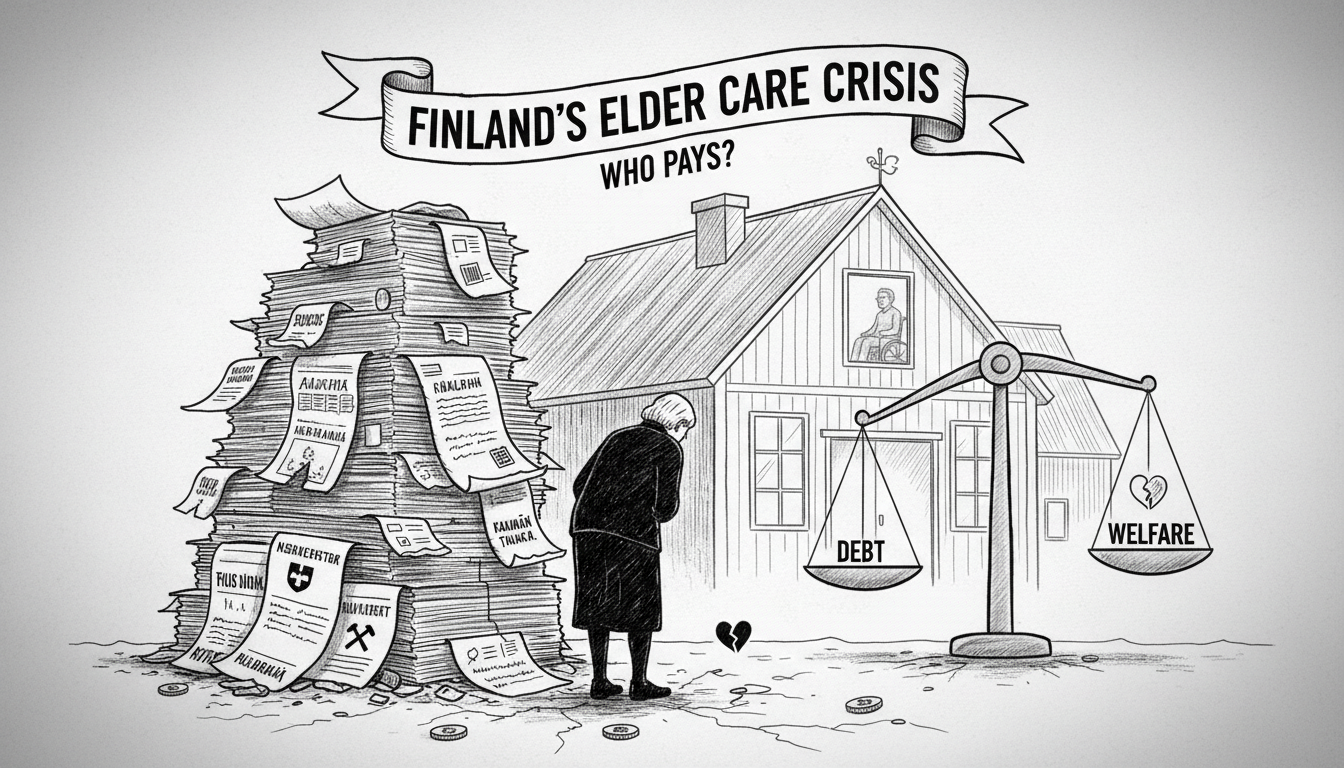
A 77-year-old Finnish widow faces debt collection after her husband's round-the-clock care home fees consumed her finances. Marketta Puranen from Palokka cared for her spouse at home for over a decade following his stroke, but his increasing aggression and care needs forced the move to institutional care approximately eighteen months ago. The well-being district responsible for social services advised her to consider moving away from her home community to reduce costs, a suggestion that highlights systemic pressures within Finland's reformed welfare model.
The case exposes growing tensions in Finland's elder care system following the national health and social services reform. Municipalities previously managed these services, but responsibility now falls to twenty-one autonomous well-being districts. These districts face strict budgetary constraints while managing rising demand from Finland's rapidly aging population. Marketta Puranen's situation represents thousands of families navigating complex fee structures, where 24-hour institutional care costs can quickly surpass pensions and savings.
Finnish law mandates that municipalities, now through well-being districts, provide necessary social and healthcare services. Client fees are income-based, but the definition of 'income' and calculations for cohabiting spouses create difficult situations. The Ministry of Social Affairs and Health sets national guidelines, yet local interpretation varies. This discrepancy can lead to advice like that given to Puranen, where moving to a different district with lower living costs is presented as a financial solution, raising ethical questions about community ties.
Political parties in the Eduskunta, Finland's parliament, have long debated care financing. The current government coalition has prioritized controlling public expenditure, which indirectly pressures well-being districts to limit service costs. Opposition parties frequently cite cases like Puranen's to argue for increased state subsidies and clearer protections for the assets of healthy spouses. The issue connects to broader EU discussions on the sustainability of social care models amid demographic change, with Nordic countries often seen as test cases.
The fundamental question is whether the system protects dignity and security in old age. When a person dedicates years to family caregiving, only to face financial ruin from necessary institutional care, the social contract feels broken. The advice to relocate from one's lifelong home treats community as a financial variable rather than a cornerstone of well-being. Finland built its reputation on comprehensive welfare, but cases like this suggest the model is straining under economic and demographic pressures that require honest political solutions.