
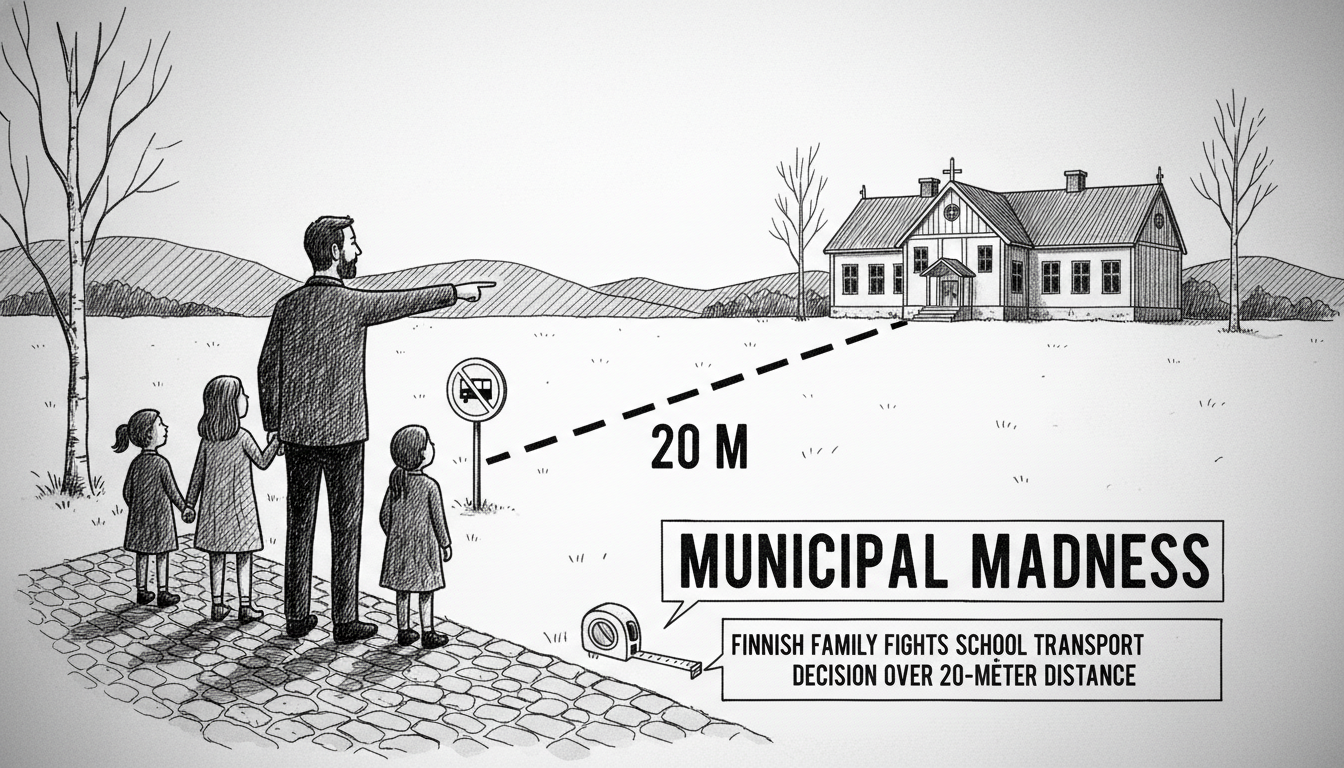
A Finnish family challenges their local school transport rules. They dispute a decision involving just 20 meters of road. Municipalities in Finland determine school travel distance and safety assessments independently. This creates varying standards across different regions.
The Sahlsten family in Paimio currently receives school transport for their second-grader Ida. Services may end after fourth grade. Father Juha Sahlsten waits mornings with his daughter for the transport vehicle. The situation appears inconsistent with common sense, the family says.
Mother Virpi Hellén calls the situation deeply unfair. She has two daughters in local schools. Last year, her older daughter Maisa lost school transport rights before starting sixth grade. The decision surprised the family completely.
Local education officials determined the route measured under five kilometers. They also judged the path insufficiently dangerous for transport services. The family now questions how authorities measure school travel distance.
Finnish municipalities use door-to-door calculations for school routes. This method sometimes creates unexpected results for families living near school boundaries. The system prioritizes precise measurements over practical walking conditions.
Local officials maintain they follow established guidelines. They say distance and safety evaluations use standardized methods. Families can appeal decisions through administrative channels.
This case highlights how technical rules can override practical realities. The 20-meter dispute shows how small measurements create big consequences for daily family life.