
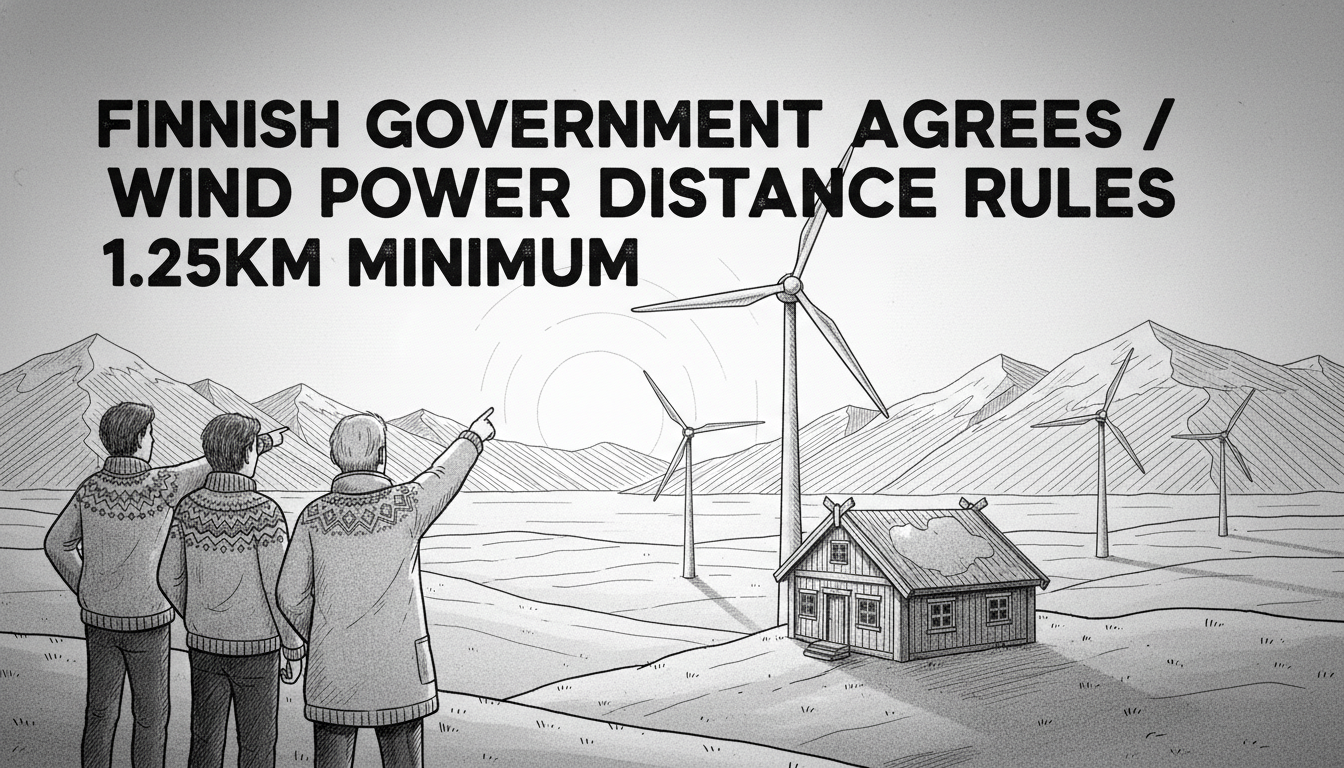
The Finnish government has finalized a landmark agreement establishing minimum distance requirements for wind turbines near residential areas. Environmental Ministry officials confirmed the proposal sets a 1.25-kilometer buffer zone between new wind power installations and existing settlements. This compromise legislation represents a significant departure from the original draft that proposed much stricter regulations based on turbine height multipliers.
The new distance requirement will not apply to areas already designated for wind power development in regional plans. Municipalities can also grant exceptions when four-fifths of local property owners support specific projects. The government plans to submit the comprehensive land use law reform early next year, combining both wind and solar energy regulations.
For solar power installations, the legislation introduces new requirements for larger projects. Solar farms exceeding 50 hectares will now require formal zoning approval, creating a more structured framework for renewable energy infrastructure development.
The original proposal faced substantial opposition from industry groups and business organizations. The Finnish Central Chamber of Commerce warned during summer consultations that the stricter rules would eliminate 75-100% of potential wind power sites across Southern, Western, and Eastern Finland. Their analysis suggested half of Finland's regions would become effectively off-limits to wind energy development under the initial plan.
This political compromise reflects the delicate balance between renewable energy expansion and local community concerns. Finland's coalition government navigated competing priorities from environmental goals, energy security needs, and municipal autonomy. The final agreement demonstrates how EU climate targets must be reconciled with practical implementation challenges at the national level.
The decision carries implications for Finland's renewable energy trajectory and EU climate commitments. As Nordic countries accelerate their green transitions, managing local opposition while maintaining development pace remains a critical challenge. The Finnish approach of establishing clear minimum standards while allowing local flexibility could serve as a model for other European nations facing similar tensions between national energy strategies and community acceptance.
What does this mean for Finland's renewable energy future? The compromise likely ensures continued wind power development while addressing legitimate neighbor concerns. The flexibility provisions acknowledge that one-size-fits-all approaches often fail in energy infrastructure planning. This balanced solution may ultimately support more sustainable long-term renewable growth across Finnish municipalities.
Political observers note the agreement represents a pragmatic solution from a multiparty coalition government. The final legislation successfully bridges divergent viewpoints between environmental protection, energy industry needs, and local community interests. This outcome demonstrates Finland's consensus-driven approach to complex policy challenges.