
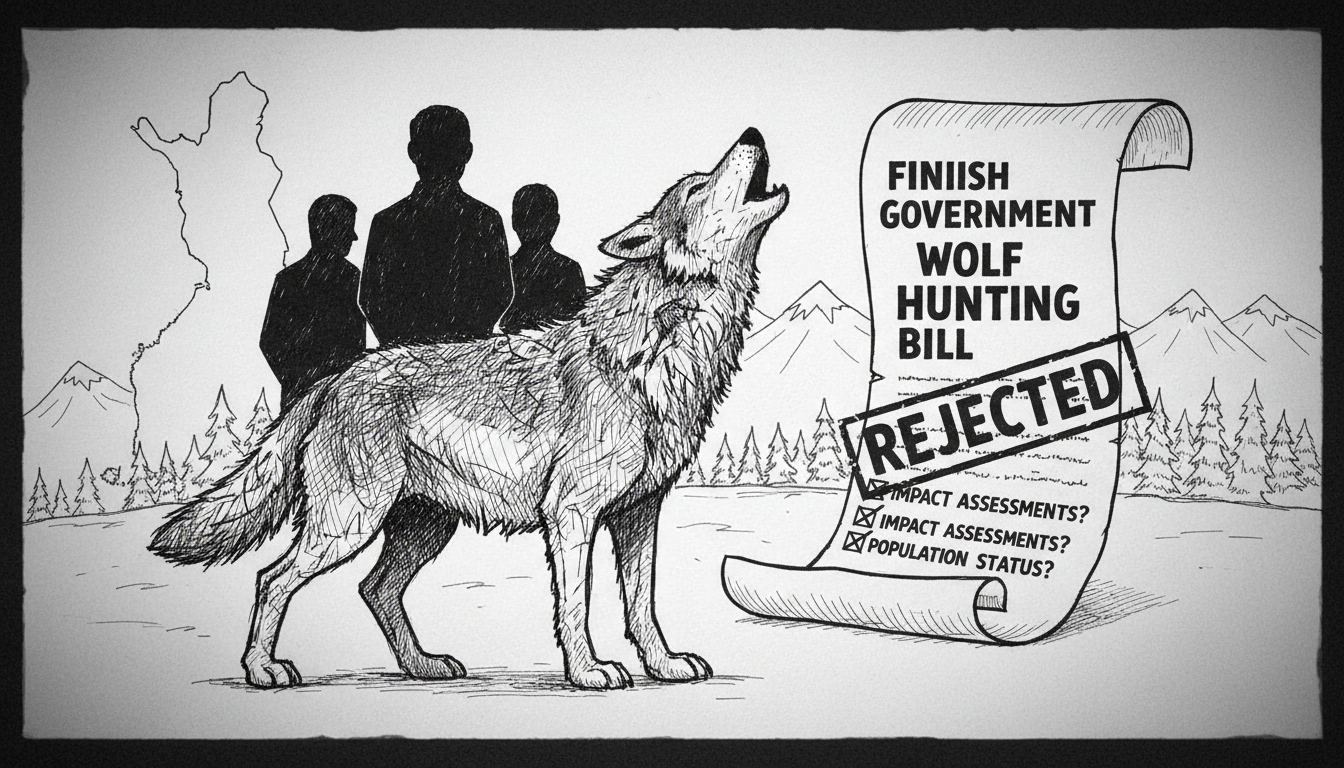
Finland's Legislative Assessment Council delivered its harshest critique yet of government legislation this parliamentary term. The council assigned the lowest possible rating to a controversial wolf hunting bill currently before Parliament. This proposed law would remove year-round protection for wolves and permit hunting based on either individual permits or regional quotas.
The assessment body identified multiple critical flaws in the draft legislation. Council Secretary Essi Römpötti stated the proposal completely lacks required impact assessments. The current state of Finland's wolf population remains undocumented in the proposal. The council cannot form any proper understanding of the economic or social consequences from the current draft.
This marks the second major legislative criticism within days. The government's procurement law reform received similar harsh treatment earlier this week. The wolf hunting legislation proves even more poorly prepared according to evaluators. It unusually reached Parliament before the assessment council could review it, breaking standard legislative procedure.
The proposal now sits with Parliament's Agriculture and Forestry Committee. This committee can request corrections and supplements from the Ministry of Agriculture and Forestry. Committee members face pressure to address the fundamental flaws identified by legal experts.
Finland's wolf protection debate reflects deeper urban-rural divisions in Finnish politics. Rural communities report increasing wolf encounters and livestock losses. Conservation groups warn that relaxing protections could threaten the species' recovery. The government coalition includes parties that promised rural constituents action on predator management.
The legislative assessment noted particularly troubling omissions. The proposal fails to indicate how many wolves currently live in Finland. It doesn't specify which regions experience the most conflict. There's no estimate of how many wolves might be hunted annually under the new system.
European Union habitat directives complicate Finland's wolf management options. Finland must maintain favorable conservation status for protected species. The proposal completely ignores how increased hunting might affect wolf population viability. This creates potential conflict with EU nature conservation requirements.
The assessment council's opinions carry advisory weight rather than legal force. Parliament can technically proceed with flawed legislation. Past governments have occasionally ignored critical assessments, though rarely for proposals rated this poorly. The Agriculture Committee now decides whether to demand substantial revisions or risk passing deeply flawed legislation.
This situation reveals broader concerns about legislative quality in the current government. Two major bills receiving devastating critiques within one week suggests systemic problems in law preparation. The opposition will likely use these assessments to question the government's competence in managing complex policy areas.