
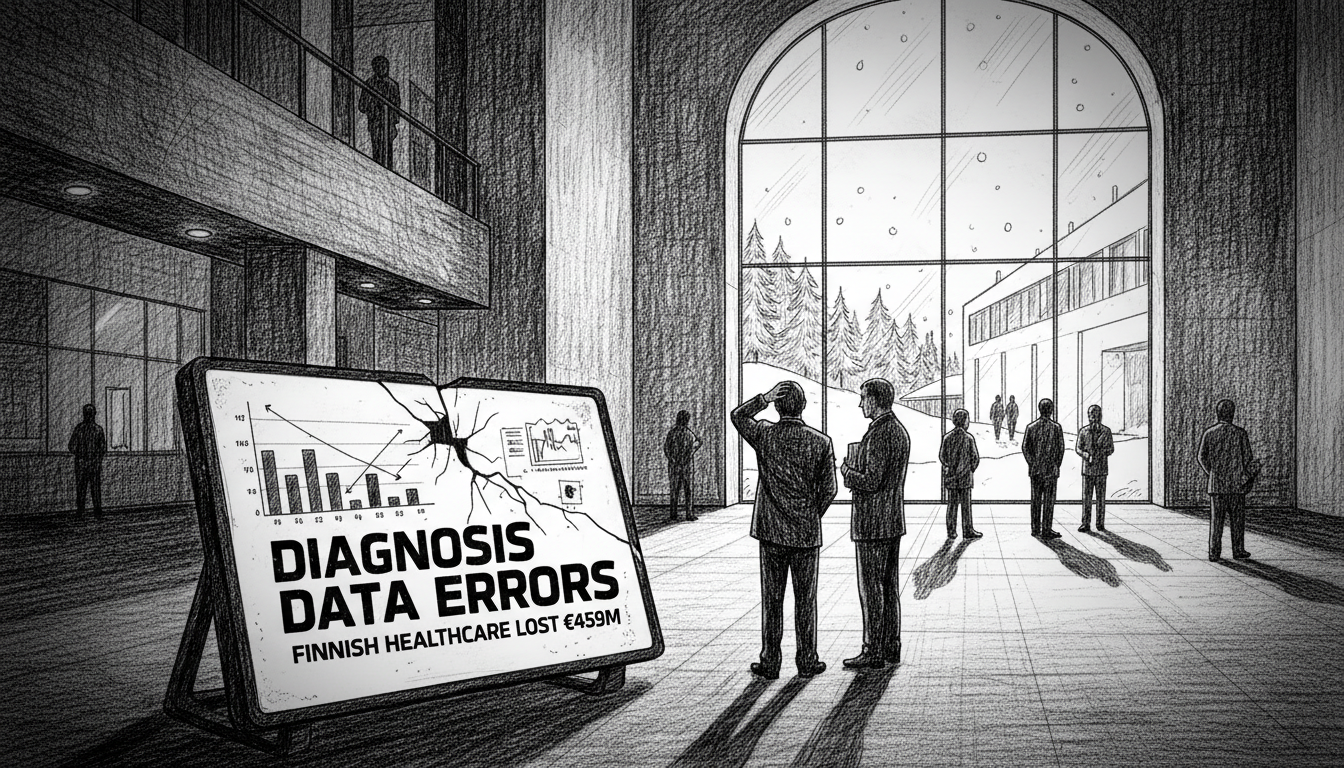
Two Finnish welfare regions say incorrect diagnosis data has cost them millions in healthcare funding. South Ostrobothnia and Central Finland welfare areas blame system errors for inaccurate patient records that affect their state funding allocations.
The National Institute for Health and Welfare calculates regional funding based on local illness rates and service needs. Both regions argue their data does not reflect reality and they are being unfairly penalized.
Officials suspect technical problems cause some systems to miss chronic diagnoses while others generate false long-term conditions. This creates uneven funding distribution across Finland's healthcare regions.
South Ostrobothnia's chief physician Jari Kankaanpää described the problem. "Some regions have all chronic patients recorded properly. Others only track those that doctors or nurses happen to mark," he said in a statement.
Both regions face massive budget shortfalls they must cover by the end of 2026 under Finnish welfare area law. Central Finland projects a 329 million euro deficit while South Ostrobothnia needs 130 million euros.
Covering these gaps would require drastic measures. Central Finland would need to close all service points for one year or dismiss about half of its 11,500 staff. South Ostrobothnia would need to cut 2,400 workers, about one-fifth of its workforce.
Neither option is feasible because constitutionally guaranteed services cannot be eliminated.
Kankaanpää found clear data anomalies during his analysis. Some regions show unusually high rates of specific conditions that don't match medical reality. North Ostrobothnia appears to have exceptional lung disease rates while two other areas show ten times more dental cavities than elsewhere.
Uusimaa regions report numerous hip fractures and transient ischemic attacks recorded as chronic conditions, though patients typically recover from these. Regions have little incentive to correct records that increase their funding.
The National Institute for Health and Welfare is reforming the funding model to include more diagnoses. Regional representatives worry this will make the system even more complex.
They want opportunities to correct missing diagnosis data first, then adjust all regional funding nationally. The current situation forces unequal austerity measures across Finland's healthcare system.
South Ostrobothnia welfare director Tero Järvinen explained the broader impact. "All regions need to make adjustments, but data errors determine how much different areas must cut services," he said.
The funding discrepancies highlight how technical system flaws can create real financial crises in public healthcare. Without accurate data, regions serving genuinely sicker populations might receive less support than areas with better record-keeping.