
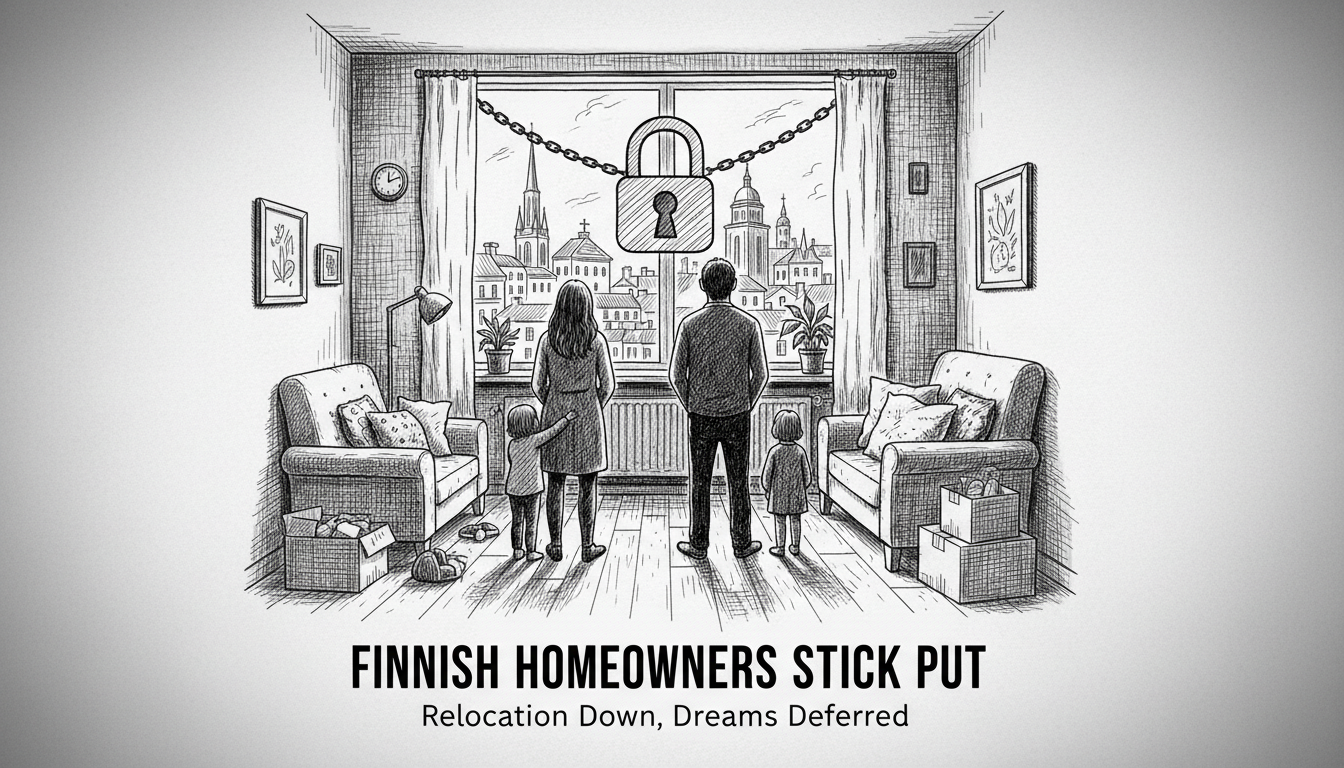
Many Finnish homeowners now face selling their properties at a loss after recent housing price declines. A new study reveals this psychological barrier significantly reduces mobility and keeps families in unsuitable homes.
Research from the Government Institute for Economic Research and University of Helsinki examined homeowners in Helsinki, Tampere and Turku regions. The study found people often refuse to sell when market prices fall below their original purchase price.
About seven percent of households moved annually in the research data. Moving probability dropped nearly 50 percent for households facing potential losses.
Research professor Teemu Lyytikäinen explained the psychological impact. 'If someone paid €200,000 for an apartment five years ago and cannot get at least that price now, they often stay put even when they need to move,' he said in the research release.
The avoidance of selling at loss reduced both local moves and relocation between employment areas. This means families live in homes poorly suited to their life situations, and workers may not reach the best job opportunities.
Researchers discovered one workaround: homeowners facing losses often rent out their previous property instead of selling. This allows moving without realizing the financial loss.
The effect appears strongest for recent buyers and those with high mortgage debt relative to property value. The study covered 2006-2018 data, capturing various market conditions.
While reduced mobility creates personal inconvenience, the research found no significant impact on unemployment duration or job switching patterns. The phenomenon primarily affects housing choices rather than employment outcomes.
This research highlights how psychological pricing barriers can create market inefficiencies. Families remain in cramped apartments after having children, or older couples stay in large homes after children move out, simply to avoid acknowledging paper losses.