
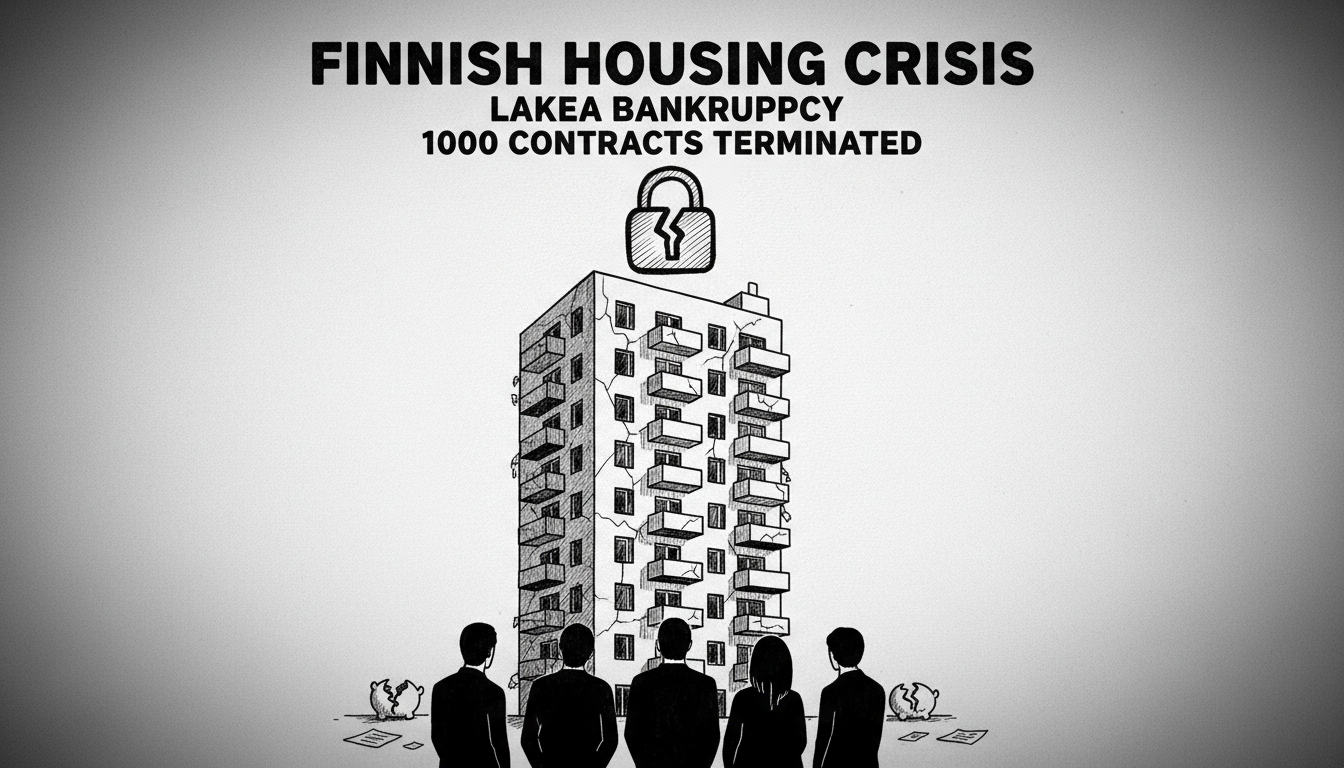
Finland faces a significant housing crisis as the Lakea property group's bankruptcy unravels rental agreements for approximately 1,000 residents across ten municipalities. Bankruptcy trustee Touko Raitis confirmed that all Omaksi contracts have been terminated and new rental agreements will be offered starting next week. The situation highlights vulnerabilities in Finland's unique housing ownership models and raises questions about consumer protections in specialized rental schemes.
The Omaksi model represented an innovative approach to home ownership that combined rental and purchase elements. Residents initially paid seven percent of the apartment's value followed by monthly payments applied toward the property's redemption. After twenty years, participants could fully own their apartments. This system now lies in ruins following the corporate collapse.
Bankruptcy officials will send personalized contract proposals to affected residents during the coming week. These will include market-rate rental terms with indefinite validity periods. The new agreements feature extended notice periods for landlords while maintaining shorter termination options for tenants. Monthly rates will match what residents paid during November before the bankruptcy proceedings accelerated.
One Kuopio resident revealed she had paid over 50,000 euros through the Omaksi system with little hope of recovering her investment. Her situation mirrors hundreds of other families now facing financial devastation and housing uncertainty. Many planned to move in with friends or relatives as they confront the reality of lost savings and disrupted living arrangements.
The legal foundation collapsed because contracts existed with Lakea rather than the individual housing companies. When those companies entered bankruptcy, Lakea's management rights over the properties automatically terminated. This technical distinction created a legal vacuum that left residents without contractual protections they believed they possessed.
Raitis explained that collecting only maintenance fees became unsustainable after the bankruptcy. These reduced payments couldn't cover essential services like water, heating, and property maintenance. The trustee emphasized that market-rate rentals represent the only viable path forward for maintaining the buildings and preserving housing options.
This crisis exposes regulatory gaps in Finland's housing market that permitted specialized ownership models without adequate consumer safeguards. Parliament may need to review legislation governing alternative housing arrangements to prevent similar collapses. The situation also tests Finland's social safety net as municipalities prepare for potential housing assistance requests.
The government faces pressure to address systemic issues while providing immediate support to affected families. With winter approaching and hundreds facing potential displacement, the timeline for resolving this housing crisis remains uncertain. The coming weeks will reveal whether temporary solutions can stabilize the situation before deeper reforms emerge.