
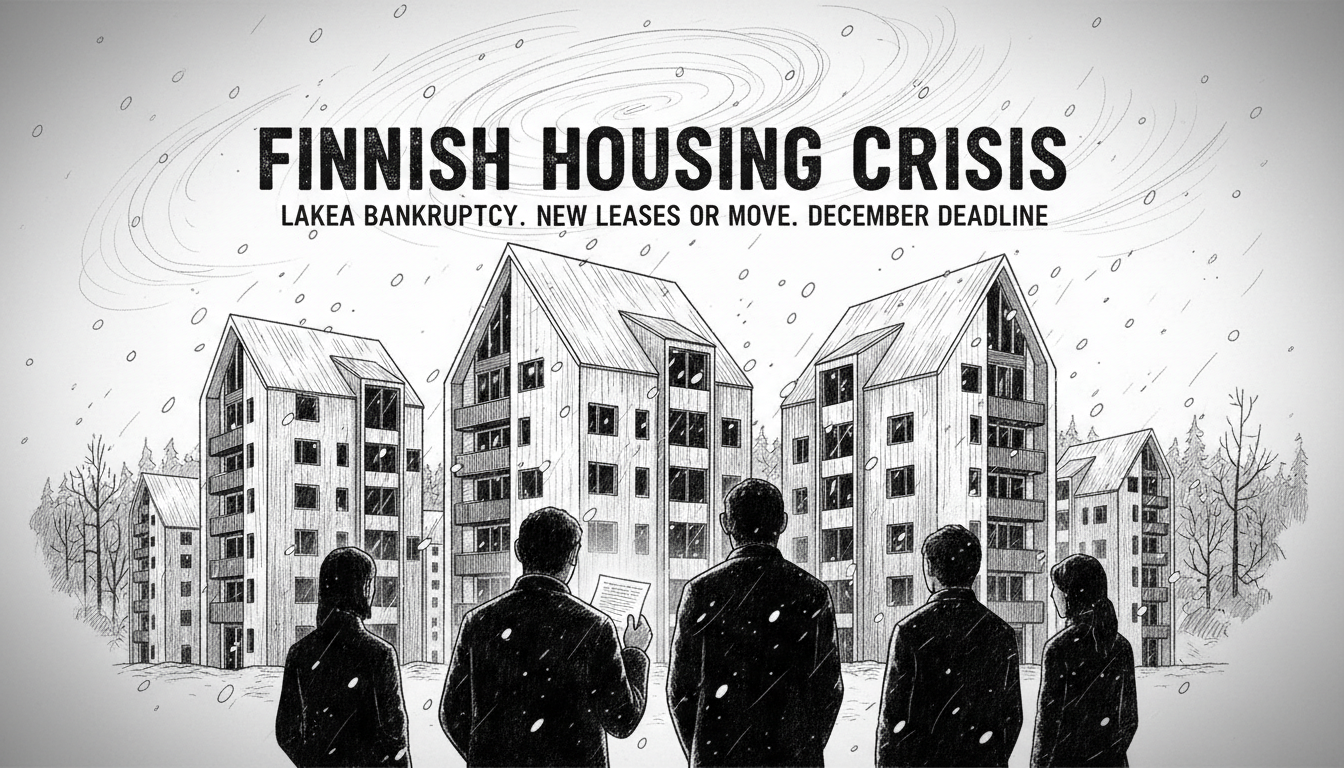
Thousands of Finnish residents face immediate housing uncertainty following the bankruptcy of property developer Lakea. The company's collapse has triggered automatic termination of unique ownership-accumulation contracts across 23 apartment buildings in the Helsinki region. Residents who participated in Lakea's progressive ownership model must now either accept new rental agreements or vacate their homes by year's end.
The bankruptcy estate managing Lakea's assets has dispatched formal letters to affected households. These notifications demand decisions about new tenancy contracts during December. Residents refusing the revised terms must surrender their apartments to bankruptcy authorities before the new year begins. The situation creates particular hardship during Finland's holiday season when housing markets typically slow.
Lakea's innovative ownership model allowed participants to pay seven percent of an apartment's total value as initial capital. Monthly payments combined standard rent with incremental ownership accumulation. After completing the payment period, residents could fully purchase their apartments at predetermined prices accounting for both initial investments and subsequent installments. This model appealed to many seeking gradual property acquisition without traditional mortgage arrangements.
The bankruptcy proceedings automatically converted these ownership-accumulation residents into regular tenants overnight. Estate administrators currently determine market-rate rent levels for the proposed new contracts. The bankruptcy estate confirms these replacement agreements would function as indefinite rental contracts rather than ownership pathways.
This housing crisis reflects broader vulnerabilities in Finland's property development sector. Similar progressive ownership models gained popularity during recent construction booms as alternatives to conventional financing. The Lakea collapse demonstrates how such arrangements leave residents exposed when developers face financial troubles. Consumer protection mechanisms appear insufficient for these hybrid ownership-rental agreements.
Finnish housing policy traditionally emphasizes tenant security through extensive rental regulations. The sudden contract terminations challenge this national approach to housing stability. Parliament members from across the political spectrum have begun questioning whether current legislation adequately protects participants in alternative ownership schemes.
The situation affects numerous families in Helsinki's growing suburban areas where Lakea concentrated its developments. Many residents invested significant savings into the ownership-accumulation model expecting eventual property transfer. The bankruptcy now leaves them facing potential displacement or unexpected rent increases during Finland's economically challenging winter months.
Local housing authorities monitor the situation closely as December decision deadlines approach. Social services prepare for potential increases in housing assistance applications if significant numbers of residents cannot accept new terms. The case highlights ongoing tensions between innovative housing finance models and consumer protection in Finland's evolving property market.