
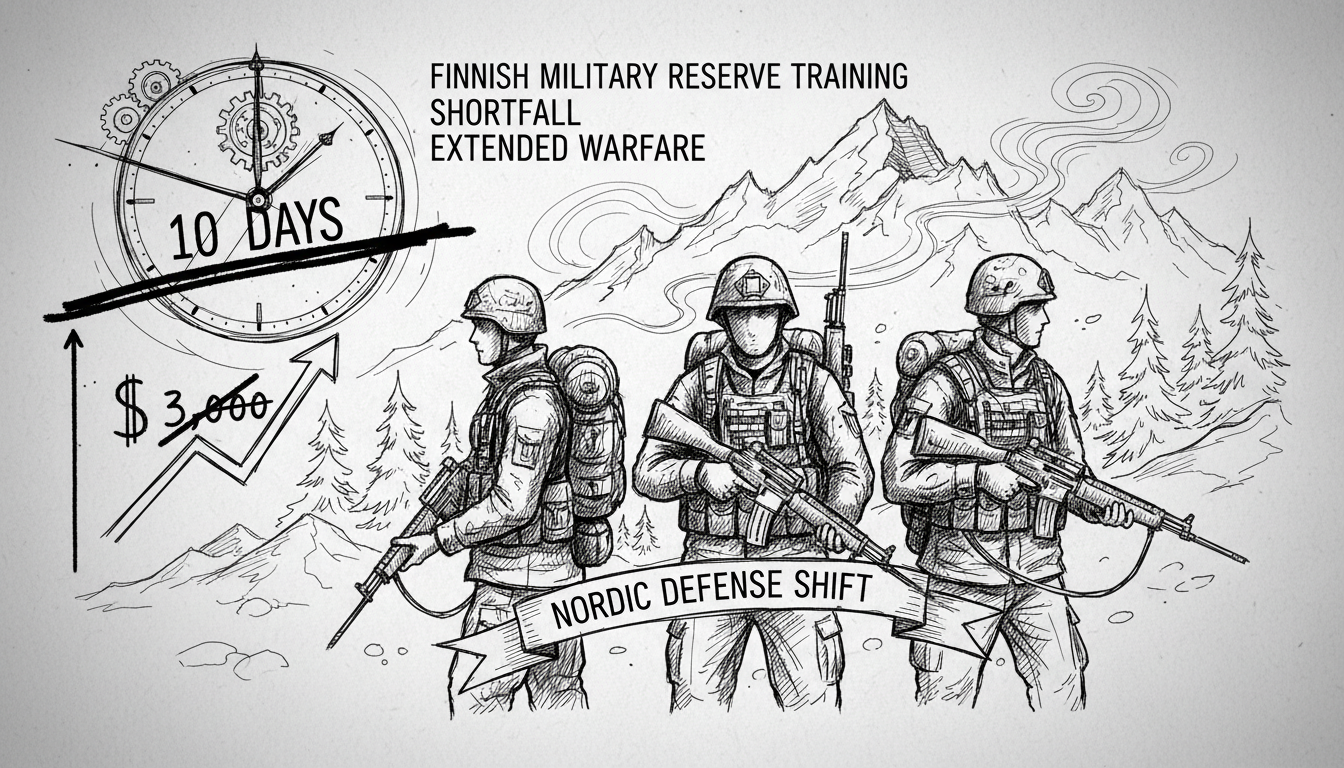
The Finnish Defense Forces will fall approximately 3,000 reservists short of their annual training target this year. Military officials aimed to train 25,000 reservists but now project reaching only 22,000 participants.
Major Arto Rantahalvari from Defense Command explained the shortfall stems from two primary factors. Rising costs have constrained training capacity. Simultaneously, the military has extended the duration of many refresher exercises.
Traditional reservist training typically lasted five days. The defense forces now conduct exercises spanning up to ten days. This strategic shift reflects changing military priorities across the Nordic region.
Officials state the longer exercises focus on extended warfare scenarios. They want to build capability for prolonged conflict situations. The extended training comes with higher per-session costs but delivers more comprehensive preparation.
Finland maintains one of Europe's most substantial reserve forces relative to population. The country can mobilize approximately 280,000 trained personnel during emergencies. This system forms the backbone of Finnish national defense strategy.
The training shortfall occurs amid broader Nordic defense cooperation enhancements. Finland's recent NATO membership has intensified focus on military readiness across the region. Longer exercises align with NATO standards for extended operations.
Defense budget constraints present ongoing challenges for Nordic countries. Balancing comprehensive training with fiscal reality remains difficult. Finland spends approximately 2.3% of GDP on defense, exceeding the NATO target.
The extended exercises have improved unit performance according to military assessments. Troops develop deeper skills during longer training periods. They practice complex scenarios that shorter exercises cannot accommodate.
This training approach reflects lessons from ongoing European conflicts. Modern warfare demands sustained operational capability over extended periods. Nordic nations increasingly prioritize endurance in their military preparations.
International observers watch Finnish defense developments closely. The country's geographical position and recent NATO accession make its military readiness particularly significant. Reserve forces provide crucial depth to national defense.
The training adjustments demonstrate practical responses to evolving security needs. While falling short numerically, the qualitative improvements may offset quantity concerns. Defense officials balance these competing priorities continuously.