
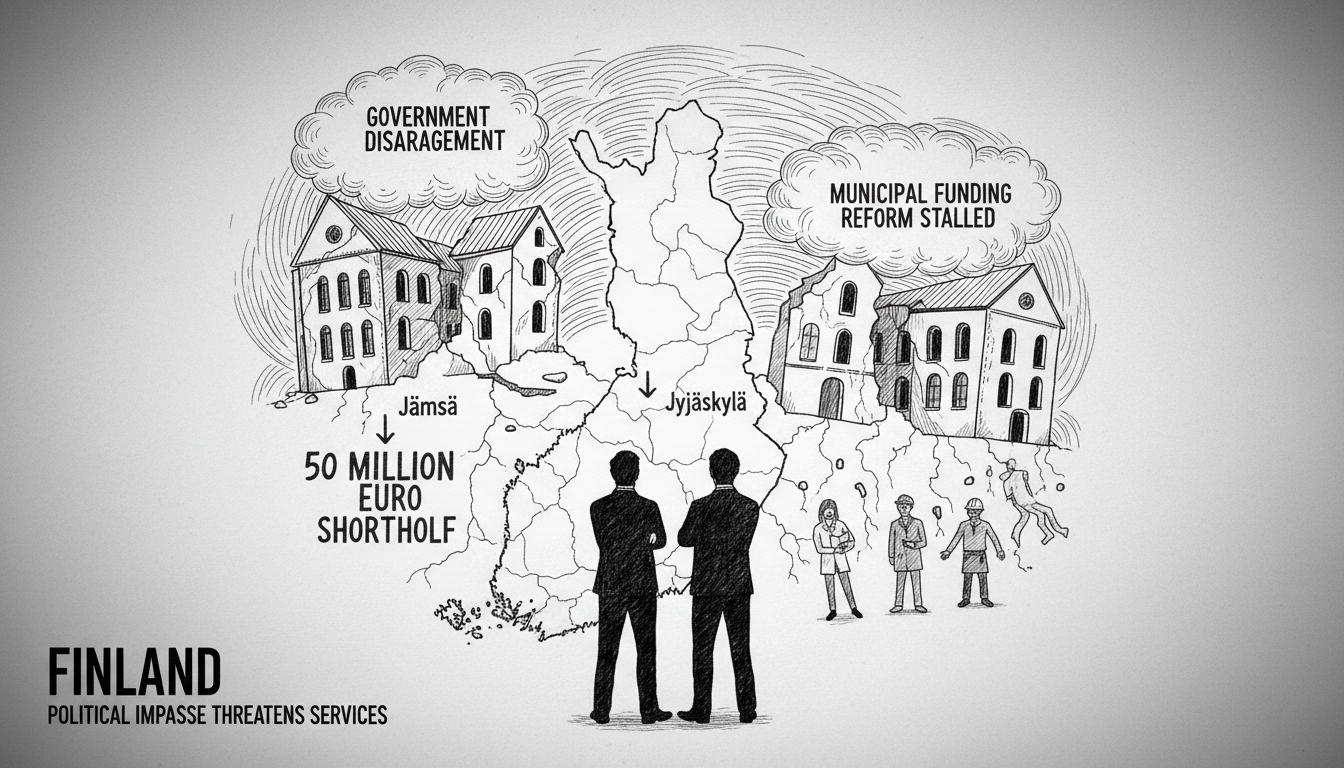
Finland's long-awaited municipal funding reform has collapsed during this government term due to irreconcilable differences among coalition parties. The failure means municipalities remain trapped in an outdated system widely recognized as dysfunctional, with Central Finland facing particularly severe financial consequences. This deadlock represents a significant setback for regional equality and public service funding across the Nordic nation.
Central Finland loses approximately 50 million euros annually under the current municipal funding distribution system according to local officials familiar with the abandoned reform. The substantial financial shortfall accumulates from multiple components within Finland's complex state allocation framework. This year, the national government will distribute roughly 3.5 billion euros in municipal funding, but the money distributes unevenly across regions without clear allocation criteria related to municipal size or geographical location.
Jämsä and Jyväskylä face the most inequitable situation within Central Finland, receiving negative basic service allocations that actually reduce their funding. They rank immediately behind Joutsa, Saarijärvi and Hankasalmi municipalities, which barely break even in their state funding calculations. The disparity becomes evident when comparing different regions' circumstances, with Espoo funding approximately 60 percent of its basic education and early childhood services through state allocations while Jämsä operates at nearly 10 percent deficit.
The funding system's structural flaws have created what local administrators describe as an unsustainable situation for Central Finnish municipalities. Without comprehensive reform, these communities face continued financial pressure that could impact public services including education, healthcare and infrastructure maintenance. The political impasse reflects deeper disagreements within Finland's coalition government about regional development priorities and fiscal responsibility.
This funding model controversy connects to broader European Union discussions about regional development and cohesion policy. Finland's internal struggle mirrors EU-wide debates about balancing urban and rural development funding, particularly as Nordic countries address demographic challenges including aging populations and rural depopulation. The stalled reform leaves Finnish municipalities operating under a system that even government officials acknowledge requires substantial modernization.
What does this political deadlock mean for Finland's future regional development? The funding model disagreement suggests deeper ideological divisions within the governing coalition about municipal autonomy versus centralized control. Without legislative changes, economically vulnerable regions may face increasing difficulty maintaining essential services, potentially accelerating internal migration patterns toward urban centers. The reform's collapse represents not just a temporary political failure but a structural challenge to Finland's traditional commitment to regional equality.