
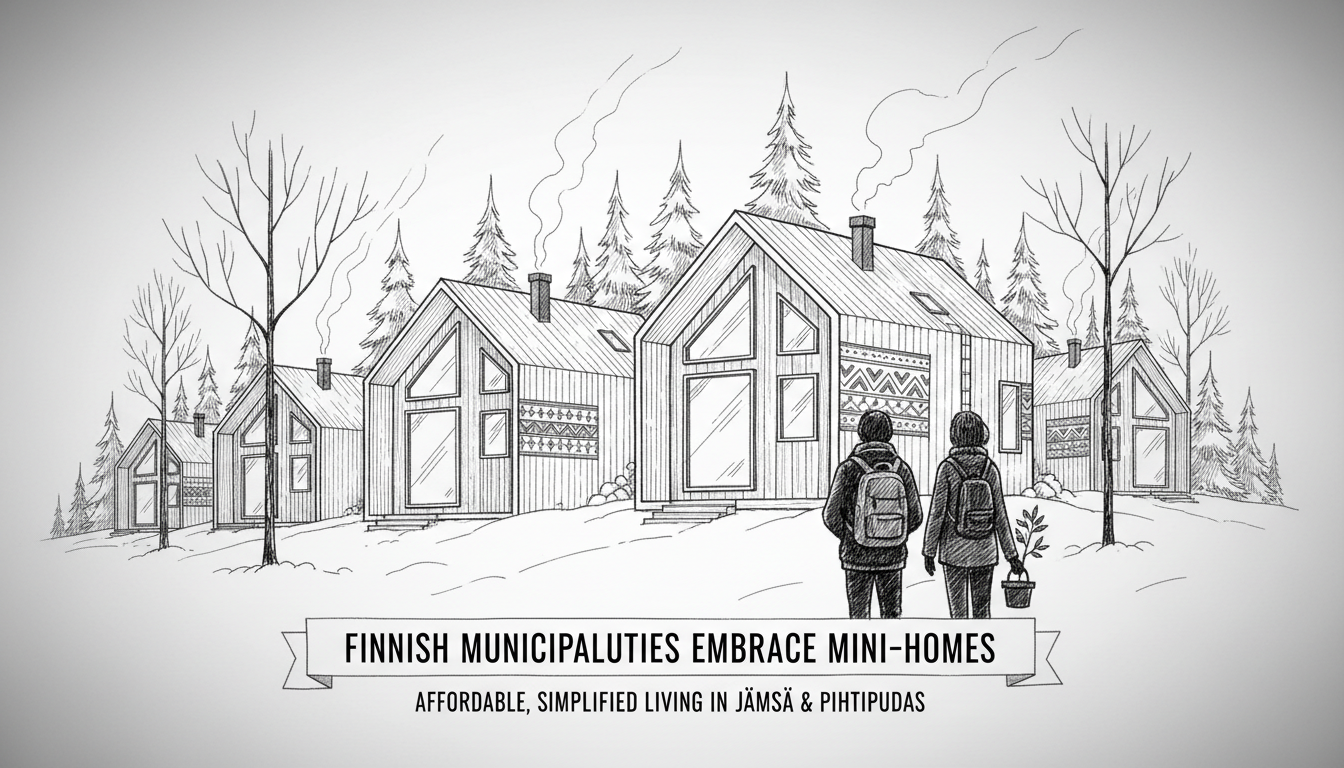
Finnish municipalities are actively planning new mini-home developments to address growing demand for affordable and low-maintenance housing. The towns of Jämsä and Pihtipudas are leading this trend, with detailed zoning plans advancing for compact residential units designed for singles and small families. This policy shift reflects a broader national conversation about housing accessibility and sustainable urban development within Finland's famously spacious but increasingly expensive property market.
In Jämsä, the Kuorevesi Hall area is a focal point for municipal planning. Officials aim to finalize zoning for two separate plots along the shores of Eväjärvi by next summer, pending the resolution of any appeals. The project proposes seventeen building lots in total, with nine along Kuorevedentie and eight at the end of Rantatie. The planned mini-homes will offer two size options, either 38 or 55 square meters, placing a premium on efficient design over sheer space.
A municipal planning engineer involved with the Jämsä project noted a clear shift in public preference. 'People do not necessarily want large apartments and big yards anymore. They are seeking ease and quality leisure time. The waterfront is a key attraction here, with some homes planned just 10 to 15 meters from the shoreline,' the engineer said in a statement. The final ownership model, whether through a housing company structure for owner-occupiers or as rental units, remains under discussion by local authorities.
This move towards mini-homes is not an isolated phenomenon. It connects to wider Finnish and Nordic housing policies that increasingly prioritize efficient land use, reduced construction costs, and lower carbon footprints per capita. For international observers, it highlights a pragmatic Scandinavian approach to demographic change, where an aging population and growing number of single-person households create demand for different housing solutions. The Finnish government has previously signaled support for denser, well-connected urban living to curb urban sprawl and preserve natural areas, aligning with broader EU sustainability directives.
The developments in Central Finland also raise questions about municipal financing and infrastructure. Smaller towns like Pihtipudas and Jämsä view such projects as tools for revitalization, aiming to attract new residents and sustain local services. The success of these mini-home zones will depend on careful integration with public transport links and community amenities, ensuring they offer not just a roof but a viable, connected lifestyle. The trend underscores a recalibration of the Finnish dream, where simplicity and location may be gaining ground over traditional notions of square footage. As these plans move from blueprints to building sites, they will serve as a critical test case for affordable housing models in rural and semi-urban Finland.