
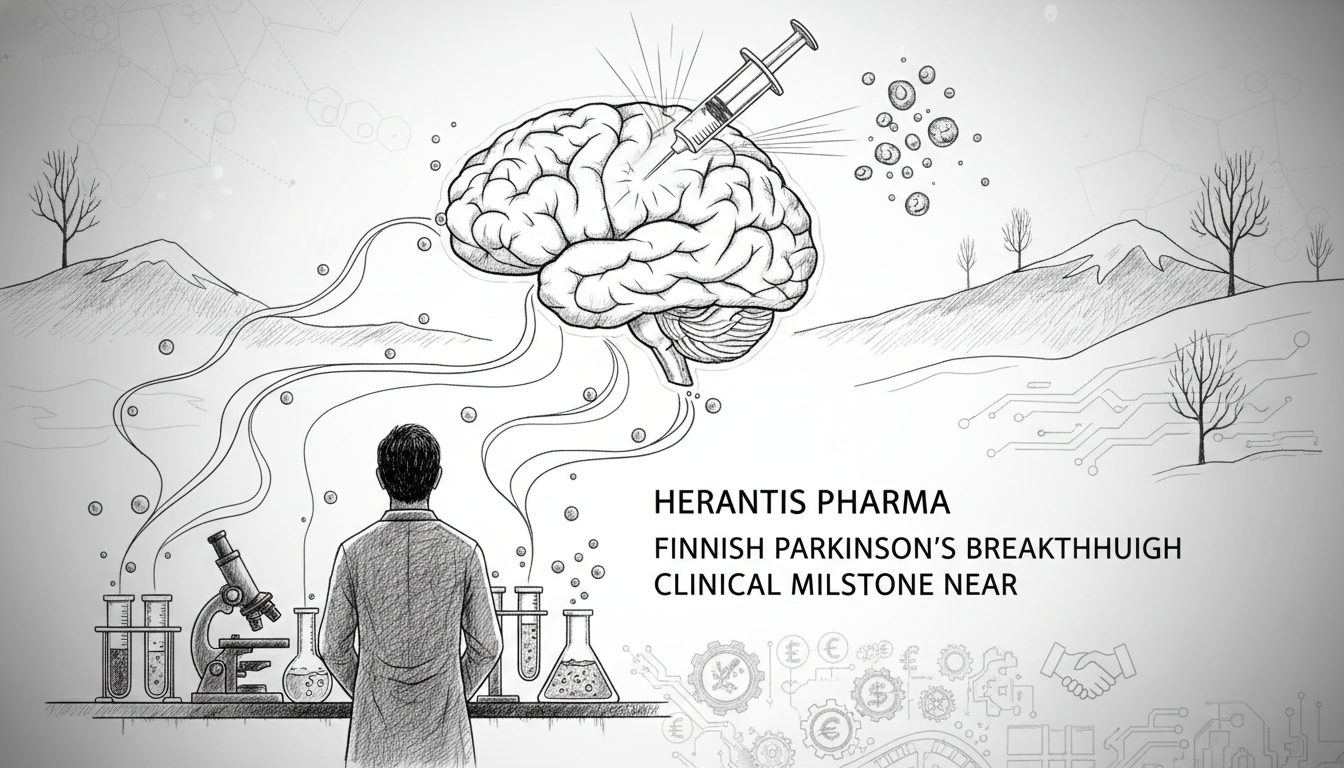
A Finnish pharmaceutical innovation could transform Parkinson's disease treatment. Herantis Pharma's new drug candidate HER-096 shows potential to halt neural degeneration.
Parkinson's disease ranks as the world's second most common progressive neurological disorder. Current medications can slow progression temporarily but lose effectiveness over time. The disease typically gets diagnosed only after symptoms appear, when about half of affected nerve cells have already deteriorated.
Company CEO Antti Vuolanto stated their goal is clear. 'We want to stop Parkinson's-induced degeneration in the brain,' he said in a statement.
The research builds on discoveries dating back to 2008 when University of Helsinki researchers identified the CDNF protein. Early clinical trials showed promising neuroprotective effects, but the treatment required direct brain administration due to the molecule's large size.
Scientists eventually developed HER-096 as an injectable formula that patients can administer similarly to diabetes or obesity medications. The treatment currently undergoes Phase 1 clinical trials. If successful, it could reach patients within five years.
Parkinson's progresses stealthily. By diagnosis, approximately half of movement-regulating neurons have already lost function. 'We believe our drug could stop disease progression and even partially restore damaged nerve cells,' Vuolanto explained.
Early degeneration occurs unnoticed. A patient might lose one-third of certain neurons before experiencing first symptoms five years later.
Common Parkinson's symptoms include stiffness and tremors. These often follow more general indicators like constipation, sleep problems, and reduced sense of smell or taste.
The disease doesn't clearly follow hereditary patterns, though age increases risk. Chemical exposures might contribute – one study suggested living near golf courses elevated Parkinson's risk, possibly due to pesticides.
International interest has grown around the Finnish research. Herantis Pharma secured €3.6 million in Phase 1 funding from The Michael J. Fox Foundation for Parkinson's Research and Parkinson's UK. 'We're at the forefront of development, which explains the support interest,' Vuolanto noted.
Further development depends on securing additional millions in funding, potentially from major pharmaceutical partners. Drug development remains expensive, Vuolanto acknowledged.
The research represents meaningful progress for a condition affecting millions worldwide. While not guaranteeing success, the novel approach offers genuine hope where current treatments merely manage symptoms.