
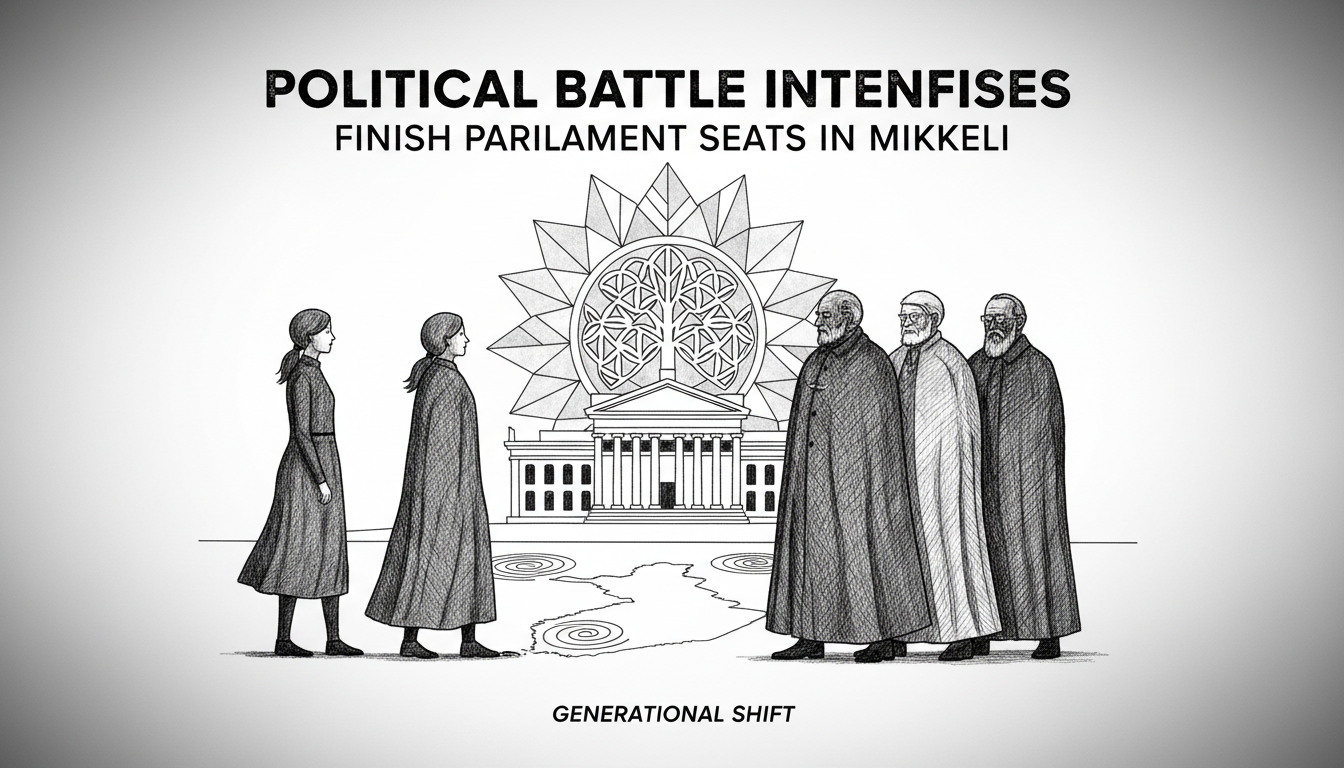
A competitive race for parliamentary positions is developing in the Mikkeli electoral district as established politicians face challenges from emerging candidates. Two young female contenders, Anni Lahtinen and Lotta Tuominen, have entered the political arena against experienced incumbents. Current Members of Parliament Oskari Valtola from the National Coalition Party and Vesa Kallio from the Centre Party are both seeking to renew their mandates in the upcoming election cycle.
The political landscape in this Eastern Finnish region demonstrates the ongoing generational shift within Finnish politics. Valtola represents the conservative economic policies of his party while Kallio advocates for rural interests through the Centre Party's platform. Their decision to seek reelection indicates confidence in their political standing despite new competition.
Jaana Strandman from the Finns Party has not yet confirmed whether she will run for another term. This uncertainty creates additional dynamics in the district's political calculations. The Finns Party has gained substantial support in recent years by focusing on immigration skepticism and nationalist policies.
Mikkeli's electoral significance stems from its position as a regional hub in Southern Savonia. The city has traditionally maintained balanced representation across multiple parties. Local voters often prioritize regional development issues alongside national concerns.
Finland's parliamentary system requires candidates to build strong local support while aligning with national party platforms. The Eduskunta operates through proportional representation, making each electoral district crucial for determining the final composition of the 200-seat legislature. Recent governments have typically formed through coalitions among multiple parties.
Political observers note that younger candidates like Lahtinen and Tuominen represent changing voter demographics. Their campaigns will likely emphasize digital policy, climate action, and social welfare modernization. These issues resonate particularly with urban and younger voters across Finland.
The European Union dimension remains important for all Finnish parliamentary candidates. EU legislation affects numerous policy areas from agricultural subsidies to environmental regulations. Finnish MEPs work closely with national parliament members on cross-border issues.
Campaigning in the Helsinki government district differs substantially from regional contests like Mikkeli. Local candidates must address specific regional concerns while maintaining party discipline on national matters. The upcoming election will test whether established politicians can maintain their appeal against fresh challengers.
Finnish political parties are preparing their candidate lists amid broader national debates about economic direction and security policy. NATO membership has introduced new foreign policy considerations that all candidates must address. The final candidate lineup will become clearer in the coming weeks as nomination processes conclude.
Voter turnout in Finnish parliamentary elections typically exceeds 70 percent, reflecting strong civic engagement. The Mikkeli race will provide insights into whether traditional party loyalties continue to dominate or if new political movements can gain traction. The outcome could signal broader trends in Finnish political preferences.