
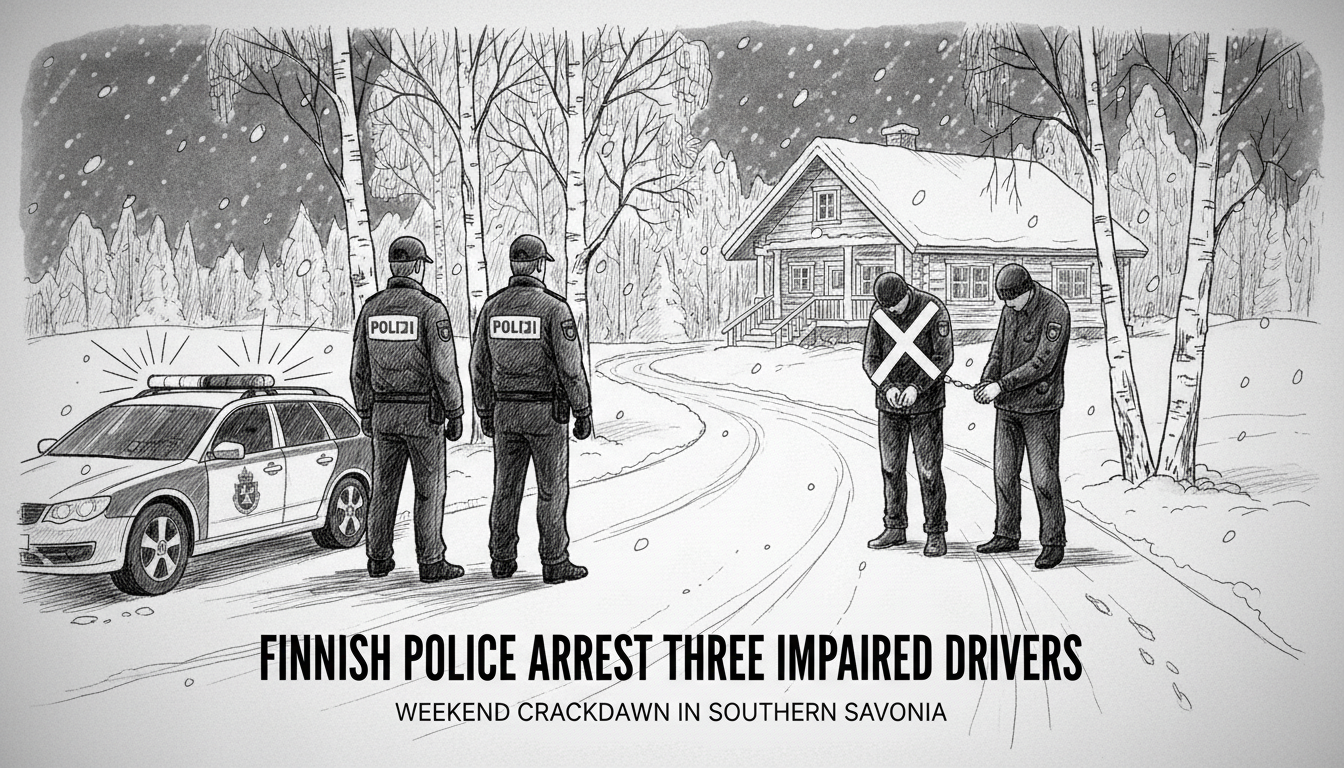
Finnish authorities detained three intoxicated motorists during coordinated traffic surveillance operations across Southern Savonia this weekend. Police conducted breathalyzer tests and drug screenings that revealed serious traffic violations, with all suspects facing criminal charges for aggravated drunk driving offenses. The arrests occurred in Pieksämäki city center and Mikkeli's Launiala district during routine traffic monitoring, demonstrating heightened enforcement of Finland's strict impaired driving laws.
Police first intercepted a driver in Pieksämäki's central intersection during Saturday traffic control. The breathalyzer test immediately indicated aggravated drunk driving levels, leading to immediate detention. Later that evening in Kontiopuisto, officers noticed a vehicle accelerating rapidly from a crossing area. The driver appeared impaired but recorded zero alcohol levels, yet a rapid drug test returned positive results. Authorities discovered this individual was already under a previous driving ban.
In Mikkeli, police responded to emergency center reports about a potentially intoxicated driver in the Launiala neighborhood. Officers located the vehicle owner near their residence address, where the person admitted to operating the vehicle. Subsequent breath analysis confirmed aggravated drunk driving readings, resulting in formal suspicion of criminal traffic offenses according to police documentation.
Finland maintains some of Europe's strictest drunk driving regulations, with aggravated charges applying at blood alcohol concentrations exceeding 0.12 percent. The country's zero-tolerance drug driving policy means any detectable amount of controlled substances constitutes a criminal offense. These weekend arrests reflect ongoing efforts to reduce traffic fatalities through consistent enforcement, particularly in regional municipalities where limited public transportation options sometimes encourage risky behavior.
Southern Savonia police districts have intensified traffic monitoring following concerning regional accident statistics. Finland's traffic enforcement strategy combines random checks with targeted operations in high-risk areas, especially during weekend evenings when impairment-related incidents peak. The recent cases highlight how authorities use multiple detection methods beyond alcohol screening, including visual observation and drug testing technologies.
What consequences do these drivers now face under Finnish law? Convictions for aggravated drunk driving typically bring substantial fines calculated by income, mandatory prison sentences up to two years, and lengthy license revocations. Repeat offenders or those driving during prohibitions face enhanced penalties that can include electronic monitoring and compulsory substance abuse treatment programs.
These enforcement actions occur within Finland's broader road safety framework that has reduced traffic deaths by over half during the past two decades. The consistent application of strict penalties demonstrates how Nordic countries prioritize preventive measures through deterrence rather than reactive approaches. International visitors should note that Finland's impaired driving thresholds are substantially lower than many other nations, requiring extra caution when operating vehicles after any alcohol consumption.