
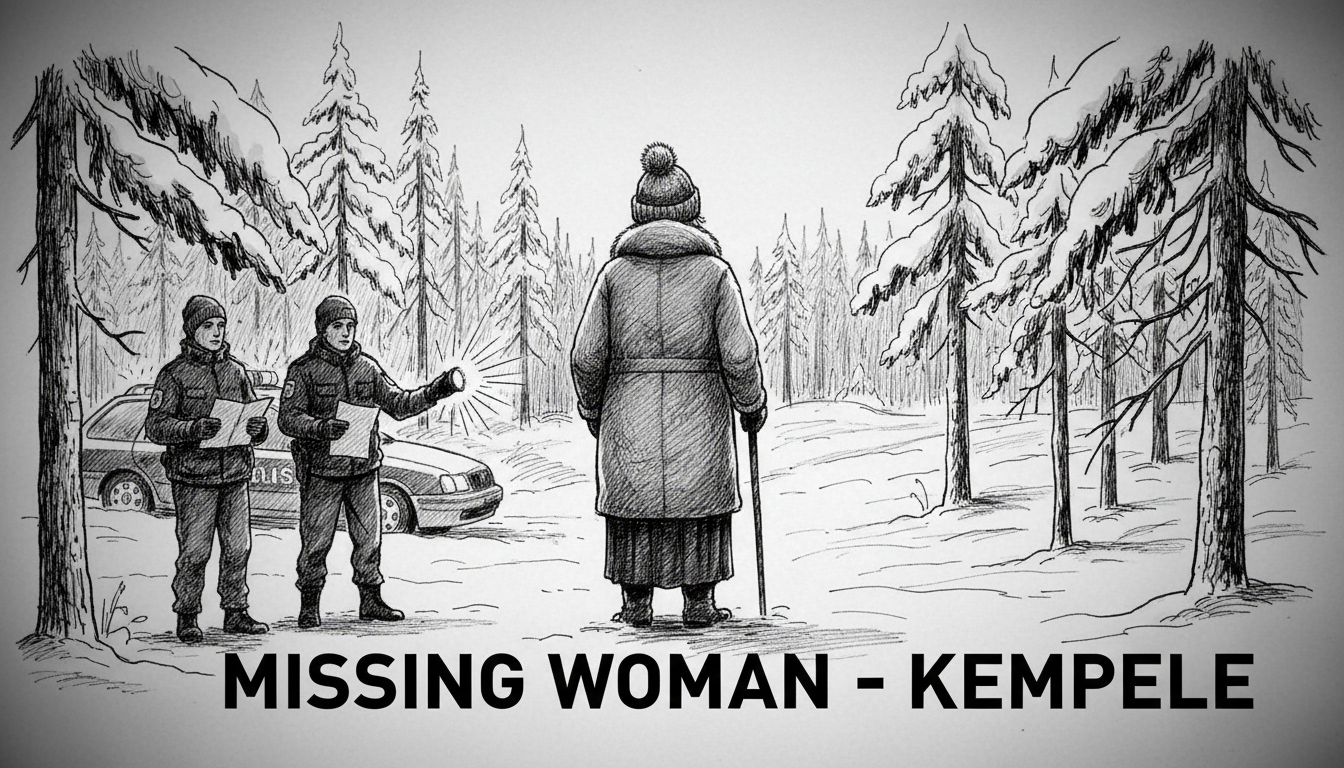
Finnish police have issued a public appeal for information regarding a 69-year-old woman missing from Kempele, a municipality in the Northern Ostrobothnia region. Authorities describe the woman as slim, approximately 155 centimeters tall, with a bob haircut, glasses, a reddish hat, and a grey coat. Acute sightings should be reported directly to the emergency number, while non-urgent tips can be directed to the Oulu police tip line at 0295436442.
This search operation highlights the robust public safety protocols and community engagement mechanisms that are a hallmark of the Finnish social system. While missing persons cases are relatively infrequent in Finland compared to many other nations, each triggers a coordinated response from local police, leveraging both official channels and public assistance. The decision to release a detailed physical description and contact information reflects a standard procedure aimed at maximizing community awareness and accelerating the search process.
Finland's low population density, particularly in northern regions like Ostrobothnia, presents unique challenges for search and rescue operations. Vast forested areas and sparse settlements can complicate efforts, making early public involvement critical. The Finnish model often integrates local volunteer rescue associations with police efforts, a system developed over decades to address the specific geographical realities of the country. This case in Kempele, located near the city of Oulu, tests these integrated response networks.
For international observers and residents, such incidents underscore the high level of public trust in Finnish authorities and the expected civic participation. The police appeal assumes citizens will act responsibly with the provided information, a social contract that functions effectively in the Nordic context. The direct request for public help is not a sign of resource shortage but rather a strategic use of community resources to cover more ground quickly. It is a reminder that safety in Finland is often viewed as a shared communal responsibility, not solely a state function.
What happens next typically involves police assessing incoming tips, coordinating ground searches with available units and possibly volunteers, and providing updates to the public if the situation persists. The outcome of this search will depend heavily on the timeliness of community reports and the individual's circumstances. The efficient handling of such cases remains a quiet priority for Finnish interior authorities, reflecting a broader societal commitment to welfare and security that extends from the Helsinki government district to the smallest northern communities.