
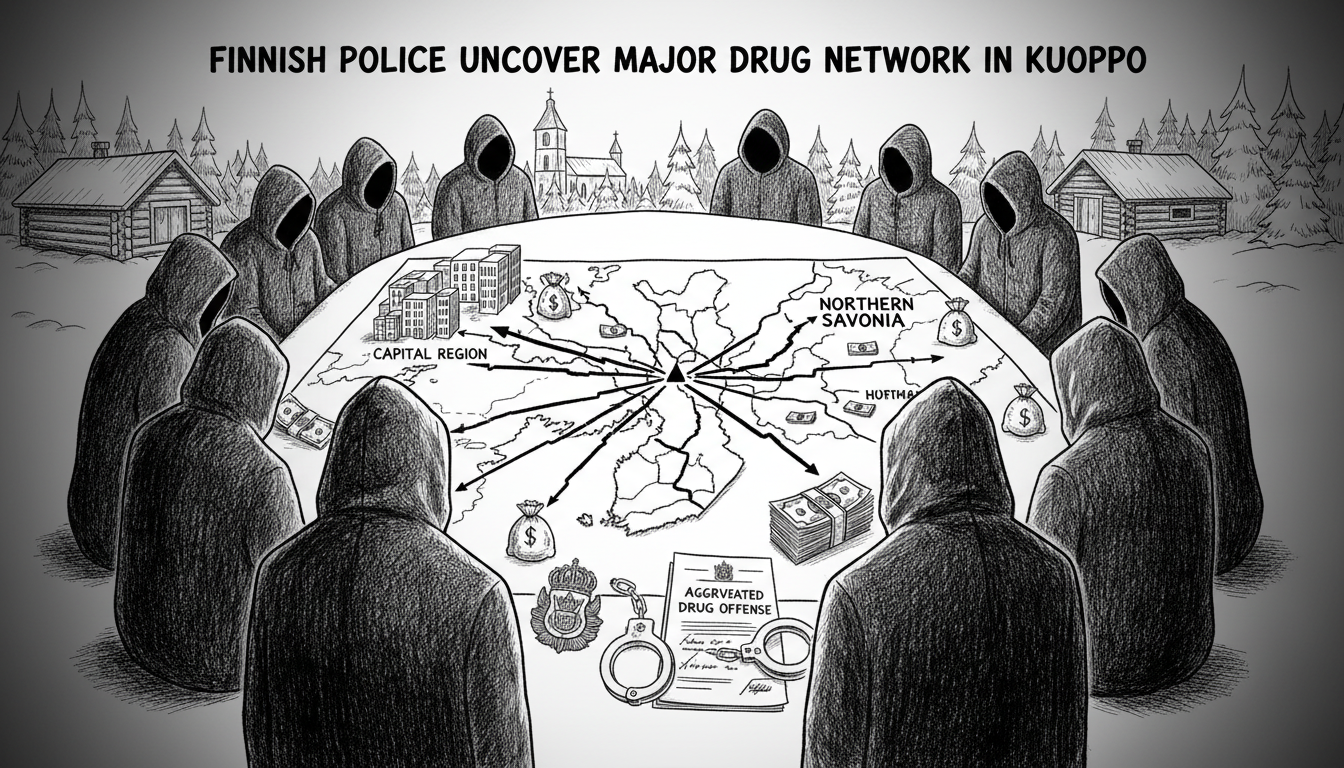
Finnish authorities have dismantled a significant drug trafficking operation centered in Kuopio, with police alleging one suspect spent over 60,000 euros acquiring narcotics for distribution throughout Northern Savonia. The investigation reveals sophisticated coordination between Helsinki metropolitan area suppliers and regional distributors moving substantial quantities across eastern Finland.
Police documents indicate the primary suspect acquired 3.85 kilograms of hashish, between 3.3 and 4.3 kilograms of amphetamine, 500 grams of cocaine, and 499 Subutex tablets during the operation. Law enforcement estimates the street value of these substances exceeded 200,000 euros, demonstrating the substantial scale of this criminal enterprise. The suspect remains in custody facing charges of aggravated drug offenses.
Three additional individuals born in 1999 and 2002 are suspected of participating in the distribution chain. Investigators believe this group collected drugs from the capital region and organized their distribution throughout Northern Savonia. The case has now progressed to prosecutorial consideration, marking a significant development in Finland's ongoing efforts against organized narcotics trafficking.
This case highlights Finland's continuing challenges with drug distribution networks connecting major urban centers to regional markets. The substantial quantities involved suggest established criminal operations rather than isolated incidents. Finnish police have intensified regional cooperation to combat drug trafficking routes extending from southern Finland to eastern regions.
Northern Savonia has seen increased law enforcement attention following several high-profile drug cases in recent quarters. The region's transportation infrastructure and geographical position create both challenges and opportunities for criminal networks. Police resources have been reallocated to address these emerging patterns in regional drug distribution.
Finland's approach to drug enforcement combines strict legal measures with prevention programs, though authorities acknowledge the persistent market demand driving such operations. The substantial profit margins evident in this case—with 60,000 euros in purchases generating 200,000 euros in street value—demonstrate the economic incentives sustaining these illegal networks despite enforcement efforts.
What does this case reveal about current drug enforcement priorities in Finland? The coordinated investigation between multiple districts suggests improved intelligence sharing and operational coordination. The progression to prosecution phase indicates authorities have gathered substantial evidence against the suspected network members. This case likely represents part of broader strategic efforts to disrupt distribution chains beyond mere retail-level enforcement.
Finnish drug policy continues to emphasize enforcement while debating potential harm reduction approaches. The substantial quantities involved in this Kuopio case will likely influence ongoing parliamentary discussions about resource allocation for drug enforcement versus treatment programs. The case arrives as lawmakers consider updated strategies for addressing both supply and demand aspects of Finland's drug market.